

MIKVEH - A NEW MEANING
What to Know
What It Is – The Meaning of Mikveh - The Hebrew word mikveh first appears in Genesis 1:10, where God gathers the waters into one place. Traditionally, mikveh means a “collection of waters,” a definition consistently seen throughout the Pentateuch, Chronicles, and Wisdom literature. Verses like Leviticus 11:36 show that a gathered, abundant body of water was considered inherently clean, reinforcing mikveh as a symbol of purity, cleansing, and ritual readiness.
A Term That Evolves Beyond Water - As the Old Testament progresses, mikveh begins to take on a new and surprising meaning. In Ezra 10:2, after Israel’s sin of taking pagan wives, the word appears in a different sense: “now there is hope in Israel.” Here, mikveh shifts from describing waters to expressing the idea of hope — a striking transformation given its long-established connection with cleansing.
Mikveh as “Hope” — A Title of God Himself - Jeremiah expands this meaning even further. Twice he calls God “the Hope (Mikveh) of Israel” (Jeremiah 14:8; 17:13). Instead of using the standard Hebrew word for “hope,” tikveh, Jeremiah assigns the term mikveh to God, revealing a deeper theological truth: God Himself is the source of cleansing, restoration, and true hope.
Why Mikveh Shifts in Meaning - The shift from “collection of waters” to “hope” is deliberate. Throughout Scripture, water symbolizes purification, renewal, and restoration — all qualities that ultimately come from God. As Israel returns from exile and confronts its sin, the use of mikveh highlights that the same God who cleanses is the One who gives hope.
The Connection to Baptism - Understanding mikveh is essential for understanding baptism. The word links cleansing water with spiritual hope, tying the physical symbol to the deeper reality it represents. Baptism unites both meanings: it is immersion in water (a mikveh) and an expression of hope in God’s cleansing, saving work.
The first time that mikveh is used in the Bible is in Genesis 1:10, when “God called the dry land Earth, and the gathering together of the waters He called Seas.” According to many online sources, including Strong’s Concordance, the word “gathering together” used in this verse is mikveh and means “a collection.” Most online sources, such as Blue Letter Bible, and various Hebrew sources like Mikvah.org, define mikveh as “a collection [of waters]” due to the word’s strong and repeated connection with water. Throughout the Pentateuch (the first five books of the Bible), the Chronicles of the Kings, (1st and 2nd Chronicles and Kings), and the Books of Wisdom (Job, Psalms, and Proverbs) we see mikveh used in a similar way to mean “a collection [of water].” We see a noticeable example of the usage of mikveh in Leviticus 11:36:
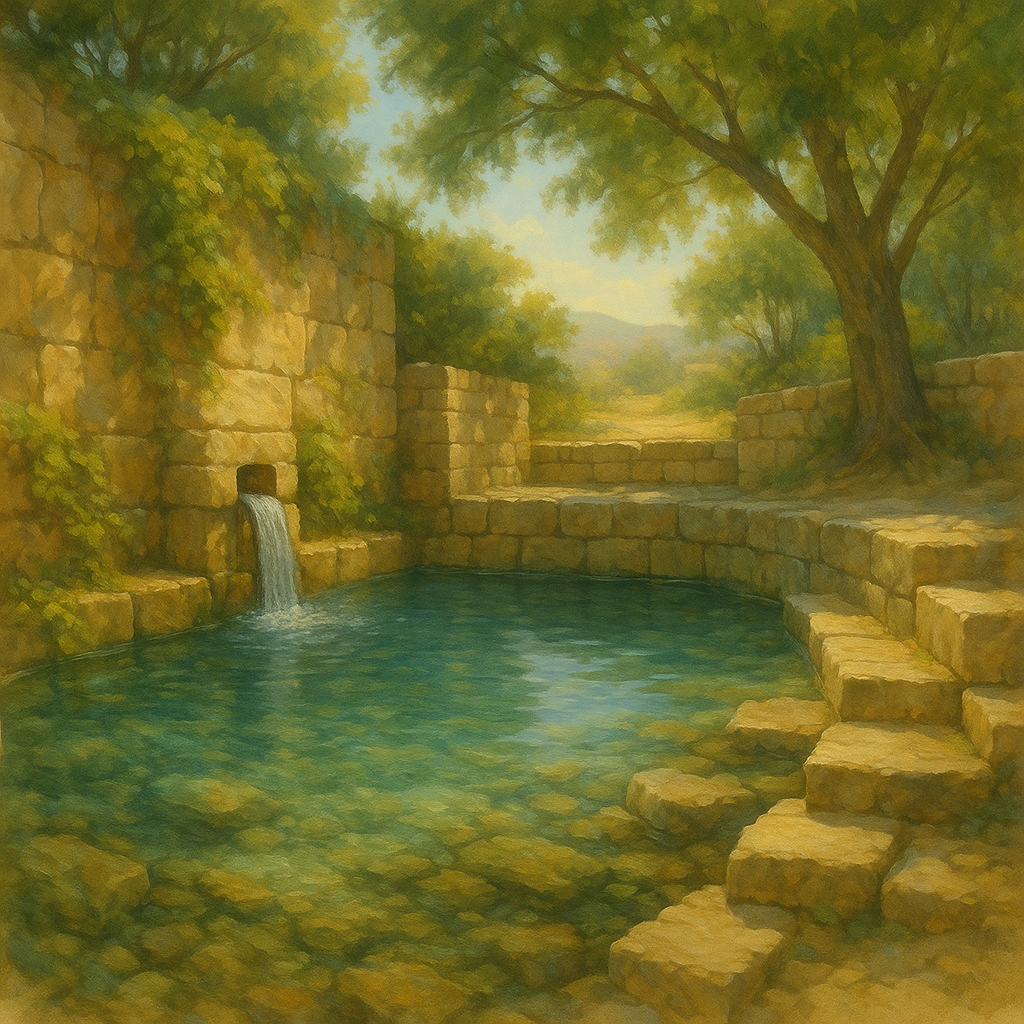
An artistic representation of a cistern filled with clear, “living” water. Surrounded by lush greenery, this scene reflects the biblical setting of ritual cleansing described in Leviticus 11:36, where a natural “collection of waters” is considered clean.
“Nevertheless a spring or a cistern, in which there is plenty of water, shall be clean, but whatever touches any such carcass becomes unclean.” (Leviticus 11:36)
This verse is referring to the cleanliness laws found in the Old Testament and when something should be deemed clean or unclean. Notice that a collection of waters (or, as the verse says, ‘plenty of water’) is always clean. Throughout the early books of the Old Testament, we see the same imagery being conveyed of mikveh as it relates to water. However, as we progress through the Old Testament, we see mikveh used in a different and interesting way. In Ezra, we see a clear example of the different way mikveh begins to be used. At the end of the verse, Shekaniah is recorded as saying,
“…we have trespassed against our God, and have taken pagan wives from the people of the land; yet now there is hope in Israel in spite of this.” (Ezra 10:2)
(Note: although Ezra is near the beginning of the Bible in most versions, Ezra was written after the exile of Israel from the land by the Babylonians, closer to the writings of the major prophets).
At the time this book was written, the people with Ezra clearly understood they did wrong against God with their actions. However, with all their work in restoring the Temple and Jerusalem, the remark of “now there is hope in Israel in spite of this” is a peculiar usage of mikveh in this context. Why is mikveh, previously only used to mean “a collection [of waters],” now being used in a context to mean “hope?” Jeremiah gives us a more striking example of mikveh being used in this new manner and relates this word directly to God. In order to gain the proper context for what Jeremiah is talking about in these verses, we will begin with the preceding verse,
“O LORD, though our iniquities testify against us, do it for Your name’s sake; for our backslidings are many, we have sinned against You. O the Hope of Israel, his Savior in times of trouble…” (Jeremiah 14:7-8)
Similar to the verses we read in Ezra, these verses in Jeremiah talk about the iniquities and sins that the people have committed against God. Moreover, similar to Ezra, Jeremiah also incorporates this new meaning of mikveh by calling God “The Hope (Mikveh) of Israel.” This is not a one-time occurrence either, as Jeremiah also makes use of the different meaning of mikveh again later on,
“LORD, You are the Hope (Mikveh) of Israel; all who forsake You will be put to shame.” (Jeremiah 17:13)
According to the Blue Letter Bible and various online sources, the Old Testament already had a word for “hope” that appears 32 times. This word is tikveh, meaning “an expectation” or “to hope for.” This discovery and the preceding verses related to mikveh prompt several important questions. What does it mean that God is the Mikveh of Israel and, therefore, our Mikveh, as Jeremiah says in Jeremiah 14:8? Why does mikveh change from “a collection [of waters] to “hope” rather than employing “tikveh?” Moreover, what connection does mikveh have to the concept of baptism?
——————————————————————————————————————————————————————————————————————————————————
Discover the Deeper Meaning Behind Baptism and the Hope We Have in Christ
1. Baptism: Where Our Hope Begins - Discover why Jesus Christ’s baptism is recorded in all four gospels and how baptism becomes the starting point of the believer’s transformation, symbolizing repentance, cleansing, and new life in Christ.
2. Ritual Cleansing in the Old Testament - Explore how ancient Israel used water for purification — from Sinai preparation to priestly consecration — and how these rituals foreshadowed the spiritual cleansing God desires for His people.
3. The Meaning of Mikveh — From Water to Hope - Learn how the Hebrew word mikveh evolves from “a collection of waters” to “hope,” and how prophets like Jeremiah reveal that God Himself is our Mikveh — the true Hope of Israel.
4. Mikveh Pools & Jewish Life Before Christ - Archaeology uncovers hundreds of ancient mikveh pools across Israel. See how mikvoth shaped Jewish purification practices and prepared the world for the Messiah and His message.
5. Jesus’ Miracles at the Mikveh Pools - The healings at Bethesda and Siloam were not random — both pools were mikvoth. Understand how Jesus showed that He, not the water, is the source of healing and hope.
6. Did Jesus Simply Turn Water Into Wine? - A deeper look at His first miracle reveals the entire plan of God: the transformation of Old Covenant purification water into wine representing Christ’s blood, the New Covenant, and the hope of eternal life.
7. The Fulfillment of Mikveh — Jesus Christ as Our Living Hope - Trace how the apostles understood Jesus as the fulfillment of mikveh and the One through whom God’s promise of eternal life is made possible.