

Why Some Prayers Go Unanswered: What the Bible Actually Says
Few things can challenge our faith like unanswered prayer. We pray for healing, direction, provision, restoration, or for someone we love. Sometimes we pray for weeks, months, or even years, and nothing seems to happen. When that happens, it is easy to wonder whether God is listening at all.
Usually, Christians are given one of a few simple explanations: God said no, God is telling you to wait, or God has something better planned. And sometimes those answers may be true. Scripture gives us examples of faithful people who waited a long time before seeing the answer to their prayers.
But those are not the only explanations the Bible gives. Some passages also tell us that certain things in our own lives can interfere with prayer. That can be uncomfortable to talk about, but if the Bible talks about it, I think we should too.
The Bible Makes Incredible Promises About Prayer

Jesus repeatedly encouraged His followers to pray. He told them to ask, seek, and knock. Paul told believers to bring their requests before God, and Scripture describes God as a Father who cares for His people and hears their cries. Prayer is intended to be communication with the Creator. But when we collect all of the passages about prayer together, we find something many pastors and believers rarely discuss. The promises about prayer do not exist in isolation. Scripture also talks about our motives, our behavior, our relationships with other people, repentance, righteousness, and obedience.
In other words, the Bible does not describe prayer as a formula where saying the right words automatically produces the result we want. Prayer exists within a relationship with God, and relationships involve more than talking. But sometimes We Ask for the Wrong Things. We can see one of the clearest examples from James.
James writes:
“You ask and do not receive, because you ask amiss, that you may spend it on your pleasures.” (James 4:3)

That is quite straightforward. Sometimes a prayer is not answered because what we ask for is driven by the wrong motive. There is nothing wrong with bringing our desires before God. Scripture encourages us to do that. But there is a difference between asking God for something and expecting God to serve whatever desire happens to be in our heart.
James describes people whose lives were being controlled by jealousy, selfish ambition, conflict, and worldly desires, and yet they were still praying. They were praying, but the issue lay in what was behind the prayer. That should prompt us to ask ourselves a difficult question: Why do I want what I am asking God for? Sometimes the answer to that question may reveal more than the prayer itself.
Unforgiveness Can Affect Our Relationship With God

Jesus also connected forgiveness with prayer. In Mark 11:25, He tells His followers that when they stand praying, they should forgive anyone against whom they are holding something. This is significant because Jesus does not treat forgiveness as something unrelated to our spiritual life. He connects our willingness to forgive other people with our own relationship with the Father.
The same idea appears immediately after the Lord’s Prayer. Jesus teaches that if we refuse to forgive others, we should not expect forgiveness to be treated lightly in our own lives. This does not mean that forgiveness makes what someone did acceptable. It does not mean that trust automatically has to be restored, and it certainly does not mean remaining in a dangerous situation. However, we cannot continually ask God for mercy while refusing to extend mercy ourselves.
Jesus even used the sacrificial system to illustrate this principle.
In Matthew 5:23-24, He tells someone bringing an offering to first seek reconciliation with his brother.
“23 Therefore if you bring your gift to the altar, and there remember that your brother has something against you, 24 leave your gift there before the altar, and go your way. First be reconciled to your brother, and then come and offer your gift.” (Matthew 5:23-24)
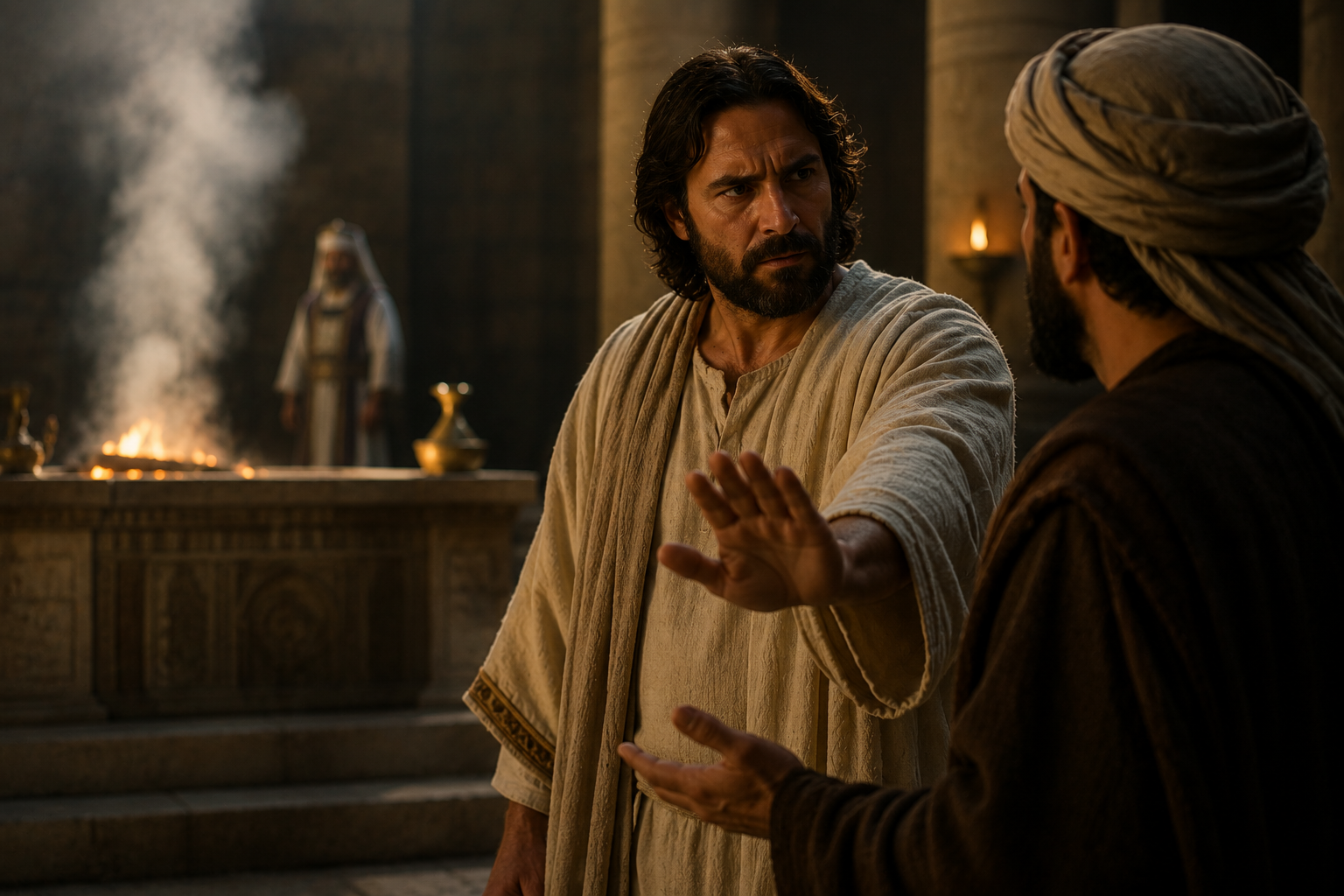
God commanded the offering, yet the condition of the person bringing it still mattered. God has never been interested only in outward religious activity. He is interested in the heart of the person doing it. How We Treat Other People Matters. This same principle appears in a surprising place in 1 Peter.
Peter tells husbands to live with their wives with understanding and honor, and then he gives an interesting reason:
“…that your prayers may not be hindered.” (1 Peter 3:7)
A person could be praying faithfully while treating his wife badly, and Peter says his prayer life could be affected by it.
Proverbs gives us another example:
“Whoever shuts his ears to the cry of the poor will also cry himself and not be heard.” (Proverbs 21:13)
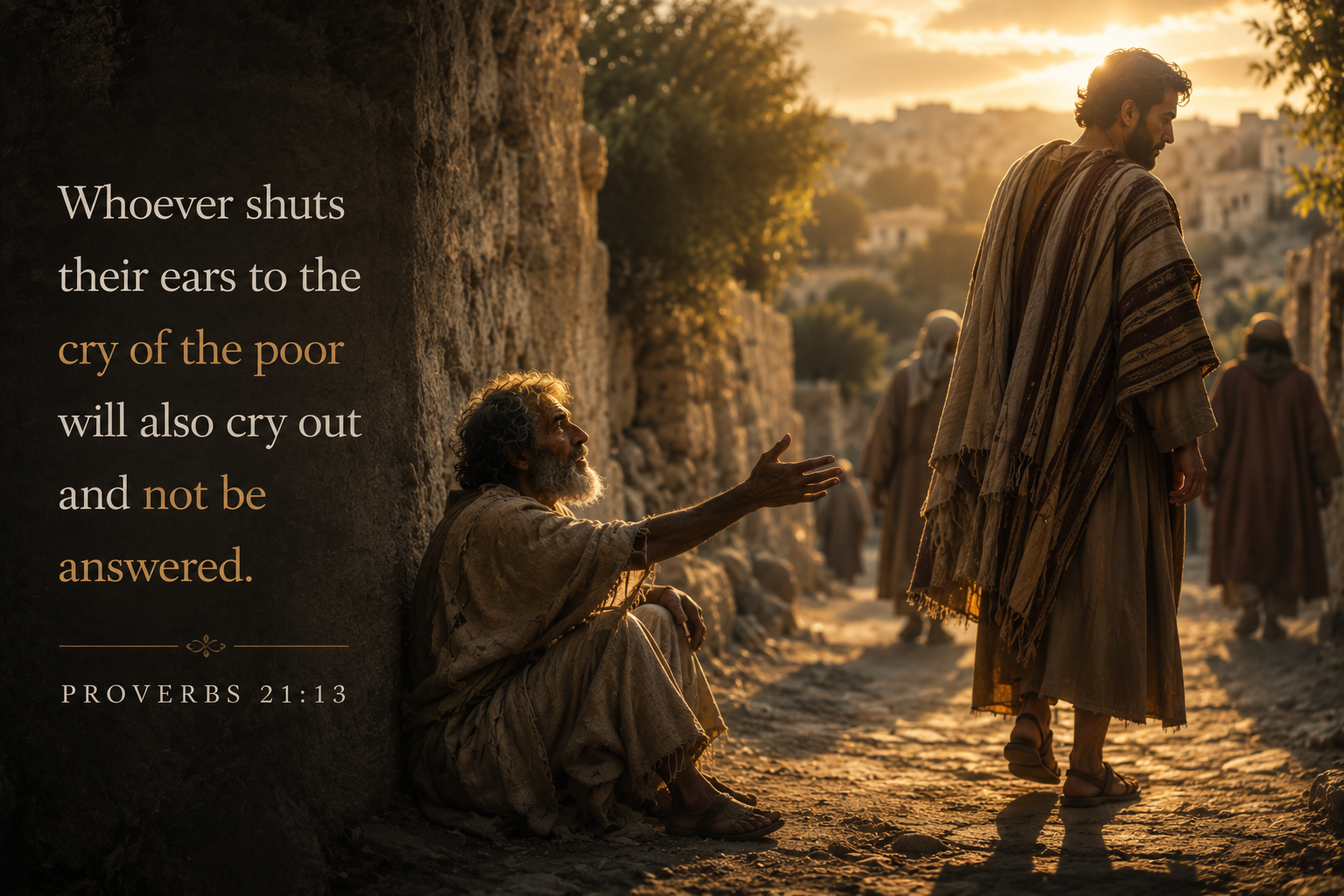
Again, we see the same pattern. Our relationship with God cannot be separated from how we treat the people around us. Someone cannot live selfishly, mistreat others, ignore those in need, and then assume none of that matters when they come before God. Scripture repeatedly connects the two.
Sin Can Become a Barrier
This is where the subject becomes even more serious. Isaiah 59 begins by assuring Israel that God’s ability was not the problem. His hand had not somehow become too weak to save them, and His ear had not become incapable of hearing.
Then Isaiah explains what had happened:
“But your iniquities have separated you from your God; And your sins have hidden His face from you, so that He will not hear.” (Isaiah 59:2)
The problem was not God’s inability to hear. Sin had damaged the relationship. David says something similar in Psalm 66:18:
“If I regard iniquity in my heart, the Lord will not hear.”
Notice that David does not say, “If I have ever sinned.” If that were the standard, none of us would have any hope of being heard. The issue is holding on to sin. Cherishing it. Knowing something is wrong and refusing to turn from it. There is a major difference between someone struggling against sin, falling, repenting, and getting back up, and someone who has decided that he simply does not care what God says.
The Bible never presents God’s people as sinlessly perfect people. But it does present them as people who desire to walk with Him.
The Prayer of a Righteous Person
This helps explain something James says that we can easily read past. James tells us, “The effective, fervent prayer of a righteous man avails much.” (James 5:16)
James does not say that prayer has great power. He specifically draws attention to the prayer of a righteous person. And Proverbs says something very similar:
“The Lord is far from the wicked, but He hears the prayer of the righteous.”
(Proverbs 15:29)
And John adds another piece to the puzzle:
“And whatever we ask we receive from Him, because we keep His commandments and do those things that are pleasing in His sight.” (1 John 3:22)

There seems to be a consistent pattern running through these passages. Prayer, righteousness, obedience, repentance, and our relationship with God are connected. That does not mean we somehow earn answers to prayer by being good enough. However, it does mean prayer is part of a relationship.
One of the Most Overlooked Verses About Prayer
There is one verse in Proverbs that I rarely hear mentioned when Christians discuss unanswered prayer:
“One who turns away his ear from hearing the law, even his prayer is an abomination.” (Proverbs 28:9)
That is an incredibly strong statement. But pay close attention to exactly what the verse says. It describes someone who turns his ear away from hearing. There is an intentional refusal to listen. And when thinking about prayer, that makes sense.
Prayer is us speaking to God. But what kind of relationship would it be if we demanded that God listen to everything we say while refusing to listen to what He has already said? That is a very different picture of prayer than the one we often hear. Prayer is not supposed to be a one-way conversation. God allows us to speak to Him, but He also expects His people to hear and obey Him. And one of the primary ways we hear Him is through what He has already revealed in His Word.
There is much more to unpack in Proverbs 28:9, including exactly what it means to “hear the law” and how that fits into the rest of Scripture. I explore that more deeply in the accompanying video.

But does Unanswered Prayer Mean You Have Sinned? No. And this is extremely important. We should not look at someone who is praying for healing, struggling through tragedy, waiting for a child to return home, or pleading with God for direction, and assume their prayer has not been answered because they must be living in sin.
The Bible does not give us permission to do that. There are faithful people throughout Scripture who waited. There are prayers where God’s answer was different from what the person requesting it wanted. There are circumstances where God was working in ways the person praying could not yet see.
So the proper response to unanswered prayer is not automatically, “What sin did I commit?” But neither should we completely remove self-examination from the conversation. Scripture gives us both truths. Sometimes the answer is wait. Sometimes the answer is no. Sometimes God has purposes we cannot see. And sometimes Scripture tells us to examine ourselves.
Maybe We Have Been Asking Only Half of the Question
When prayer seems unanswered, most of us instinctively ask: “God, are You hearing me?” That is an understandable question. But after reading these passages together, I think there is another question worth asking: “Am I listening to God?” Are you holding bitterness toward someone? Are you asking from selfish motives? Are you mistreating the people closest to you? Are you knowingly holding on to something God has told you to put away? Are you willing to hear what Scripture says even when it challenges something you already believe?
Those are not questions we ask because we are trying to earn God’s favor. We ask them because we want a genuine relationship with Him. A healthy relationship cannot consist of one person doing all the talking. Prayer is about walking with God. Perhaps one of the biggest mistakes we can make is viewing prayer only as a way to get things from God. Prayer is far greater than that. It’s part of walking with Him.
Sometimes we pray because we desperately need something. Sometimes we pray because we are hurting. Sometimes we pray because we are thankful. Sometimes we simply want to be near Him. And the more we understand prayer as relationship rather than transaction, the more these difficult passages begin to make sense.
God wants His people to call upon Him but He also wants His people to listen. He wants repentance, mercy, forgiveness, righteousness, compassion, and hearts that desire to obey Him. So if you are struggling with unanswered prayer, do not automatically assume that God has abandoned you or that you have done something wrong. But do not be afraid to examine yourself either.
Search the Scriptures.
Ask God to expose anything in your life that needs to change.
And perhaps alongside the familiar prayer, “Father, please hear me.” We should sometimes add another: “Father, help me ensure I’m hearing You.”