


Master study Page

THE SABBATH
Why do over 30 languages across the globe still call Saturday "the Sabbath"? Explore the creation-based origins of the seventh-day rest and discover why there is no scriptural mandate for the historical shift to Sunday worship.
-
The Seventh-Day Sabbath is God’s First Appointed Feast: Established at creation (Genesis 2:2–3), the Sabbath predates Israel and the law given at Sinai, making it a universal institution for all humanity.
The Sabbath was Honored Throughout Scripture: Prophets, Jesus, and the apostles all observed the seventh-day Sabbath. Nowhere in the Bible is it changed to Sunday or abolished.
Jesus Affirmed the Sabbath’s Purpose: Jesus called the Sabbath a gift for mankind (Mark 2:27) and made it part of His moral practice (ethos), using it for worship, teaching, and healing.
The Apostles and Early Church Kept the Sabbath: The book of Acts shows Paul and others observing the Sabbath with both Jews and Gentiles. Hebrews 4:9 reaffirms a “Sabbath-rest” still remains for God’s people.
Sunday Observance Came Later: The shift to Sunday worship developed centuries after Christ due to Roman and ecclesiastical influence — not by biblical command.
Historical and Catholic Sources Admit the Change: The Catholic Church openly states it changed the day of worship to Sunday by its own authority, not based on Scripture.
The Sabbath Remains Central to God’s Plan: Prophets like Isaiah and Ezekiel show Sabbath observance continuing in the Millennial Kingdom, underscoring its eternal relevance.
The Sabbath Reflects God’s Covenant and Redemption: It symbolizes rest, peace, and wholeness in Christ and points to the coming Kingdom of God.
Global Language Supports the Sabbath: Over 30 world languages preserve the word “Sabbath” as the name for Saturday, reflecting its longstanding, universal recognition.

The first Feast of the LORD mentioned in Leviticus 23 is the weekly seventh-day Sabbath, a time appointed by God as a day of rest and worship emphasized throughout the Bible. While some argue that the seventh-day Sabbath (along with the rest of the law) was not instituted until the law was given to Moses at Mount Sinai, Scripture reveals otherwise. God established the Sabbath at creation, blessing and sanctifying the seventh day (Genesis 2:2-3). The Sabbath was affirmed throughout the Old Testament, upheld by the prophets (e.g., Isaiah 56:2; Ezekiel 20:12, 20; Ezekiel 44:24), and honored by Jesus and His disciples (e.g., Matthew 12:12; Mark 1:21; Luke 4:16). Even after Jesus’ resurrection, the apostles and the early Christian church observed the seventh-day Sabbath (e.g., Acts 13:14, 42-44; Acts 16:13).
There is no scriptural evidence that the Sabbath was ever changed to Sunday. A thorough examination of both the Old and New Testaments, along with historical and scholarly research, confirms that the seventh day (Saturday) remains the biblically endorsed Sabbath for all who seek to follow God and honor His redemptive plan. The practice of Sunday observance arose centuries after the apostolic era and lacks any clear biblical mandate. Recognizing the Sabbath as Saturday is neither an outdated tradition nor a custom exclusive to Judaism; rather, it is a foundational aspect of God’s design for humanity’s spiritual well-being and ultimate redemption.
From the very beginning, the Sabbath was rooted in the creation narrative itself. Genesis 2:2-3 declares, “And on the seventh day God ended His work which He had made; and He rested on the seventh day from all His work which He had made. And God blessed the seventh day, and sanctified it.”This passage precedes the establishment of the Israelite nation, demonstrating that the Sabbath transcends ethnic and national boundaries. Its significance is not confined to the Mosaic Covenant but is woven into the very fabric of creation, intended as a universal gift for all humanity. Jesus affirmed this when He said, “The Sabbath was made for man, and not man for the Sabbath” (Mark 2:27).
Throughout the Old Testament, God reaffirmed the importance of the seventh-day Sabbath. The Fourth Commandment, recorded in Exodus 20:8-11, explicitly commands believers to “remember the Sabbath day, to keep it holy.” This commandment is placed on equal footing with the other nine moral laws, none of which most Christians believe have been annulled. Ironically, the Sabbath is often the only commandment claimed to have been abolished, despite its extensive endorsement by the major prophets in the Old Testament and its reaffirmation in the New Testament.
The prophet Isaiah emphasized that the Sabbath was not limited to Israel alone but extended to all who would follow God. In Isaiah 56:2-7, he includes foreign converts and eunuchs among those who would be blessed by keeping the Sabbath. Isaiah’s prophetic vision of the future in Isaiah 66:23 describes humanity worshiping God “from one Sabbath to another,” indicating that Sabbath observance will continue into the Millennial Kingdom. Similarly, the prophet Ezekiel describes the Sabbath as fundamental to God’s future Kingdom. In Ezekiel 44-46, Ezekiel records prophetic visions of the future millennial temple, where the Sabbath is observed alongside Feasts, New Moons, and other appointed seasons. For example, Ezekiel 45:17 states, “Then it shall be the prince’s part to give burnt offerings, grain offerings, and drink offerings, at the feasts, the New Moons, the Sabbaths, and at all the appointed seasons…”
Other passages, such as Ezekiel 46:12-14 and Isaiah 66:22-23, reinforce the continued significance of the Sabbath during the Millennial reign of Christ. These prophecies affirm that the Sabbath is not merely a relic of the past but an eternal principle that reflects God’s design for humanity’s worship, rest, and relationship with Him. Its observance is deeply embedded in God’s plan for both the present and the future, making it a timeless practice for those who seek to align with God’s will.
Many argue that Sabbath observance, rooted in the Old Testament, is no longer required under the New Covenant. However, the New Testament provides clear evidence that this argument is incorrect. Throughout His ministry, Jesus consistently upheld the seventh-day Sabbath. Luke 4:16 highlights that Jesus kept the Sabbath regularly, as it was “His custom” to attend synagogue on that day. While the English word “custom” might suggest a voluntary habit or tradition specific to a certain time or place, the original Greek word ethos conveys a much deeper meaning. It refers to “the inherent traits or disposition of an individual, reflecting their moral qualities or character.” For Jesus, the Sabbath was not merely a tradition or routine specific to that time and place — it was an intrinsic part of His moral nature and practice.
Jesus used the Sabbath as an opportunity for worship, teaching, and acts of mercy, demonstrating its true purpose and significance. He never suggested that the Sabbath should be abolished or changed. Instead, He clarified its true meaning, declaring in Mark 2:27, “The Sabbath was made for man, and not man for the Sabbath.” If the Sabbath was so integral to Jesus’ character and moral standard, does it not follow that those who claim to follow Him should view it with the same importance? How can those trying to follow Jesus reflect His nature, while neglecting something He so clearly valued and practiced?
Further, the apostles and early Church also continued to observe and honor the seventh-day Sabbath after Jesus’ crucifixion and resurrection. Acts 13:42-44 describes Paul preaching to both Jews and Gentiles on the Sabbath, while Acts 17:2 notes that it was Paul’s custom (the same Greek word ethos) to reason from the Scriptures on the Sabbath, just as Jesus had done. Even the book of Hebrews reinforces the enduring nature of the Sabbath. Hebrews 4:9 states, ,“There remains, then, a Sabbath-rest (sabbatismos) for the people of God” affirming that the Sabbath commandment remains relevant for believers under the New Covenant. Nowhere in Scripture is there any record of Jesus or the apostles instituting Sunday as a replacement for the Sabbath. Instead, the historical shift toward Sunday observance emerged over centuries, driven by political, social, and religious influences, not by clear biblical instruction.
Historical research strongly supports the evidence that the shift from Sabbath observance on the seventh day (Saturday) to Sunday worship was not biblically mandated, but arose gradually over centuries. Dr. Samuele Bacchiocchi, in his work From Sabbath to Sunday, details how this change was driven by Roman cultural and religious practices, as well as church councils that sought to distance Christianity from its Jewish roots. This transition was later formalized through the influence of the Roman Church and the Roman Empire, not through scriptural instruction.
Additional scholarly resources, such as Sabbath Truth and the United Church of God’s Sunset to Sunset: God’s Sabbath Rest, document how early Christians — both Jewish and Gentile — faithfully observed the seventh-day Sabbath for centuries following Christ’s resurrection. These sources highlight that Sunday observance was later institutionalized through traditions and decrees of the Catholic Church.
Remarkably, the Catholic Church itself openly acknowledges this change. In The Catechism of the Catholic Church and other official publications, it is stated that the Church, by its authority, transferred the day of worship from Saturday to Sunday. The Catholic Encyclopedia, available on their website, emphasizes that this change was not based on biblical instruction but on ecclesiastical authority. For instance, The Convert’s Catechism of Catholic Doctrine states, “The Church substituted Sunday for Saturday by the plenitude of that divine power which Jesus Christ bestowed upon her.”
This raises a critical question for belivers: If the seventh-day Sabbath was sanctified by God at creation and upheld by Jesus and the apostles, does an institution have the authority to alter what God established? By observing Sunday, are people not affirming a change made by human authority rather than God’s command? Some may argue that the specific day of worship is unimportant. But if the Sabbath was set apart by God and reinforced throughout Scripture, would it not be more meaningful to align with what God ordained rather than with a tradition introduced centuries later by an organization?
Could it be that by observing Sunday, one is unintentionally prioritizing human tradition over God’s eternal standard?
The biblical and historical evidence clearly supports the seventh-day Sabbath as a continuing practice for those seeking to honor God’s design for worship, rest, and spiritual renewal.
The Sabbath’s significance extends far beyond mere legalism. It embodies God’s redemptive plan, symbolizing the rest, peace, and wholeness that come from a right relationship with Him. Just as God completed creation and rested on the seventh day, the Sabbath points believers toward the ultimate spiritual rest and restoration promised through Christ’s redemptive work and the future establishment of His Kingdom. By observing the Sabbath, believers affirm their dependence on God rather than on human effort or cultural norms. Far from being abolished, as many Christians claim today, Jesus enlarged its meaning, emphasizing that the Sabbath was made for humanity’s well-being and to honor God’s intentions.
Critically, there is no scriptural basis to suggest the Sabbath was transferred to Sunday. The Resurrection of Christ, often cited as the reason for Sunday observance, is never biblically connected to a change in the Sabbath day. In fact, closer examination shows that the Resurrection has a stronger connection to the Sabbath itself and did not occur on Sunday, as is widely believed. This makes the seventh-day Sabbath not only biblically sound but also deeply symbolic of God’s covenant with humanity.
If you’re interested in researching more about the Sabbath and the change from Saturday to Sunday, we’ve provided additional references here for your review.
The seventh-day Sabbath stands as a timeless sign of God’s covenantal relationship with His creation (Ezekiel 20:12). Interestingly, its significance is echoed across many cultures and languages around the world. For example, in over 30 languages, the word for Saturday is derived from the word “Sabbath.” This linguistic consistency highlights the enduring acknowledgment of the seventh day’s sanctity, even in cultures that may not recognize its biblical origins. In contrast, no such distinction is made for Sunday in these languages, underscoring the Sabbath’s unique and God-ordained role. This global testament to the Sabbath’s significance serves as a powerful reminder of its place in God’s design for humanity.
- Hebrewשבת (Shabbat)
- Arabicالسبت (As-Sabt)
- Amharicሰንበት (Sänbet)
- LatinSabbatum
- Ancient GreekΣάββατον (Sabbaton)
- SpanishSábado
- PortugueseSábado
- ItalianSabato
- FrenchSamedi
- CatalanDissabte
- GalicianSábado
- RomanianSâmbătă
- OccitanDissabte
- RussianСуббота (Subbota)
- UkrainianСубота (Subota)
- BelarusianСубота (Subota)
- PolishSobota
- Czech / SlovakSobota
- BulgarianСъбота (Sǎbota)
- MacedonianСабота (Sabota)
- Serbo-CroatianSubota
- SlovenianSobota
- GreekΣάββατο (Sabbato)
- Yiddishשבת (Shabbes)
- Georgianშაბათი (Shabati)
- MalteseSibt
- Tigrinyaሰንበት (Sänbet)
- Hindiशनिवार (Shanivaar)
- Urduہفتہ (Hafta)
- Latvian / LithuanianSestdiena / Šeštadienis
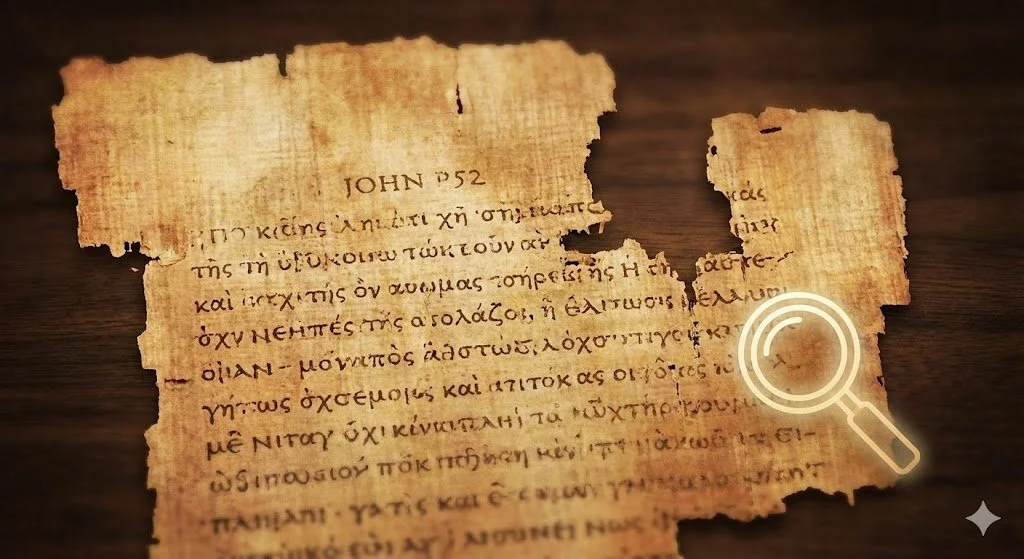
TEXTURAL CRITICISM OF THE BIBLE (PART 1)
How do we know the Bible we read today is what was actually written? Explore the staggering manuscript evidence that makes the Bible the most historically reliable document of the ancient world.
-
This article emphasizes that before exploring the deeper teachings of the Bible and Jesus Christ’s identity, one must first establish the Bible’s historical reliability.
Textual criticism is key: scholars reconstruct original New Testament writings by comparing thousands of existing handwritten copies—far more than what exists for most other ancient works.
The New Testament boasts about 5,800 Greek manuscripts (some within 200 years of the events), which is unparalleled in ancient literature. The Old Testament also has extensive manuscript support, highlighted by the Dead Sea Scrolls, which pushed textual evidence back nearly 2,000 years.
Given the Bible’s vast and early manuscript evidence, questioning its reliability would mean questioning the reliability of all other ancient historical documents as well as historical figures like Alexander the Great.
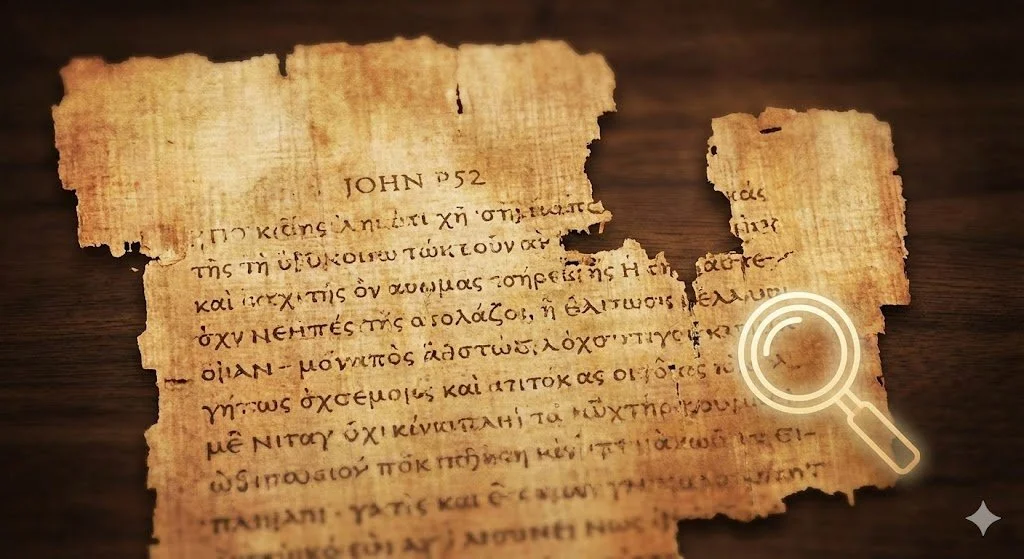
Before exploring the Bible's true teachings and scriptural truths — often obscured by tradition and diluted interpretations — we must first establish its authenticity, historical accuracy, and the truth of Jesus Christ as the Son of God.
We will begin on this journey by first examining the New Testament, specifically through textual criticism, rather than focusing on the specific writings. The New Testament was originally written in Koine Greek, the common language of the time. Today, we don't have the original manuscripts, known as autographs, of the New Testament books. Instead, we rely on handwritten copies and copies of those copies. Textual criticism is the scholarly practice of reconstructing the original text by comparing these various copies.
It's important to note that textual criticism isn't limited to the New Testament or to only biblical books. It's applied to nearly all classical works because no originals exist for any Greek or Latin classic, including the Bible. This is mainly because ancient people wrote on papyrus, a highly perishable material that can only survive in dry, airy climates. It's actually remarkable we have any surviving papyrus fragments today, considering how easily they degrade.
In 1900, only about nine known papyrus fragments contained parts of the New Testament had been discovered. Today, that number has grown to approximately 115. Among these, 45 papyrus fragments date back to before 300 AD. Collectively, these 45 manuscripts represent about two-thirds of the New Testament, dating to within 200 years of the eyewitness accounts of Jesus. In the context of ancient writings, this is incredibly close to the actual events. In fact, no other ancient document has such early and abundant manuscript evidence.
Beyond these 115 significant and larger manuscripts, there are approximately another 5,800 Greek manuscripts, 10,000 Latin manuscripts, and 9,300 manuscripts in other languages. Some scholars estimate that the number of textual references could exceed one million if we include citations from early church fathers who quoted Scripture in sermons and writings. These numbers are extraordinarily high for ancient texts, underscoring the New Testament's unique position in historical documentation.
The difference is stark when we compare the 5,800 Greek New Testament manuscripts to other classical works. Consider critical editions of works like The Iliad, Caesar's Gallic War, and Beowulf — these are classic texts widely taught in schools, and their authenticity is rarely questioned. However, the number of manuscripts that survive these works is nowhere near the New Testament. The Iliad, for example, has about 650 copies, which is sufficient to produce critical editions but pales in comparison to the New Testament. The earliest complete edition of The Iliad dates from the 10th century A.D., even though the text was written around the 8th century BC. In contrast, we have complete editions of the New Testament from the 4th century A.D., with large fragments dating back to before 300 A.D.—much closer to the events described.
To illustrate this point further, scholars have dated a small fragment containing portions of John, known as fragment P90, to the early 2nd century A.D. Another fragment, known as fragment P104, contains Scripture from Matthew and is dated to the late 1st century A.D. These fragments are incredibly close in time to the events they record, enhancing their reliability.
As briefly explained before with The Iliad, the New Testament's manuscript evidence far surpasses that of any other ancient document. For instance, we have about a dozen copies of Caesar's Gallic War, the earliest dating nearly a thousand years after the events it describes. Tacitus's Histories and Annals are preserved in three manuscripts, and Beowulf survives in only one. The New Testament, by contrast, was widely distributed across the Roman Empire and into North Africa. It was translated into multiple languages, and manuscripts of these translations have been found in numbers that far exceed those of any other ancient document.
While this discussion has focused on the New Testament, similar observations can be made about the Old Testament. Although pinpointing the exact number of Old Testament manuscripts is challenging due to its age, size, and the fact that it was written over a thousand years, estimates suggest there are around 2,000 fragments of Old Testament scripture. Considering the age of these texts, this is truly remarkable.
Some of the oldest complete Old Testament manuscripts include the Aleppo Codex, dating back to 920 A.D., and the Leningrad Codex, dating to 1008 A.D. Both were discovered before the Dead Sea Scrolls, which dates from the 1st to 3rd century B.C. The discovery of the Dead Sea Scrolls pushed back the date of the oldest Old Testament manuscripts by nearly 2,000 years.
When considering both the New and Old Testaments, no other ancient document comes close to this level of manuscript evidence. Despite this, many people still question the accuracy of the Bible and the events it describes. However, if one doubts the reliability of the Bible, they would also have to call in question the reliability of all other ancient historical documents as well.
Table of Contents
Textual Criticism of the Bible (Part 1)
The Evidence of Jesus Christ Outside the Bible (Part 2)
The Evidence of Jesus Christ Through the Darkening of the Sun (Part 3)
When was the First New Testament Book Written and by whom? (Part 4)
The Historical Reliability of the New Testament and Gospels (Part 5)
Proving the Accuracy of the Bible Through Prophecy (Part 6)
Proof of the Bible Through the Crucifixtion and Ressurection (Part 7)
A New Beginning - What does this Mean for Us? (Part 8)
Sources
1. Metzger, Bruce M., and Bart D. Ehrman. The Text of the New Testament: Its Transmission, Corruption, and Restoration. Oxford University Press, 2005.
2. Comfort, Philip Wesley, and David P. Barrett. The Text of the Earliest New Testament Greek Manuscripts. Tyndale House Publishers, 2001.
3. Geisler, Norman L., and William E. Nix. A General Introduction to the Bible. Moody Publishers, 1986.
4. Wallace, Daniel B. "The Reliability of the New Testament Manuscripts." Bible.org, 2012.
5. Kenyon, Frederic G. Our Bible and the Ancient Manuscripts. Eyre & Spottiswoode, 1895.
6. Greenlee, J. Harold. Introduction to New Testament Textual Criticism. Hendrickson Publishers, 1995.
PART I: THE BEGINNING: THE ORIGINS OF BAPTISM
Why did the Pharisees recognize baptism before it was ever explained in the New Testament? Discover the "missing" history of this sacred rite and why Jesus Christ’s immersion was a monumental turning point in God’s plan for humanity.
-
What It Is – The Baptism of Jesus Christ is a defining moment recorded in three gospels (Matthew, Mark, Luke) and referenced in John — a rare fourfold witness emphasizing its central role in the New Testament and the plan of God. At Christ’s baptism, the Holy Spirit descended upon Him, confirming Jesus as the Son of God and the One who would baptize with the Holy Spirit (John 1:33–35).
A Pivotal Event in God’s Plan - Scripture shows that Jesus’ baptism was foreordained before the foundation of the world (1 Peter 1:20). God highlights this event multiple times because it marks the beginning of Christ’s public ministry and reveals His divine identity and purpose.
The First Introduction to Baptism in the Bible - When reading the Bible from beginning to end, Jesus’ baptism is the first major appearance of baptism — before its meaning is ever explained. The gospel writers present it as inherently significant, assuming readers recognize its importance, even though its spiritual meaning is clarified later.
Baptism’s Meaning Explained Later in Scripture - The purpose of baptism is first hinted at in John 3, where Jesus describes its connection to being “born again.” The full explanation comes after Christ’s resurrection in Acts 2:38 and Acts 22:16, identifying baptism as the moment of repentance, forgiveness, and the washing away of sins. Paul later summarizes baptism’s meaning: it symbolizes being buried with Christ and rising to walk in newness of life (Romans 6:3–4).
Why the Pharisees Already Understood Baptism - In John 1:25–26, the Pharisees never ask what baptism is. Instead, they ask John why he is baptizing — showing that ritual washing and purification were already well understood in Jewish culture. Only someone with prophetic authority was expected to baptize, which is why John’s actions demanded explanation.
Old Testament Roots and Cultural Background - While the practice of baptism doesn’t formally appear in the Old Testament, its conceptual foundation — cleansing, repentance, purification, and renewal — runs throughout Scripture. The Hebrew language itself reflects a culture centered on God’s law, containing multiple nuanced terms for sin, purification, and love. These linguistic roots help illuminate the deeper meaning of baptism as it unfolds in the New Testament.
In the first book of the New Testament, an important event takes place – Jesus Christ’s baptism. This event is so significant that not only is it recorded in the first book of the New Testament (Matthew), but directly in three of the four gospels (Matthew, Mark, and Luke). Further, reference to Jesus’s baptism is also made in the fourth gospel, John, where he says,
“I did not know Him, but He who sent me to baptize with water said to me, ‘Upon whom you see the Sprit descending, and remaining on Him, this is He, who baptizes with the Holy Spirit.’ And I have seen and testified that this is the Son of God.” (John 1:33-35)
When God states something in the Bible twice, we know it’s important for us to take notice and action, if applicable. When God inspires something to be repeated four times to give abundant witness, we know it is something truly significant, and in this case, a monumental moment in the plan of God. Peter alludes to why this event was so significant in his first epistle,
“He [Jesus Christ] indeed was foreordained before the foundation of the world, but was manifest in these last times for you…”
(1 Peter 1:20)
Part of God’s plan is being shown to us through Jesus Christ’s baptism.
Reading through the various accounts of Jesus Christ’s baptism in the gospels, you may notice something perplexing, but noteworthy which occurs with baptism in general. If you had no prior knowledge of the Bible and read through it for the first time from beginning to end, Jesus’s baptism would be the first time you would be formally introduced to the concept and practice. The definition of baptism, what it means, and its representation within the plan of God isn’t explained beforehand, but only after.
The first such instance in the Bible where the purpose of baptism is alluded to is in John 3. Jesus, while talking to Nicodemus, expounds on baptism’s role as being vital for the new spiritual birth that must take place for believers to enter the Kingdom of God. However, the role of baptism isn’t specifically defined until after Jesus’s crucifixion in Acts where we are told that baptism represents “the remission of sins” (Acts 2:38; 22:16).
These verses illustrating the role of baptism were not inspired and written until some 20-30 years after Jesus’s crucifixion. In spite of this, at the time we read about Jesus Christ’s baptism in the gospels, the authors intend for us to immediately understand its significance, importance, and meaning. This is illustrated to us in John, where it says,
“They [the Pharisees] asked him [John the Baptist], ‘Then why are you baptizing, if you are neither the Christ, nor Elijah, nor the Prophet?’ John answered them, ‘I baptize with water, but among you stands one you do not know, even He who comes after me, the strap of whose sandal I am not worthy to untie.” (John 1:25-26)
The Pharisees don’t ask John what baptizing is or its significance. They grasp the importance since to them only someone of prominence like a prophet or the Messiah has the authority to baptize. They instead ask him why he is baptizing.
This is puzzling because although baptism’s origins can begin to be traced back to the Old Testament, the full concept of burying your old self and becoming a new person through baptism is first recorded by Paul, some 20-30 years after Jesus’ crucifixion. Paul explains baptism’s role to the believers in Rome in his epistle to them,
“Or do you not know that as many of us as were baptized into Christ Jesus were baptized into His death? Therefore, we were buried with Him through baptism into death, that just as Christ was raised from the dead by the glory of the Father, even so we also should walk in newness of life.” (Romans 6:3-4)
These examples force us to ask ourselves, why did this occur this way in the Biblical narrative? Is it simply because the authors of the New Testament forgot to explain baptism’s importance? Or perhaps it was because the practice was only adopted right before Jesus Christ, so as a result didn’t appear in the Old Testament? Regardless, we will look at these questions and others. While looking, we will discover that there is so much more to baptism, and its true meaning, then what we may have originally thought.
To fully understand the importance of baptism and its origins, we need to go back to the Old Testament. The practice of baptism doesn’t show up in the Old Testament, but the concept and roots go all the way back to Genesis. However, before preceding it’s important to point out something necessary to our understanding of this topic. Through language, we are able to see what topics are important to different cultures. For example, if you look at present-day English you can see topics that we hold important in our society with the recent creation of more words and phrases revolving around technology. The same concept can be applied to any society or language, and this is especially true of ancient Hebrew. The Hebrew language revolves around God and His law. Such things were an important aspect of their life, so their language was developed and evolved to represent that. Similar to our earlier example regarding present-day English, if we do the same with Hebrew, we see there are three different Hebrew words for describing both sin and love. Both of these words are important to construct a proper relationship with God (contrast this to English where there is only one word for “love”, and ancient Greek where there are four different words for “love” - showing us the priority of these cultures). Knowing what beliefs are important to different cultures at different times will be especially important, as we will see with this concept throughout the Old Testament. The meaning of certain words changes, which gives us a clearer understanding to their original intent, and eventually to their complete meaning.
Table of Contents
1. The Beginning: The Origins of Baptism (Part 1)
2. The Washing Away of Sin (Part 2)
3. Mikeveh – A New Meaning (Part 3)
4. The Intertestamental Period: The Silent Years (Part 4)
5. The Hope in Jesus Christ’s Healings (Part 5)
6. Did Jesus Just Turn Water into Wine? (Part 6)
7. The Conclusion: The Hope We Have in What was Promised to Us (Part 7)

SCIENCE AND SCIENTISTS
Does the Bible contradict science, or does it actually provide the foundation for it? Explore the history of scientific thought—from Aristotle to Einstein—and discover why the consistent laws of physics point toward a Creator who established them "by Him and for Him."

“For by Him were all things created, that are in heaven, and that are in Earth, visible and invisible, whether by thrones, or dominions, or principalities, or powers: all things were created by Him and for Him.” (Colossians 1:16)
Before diving into specific scientific proofs in the Bible, it’s important to first look at “science” and what it means. This is especially important since we’re living in a time when many people believe the Bible and science contradict one another, which I hope these articles and other material on this website will show is actually the opposite of the truth. The Bible and science both complement one another, as we’ll see, and this should be expected since God, the Creator of all things, also created science.
Let’s first briefly look at the term “scientist.” The term actually only dates back to 1833 and was coined by British polymath William Whewell. Whewell was just the first person to coin the term, but history shows scientists have been with us for far longer. Modern scholars consider the well-known ancient Greek Aristotle to be the first recorded “scientist” in history, largely due to his extensive knowledge of natural phenomenon, and his curiosity in trying to understand why things happen as they do. Others may argue the astronomer Galileo Galilei is the first true “scientist” due to his use of experimentation, observation, and math to understand nature (instead of common sense and logical deductions used by Aristotle). Regardless of who the first scientist was, we can see that science dates back thousands of years, and even before these men, perhaps to the beginning of humanity.
These scientists made science what it is today, that is observing and then using those observations to establish rules and laws to explain how the world operates. In the realm of physics, this process is done largely through mathematical equations. Understanding this brings us to an important question to consider:
If these great scientists from the past only discovered these laws, then where did they come from?
For science to exist and to be trusted, the observations seen must be consistent and repeatable. For the observations we see to be consistent and repeatable, there must be specific laws that are being followed, otherwise everything would be in constant change and science would be impossible. This is an important point to consider since life itself and our interactions with the world would be impossible unless we had established, predictable, and constant laws. At some point, these laws of the universe had to be established. Not surprisingly, this observation was made in the beginning of science by the ancient Greeks and they debated this topic extensively. In school we learned about famous Greek scientists such as Socrates, Plato, and the previously mentioned Aristotle. These men were not only considered great scientists of their age, but also great philosophers. The Greeks realized that oftentimes science and philosophy needed to be included together to form a wholistic and complete picture of the reasoning and laws which govern the universe. This correlation between philosophy and science exists even today. Some of the great scientists of the 20th century, such as Albert Einstein and Nikola Tesla, considered themselves to be “philosophical scientists.”


Both ancient Greeks and modern scientists understand that science and philosophy are needed together to begin to understand and answer some of these big questions, but the question still remains. Where did the laws come from that allow science to exist?
The Natural Laws argument comes from the philosophical field and dates back to Aristotle. According to the Massachusetts Institute of Technology (MIT), the argument states, “the observation of governing laws and existing order in the universe indicates the existence of a superior being who enacted these laws.” Due to the age of this argument, there is obviously much debate, specifically on what should be considered a natural law versus a man-made law or observance.
Regardless, through basic observation and common sense we can see there are obviously core laws built into the universe which humanity can merely just discover such as mathematics, engineering, and physics. Without these laws present and consistent, our interaction with the universe would be impossible. Considering this, ask yourself:
If these laws are present, orderly, and consistent then what would that imply?
The Bible tells us plainly what this implies and precisely where these laws came from.
“For the LORD is our Judge, the LORD is our Lawgiver, the LORD is our King, He will save us.” (Isaiah 33:22)
In the New Testament of the Bible, we see the apostle James state something similar:
“There is only one Lawgiver and Judge, the One who is able to save and destroy…” (James 4:12)
You might think these verses refer to the LORD as the giver of the law, particularly in the Old Testament, and that’s partially correct. However, consider the Hebrew word translated as “Lawgiver” here: ḥāqaq. This word is also used in Proverbs, but not in reference to God’s law. Instead it is used to describe the creation of the Earth and the establishment of the laws of the universe.
“When He gave the sea its boundary so the waters would not overstep His commands, and when He appointed [ḥāqaq] the foundations of the earth…” (Proverbs 8:29)
Whether it was Aristotle or Galileo, whoever was the first person to observe or discover these natural laws did only that - discover. As the Bible states and we are able to see all around us, it was God Who created not only the universe, but also the laws that govern it and provide stability. When we ask where did the natural laws come from, we should consider Paul’s word in Colossians who succinctly summarizes this point,
“He is before all things, and in Him all things hold together.” (Colossians 1:17)
Paul, and other Biblical authors before him, are given no consideration by scholars as being great scientists or philosophers from their times. However, we see the Biblical authors, who were inspired to write these words by God, come to the same conclusion regarding natural laws and a Lawgiver well before the great minds of the ancient Greeks, like Aristotle, began to grasp with these questions. The intricate relationship between science and the Bible is not one of opposition but of complementarity. As we’ve explored, the Bible anticipated many of the questions that would later be formalized by great minds like Aristotle, Socrates, and Plato. The natural laws they discussed and we’ve “discovered” are not inventions of humanity, but rather, reflections of the divine order established by God from the very beginning. These laws provide the consistent, predictable foundation upon which science stands, and their existence points to the necessity of a Lawgiver. As we look at the universe and the governing principles within it, it becomes clear that science, rather than contradicting the Bible, affirms the existence of a Creator. The Bible not only explains where these laws originated, but offers a broader understanding of their purpose, as seen in scriptures in both the Old and New Testaments. Just as science relies on consistent laws, our lives depend on a God who created them and continues to hold sustains and all holds all these things together. Through this, we see that both the Bible and science ultimately lead us back to the same truth: that God is the author of all creation, including the laws that govern it.
Table of Contents
Science and Scientists
All Things Were Created
Hanging in the Void
The Creator’s Vantage Point
Noah’s Ark: The Engineering Marvel that Survived the Flood
The Fragile Earth: Soil Erosion
The Polar Ice Caps and Frozen Realm
The Heavens Stretched Above the Earth
The Anisotropic Gemstones of Revelation 21
The Solar Eclipse