


THE MEANING
OF LIFE

THE EIGHTH DAY
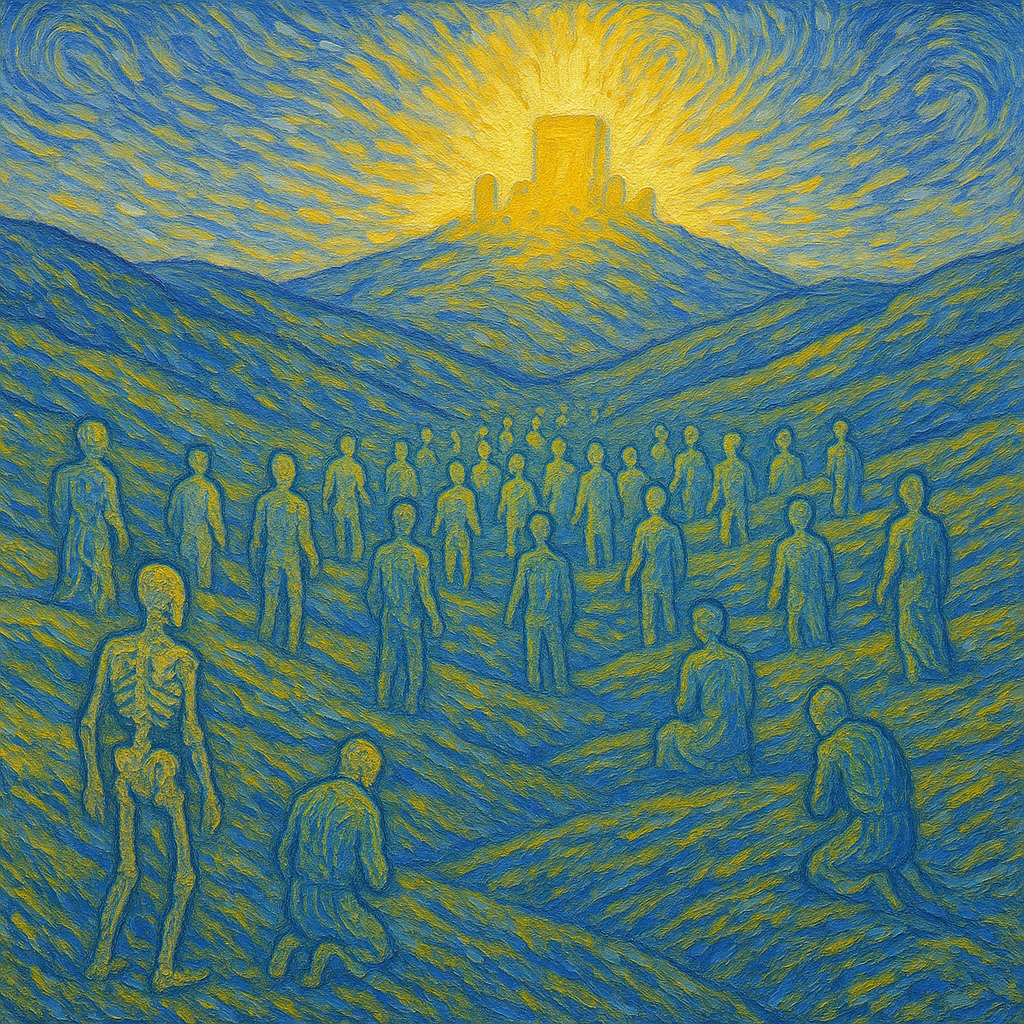
What happens after the Millennium? Discover "The Eighth Day"—the final step in God’s plan that offers every human being who ever lived a fair and just opportunity for salvation. Explore the mystery of the Great White Throne Judgment and the moment death itself is defeated forever.
What to Know
What It Is – The Eighth Day, also called The Last Great Day, is a separate and distinct holy day that follows the seven days of The Feast of Tabernacles (Leviticus 23:36). Though closely connected in timing, it represents the final step in God’s redemptive plan, looking beyond the Millennial reign of Christ to the ultimate fulfillment of God’s purpose for humanity.
A Distinct Celebration of Renewal – While The Feast of Tabernacles pictures Christ’s thousand-year reign, The Eighth Day looks beyond it — to a time when all who have ever lived will be resurrected and given the opportunity to know God. It reveals God’s perfect justice and mercy, offering salvation to all and symbolizing the completion of His plan for mankind.
Biblical and Spiritual Meaning – The number eight in Scripture signifies new beginnings and eternal life. Circumcision on the eighth day (Genesis 17:12) and the dedication of the Tabernacle after seven days of preparation both point to renewal and covenant relationship. Likewise, The Eighth Day symbolizes the ultimate renewal of creation and the beginning of eternal fellowship between God and His redeemed family.
Resurrection and Judgment – In Revelation 20:11–15, The Eighth Day corresponds to the Great White Throne Judgment, when the dead are raised and judged according to their works. This time reveals God’s fairness and mercy, granting every person the chance to know Him. When this judgment is complete, sin and death are eradicated forever — “Death and Hades were cast into the lake of fire” (Revelation 20:14).
God Dwelling with Humanity – The Eighth Day culminates in the vision of Revelation 21:1–4, where God the Father Himself comes to dwell — literally to “tabernacle” — with humanity. For the first time, both the Father and the Son live eternally with their redeemed family. This marks the completion of God’s plan, when sorrow, pain, and death are no more.
Spiritual Meaning for Believers Today – The Eighth Day celebrates the hope of final redemption, the end of sin and death, and the eternal unity of God and His people. It reminds believers of God’s desire “to bring many sons to glory” (Hebrews 2:10) and of His promise to make all things new. Far from being an ancient custom, it points to the ultimate renewal of creation and the everlasting joy of dwelling with God forever.
Just as Passover and the Days of Unleavened Bread are often perceived as one continuous celebration, a similar misconception occurs with The Feast of Tabernacles and The Eighth Day, also known as the Last Great Day. Despite their close timing, The Eighth Day is a distinct holy day, separate from the Feast of Tabernacles, and holds profound and special significance as it symbolizes the final step in God’s redemptive plan for humanity.
While many Christians are either unfamiliar with The Eighth Day or dismiss it as merely a Jewish tradition or holy day, The Eighth Day uniquely reveals the culmination of God’s plan, emphasizing His justice, fairness, and mercy to all humanity. Unlike mainstream Christian teachings, The Eighth Day highlights God’s comprehensive plan for salvation, offering the hope of resurrection and the opportunity for eternal life to all who choose His way. Observing this day allows believers to reflect deeply on the hope it represents, the inclusivity of God’s Kingdom, and the final fulfillment of His redemptive work for humanity.
The Eighth Day, like the other holy days, is introduced in Leviticus 23:36, where it is described as a sacred assembly following the seven-day Feast of Tabernacles. However, unlike other holy days that often commemorate historical events or agricultural milestones in the Old Testament, The Eighth Day exclusively points toward the future, symbolizing the completion of God’s plan for humanity. It is a day of solemn reflection and rejoicing, distinct from the preceding Feasts and set apart as a unique celebration in God’s holy calendar.
The number eight holds profound symbolic meaning in the Bible, often representing new beginnings, renewal, and eternal life. For instance, circumcision, the sign of God’s covenant with Abraham, was performed on the eighth day (Genesis 17:12), signifying entry into a covenant relationship with God. Similarly, the Tabernacle was dedicated to God on the eighth day following seven days of preparation, a concept mirrored by the preceding Feast of Tabernacles. The Eighth Day, or Last Great Day, therefore, encapsulates the ultimate renewal of creation and the establishment of an eternal relationship between God and all humanity. This holy day reminds believers of God’s promise to complete His redemptive work, offering hope and assurance of a future where His presence and Kingdom are fully realized.
The deeper significance of The Eighth Day becomes evident in the New Testament, where it is closely tied to themes of resurrection, judgment, and the ultimate fulfillment of God’s redemptive plan. In Revelation 20:11-15, the apostle John describes the Great White Throne Judgment, where all the dead are resurrected and judged according to their deeds. This pivotal event occurs after Christ’s millennial reign, symbolizing the final phase of God’s plan for humanity. The Eighth Day represents this monumental resurrection and judgment, offering those who have never had the opportunity to know God the chance to learn His ways and choose salvation. This period underscores God’s perfect justice and mercy, granting all humanity the opportunity to be reconciled to Him.
Following this judgement, the Bible makes clear that sin and its influence will be entirely eradicated from God’s renewed creation. Revelation 20:11-15 reveals that those whose names are not found in the Book of Life are cast into the lake of fire, along with Death and Hades, symbolizing the second death. Earlier, Satan — the original instigator of sin — is also thrown into the lake of fire (Revelation 20:10). With the removal of Satan and unrepentant sinners, no source will remain to perpetuate sin. This is further supported in the description of the New Jerusalem in Revelation 21:27, which states, “But there shall by no means enter it anything that defiles, or causes an abomination or a lie.” Additionally, Revelation 22:3 declares, “And there shall be no more curse,” referring to the curse introduced by sin in Genesis 3:17–19.
For the first time since the fall of man, sin and its curse will no longer exist in any form. The wages of sin is death (Romans 6:23); and with death itself cast into the lake of fire, the very evidence of sin’s existence will vanish forever. Freed from corruption, creation will at last reflect the perfect righteousness and eternal life that God intended from the beginning.
The connection between The Eighth Day and resurrection is also highlighted in John 7:37-39, where Jesus stood on the final day of the Feast of Tabernacles and declared, “If anyone thirsts, let him come to Me and drink. Whoever believes in Me, as the Scripture has said, ‘Out of his heart will flow rivers of living water.’” John clarifies that Jesus was referring to the Holy Spirit, which would later be given to believers. This powerful declaration on the final day of the Feast of Tabernacles connects to The Eighth Day. It prophesied that God’s Spirit would be poured out on all flesh (Joel 2:28-29), enabling all humanity to come to a saving knowledge of God. The imagery of living water reflects the ultimate fulfillment of God’s plan: a time when spiritual thirst will be quenched, and humanity will dwell in perfect harmony with God.
The prophetic significance of The Eighth Day reaches far beyond resurrection and judgment — it points to the ultimate fulfillment of God’s plan: the creation of a new heaven and a new earth. In Revelation 21:1–4, John describes a breathtaking vision of the New Jerusalem, where God the Father Himself will finally come down to dwell — literally to “tabernacle” — with humanity. No longer will His presence be mediated solely through Jesus Christ; rather, both the Father and the Son will dwell together with their redeemed people.
“Behold, the tabernacle of God is with men, and He will dwell with them, and they shall be His people, and God Himself will be with them and be their God.” This marks the first time the Father personally dwells with His spiritual family, completing His divine purpose to live among His children forever.
“He will wipe away every tear from their eyes, and death shall be no more; neither shall there be mourning, nor crying, nor pain anymore, for the former things have passed away.”
The Eighth Day thus represents this final renewal — when sin and death are completely eradicated, the curse is lifted, and God’s Kingdom is fully established as both the Father and Christ share their eternal presence with humanity. Jesus Christ Himself alluded to this ultimate relationship in John 17:3, declaring, “This is eternal life, that they may know You, the only true God, and Jesus Christ whom You have sent.”
The Eighth Day celebrates the culmination of God’s redemptive plan and the dawn of a new chapter in His relationship with humanity. The apostle Paul captures this transition in 1 Corinthians 15:24–28, where he explains: “Then comes the end, when He [Christ] delivers the Kingdom to the Father after destroying every rule and every authority and power. For He must reign until He has put all enemies under His feet. The last enemy to be destroyed is death.” When all things are finally subdued under Christ’s authority, He will deliver the perfected Kingdom to the Father, “that God may be all in all.”
John’s vision in Revelation harmonizes perfectly with Paul’s words. In Revelation 20:14, John records, “Then Death and Hades were cast into the lake of fire,” signifying the complete and final defeat of death. At that moment, all things are placed under Christ’s dominion and then presented to the Father. Finally, as Revelation 21:3 declares, “God Himself will be with them and be their God,” revealing the eternal union between God and humanity — a relationship perfected in love, peace, and everlasting life.
The Eighth Day celebrates this ultimate renewal, the final victory over sin and death, and the beginning of an everlasting relationship with God. It encapsulates the hope, promise, and fulfillment of God’s redemptive plan.
The Eighth Day stands as the crowning jewel of God’s redemptive plan, symbolizing the fulfillment of His purpose to bring salvation to all humanity and restore creation to its intended glory. Far from being an outdated Jewish holy day, The Eighth Day encapsulates the culmination of the profound themes woven throughout God’s holy days: redemption through the Passover; sanctification through The Days of Unleavened Bread; empowerment through the giving of the Holy Spirit at Pentecost; judgment through the Feast of Trumpets; atonement through the Day of Atonement; and restoration and joy through The Feast of Tabernacles. The Eighth Day unites these elements, pointing to the final realization of God’s eternal plan— a state of everlasting peace and joy where all of creation will dwell in harmony with its Creator.
No other religion offers a concept as extraordinary as The Eighth Day — a divine symbol of fairness, justice, and opportunity, extending God’s invitation to every human being to become part of His family and the chance to inherit eternal life. Unlike the man-made holidays most Christians observe, which often lack spiritual depth and divine mandate, God’s holy days — including The Eighth Day — are commanded by God and are rich with meaning. They not only provide believers with an opportunity to reflect on God’s redemptive plan, but also invites them to actively participate in it, rehearsing the steps of salvation and transformation year after year.
The Eighth Day (and all the other Feasts of God) is more than just a celebration; it is a profound declaration of God’s justice, mercy, and love, offering a hope that no other faith or philosophy can match. The Eighth Day points to the ultimate fulfillment of God’s promise to “bring many sons to glory” (Hebrews 2:10) and to establish His eternal Kingdom where righteousness and peace will reign. As followers of Christ, we are called not to dismiss these holy days, but to embrace them as a living expression of our faith and a reminder of the glorious future that awaits all who choose God’s way. The Eighth Day is not merely a commandment — it is an unparalleled gift, an invitation to rejoice in the boundless hope of God’s eternal plan.

THE FEAST OF TABERNACLES
Why did Jesus Christ "pitch His tent" among us? Discover the joy of the Feast of Tabernacles—the seven-day celebration of God’s dwelling with man.
What to Know
What It Is – The Feast of Tabernacles (Sukkot) is a seven-day feast beginning on the fifteenth day of the seventh month (Leviticus 23:33–43). It is the most joyous of God’s appointed times, celebrating His provision, presence, and the ultimate hope of His Kingdom.
A Time of Rejoicing and Thanksgiving – God commands His people to rejoice during the Feast of Tabernacles (Leviticus 23:40; Deuteronomy 16:13–15). It marked the final harvest of the year and reminded Israel of God’s faithful provision during their wilderness journey, when they lived in temporary shelters and depended completely on Him.
God’s Presence Among His People – The Feast of Tabernacles commemorates God’s desire to dwell with His people. The Tabernacle in the wilderness symbolized His presence, later fulfilled through Jesus Christ, who “became flesh and dwelt [tabernacled] among us” (John 1:14). Through Him, God’s presence is no longer distant but personal and transformative.
Prophetic Meaning – The Feast of Tabernacles points to the coming Kingdom of God, when Christ will reign on Earth and all nations will worship Him. Zechariah 14:16–19 and Ezekiel 45:25 reveal that this Feast will be observed during the Millennial Reign of Christ, symbolizing the unity and peace of all humanity under His rule.
Foreshadowing God’s Eternal Kingdom – The Feast of Tabernacles looks forward to the ultimate fulfillment of God’s promise: “Behold, the dwelling place of God is with man” (Revelation 21:3). It represents the time when sin, sorrow, and death will be no more, and God will dwell eternally with His redeemed creation.
A Lesson in Temporary Dwelling – By living in booths, believers are reminded of life’s temporary nature and their dependence on God. As Hebrews 11:13–16 teaches, God’s people are “strangers and pilgrims on the earth,” looking toward a better, heavenly country and the permanence of God’s eternal Kingdom.
Spiritual Meaning for Believers Today – The Feast of Tabernacles invites followers of Christ to rejoice in God’s blessings, trust in His provision, and look forward to His ultimate return. It celebrates the coming restoration of all things and the time when God’s Kingdom will fill the earth with righteousness and peace.

The Feast of Tabernacles, or Sukkot, is described in the Bible as the most joyful of God’s appointed holy days, rich with prophetic and spiritual meaning for Christians today. The Feast of Tabernacles symbolizes God’s provision, His abiding presence, and His ultimate plan to dwell with His people. While many Christians today regard the Feast of Tabernacles as merely a Jewish custom or outdated under the New Covenant, it is in fact central to God’s receptive plan for all humanity - foreshadowing the establishment of Jesus Christ’s Kingdom as prophesied throughout Scripture. Observing the Feast of Tabernacles provides a powerful opportunity to express gratitude, celebrate God’s blessings, and look forward to the glorious future of His Kingdom when His presence will dwell with us forever.
The Feast of Tabernacles, introduced in Leviticus 23:33-43, is a seven-day Feast and celebration beginning on the 15th day of the seventh month. In the Old Testament, this Feast marked the end of the agricultural year, celebrating the final harvest and God’s abundant provision for the Israelites. It was also a time for the nation to remember and reflect on their wilderness journey, during which they lived in temporary shelters and relied entirely on God for their sustenance. As part of this observance, God instructed His people to dwell in booths (temporary structures) during the Feast of Tabernacles as a reminder of their dependence on Him and His faithfulness in delivering them from Egypt and sustaining them in the wilderness. Furthermore, God commanded that this Feast be a time of rejoicing and thanksgiving, as seen in Leviticus 23:40 and Deuteronomy 16:13-15, emphasizing the joy and gratitude for His blessings.
The Feast of Tabernacles carries a deeper meaning in the Old Testament, centering on God’s presence with His people. The wilderness journey not only tested the Israelites’ faith, but also demonstrated God’s desire to dwell among them. The Tabernacle, or tent of meeting, was a temporary structure that symbolized His presence during this time (Exodus 25:8-9). Later, this temporary dwelling was replaced by the permanent Temple built by Solomon, as Solomon declared in 1 Kings 8:13, “I have surely built You an exalted house, and a place for You to dwell in forever.” The Feast of Tabernacles, therefore, celebrates the reality that God is not distant, but intimately involved in the lives of His people. It also serves as a powerful reminder of the temporary nature of earthly life and the importance of trusting in God’s eternal promises.
In the New Testament, the Feast of Tabernacles takes on even greater significance through its connection to Jesus Christ and the future Kingdom of God. John 1:14 uses imagery tied to the Tabernacle to describe Christ’s incarnation: “The Word became flesh and made His dwelling among us.” The Greek word for “dwelling” (skēnoō) means “to pitch a tent” or “tabernacle.” This language illustrates that Jesus Christ, the Word, “tabernacled” among humanity, directly linking Him to the Old Testament Tabernacle. This verse reveals that Jesus, as the fulfillment of God’s presence with His people, embodies the ultimate meaning of the Feast of Tabernacles. Through Christ, God came to dwell with humanity in a more personal and profound way than ever before.
The prophetic significance of the Feast of Tabernacles extends beyond Christ’s first coming to His return and the establishment of God’s Kingdom on Earth. Zechariah 14:16-19 prophesies that all nations will observe the Feast of Tabernacles during Christ’s millennial reign. This passage underscores that the Feast of Tabernacles is not merely a historical observance, but a timeless celebration of God’s sovereignty and His soon-coming reign. The gathering of nations to worship the King, Jesus Christ, symbolizes the unity of humanity under God’s rule and fulfills the promise of Habakkuk 2:14: “The earth shall be filled with the knowledge of the glory of the Lord, as the waters cover the sea.” Similarly, Ezekiel 45:25 confirms that the Feast of Tabernacles will be observed during God’s Kingdom: “In the seventh month, on the fifteenth day of the month (the Feast of Tabernacles), He [the prince of Jesus Christ] shall do likewise for seven days, according to the sin offering, the burnt offering, the grain offering, and the oil.” These prophetic passages affirm the ongoing relevance of the Feast of Tabernacles in God’s redemptive plan.
The New Testament further associates the Feast of Tabernacles with the ultimate restoration of all things and God’s eternal dwelling with humanity. Revelation 21:3 describes the culmination of this plan: “Behold, the dwelling place of God is with man. He will dwell with them, and they will be His people, and God Himself will be with them as their God.” This vision of the New Jerusalem, where God permanently “tabernacles” with His people, reflects the core themes of the Feast of Tabernacles — God’s presence, provision, and eternal relationship with His people. Observing the Feast of Tabernacles allows believers to look forward to this future reality, aligning their lives with the hope and joy of God’s soon coming Kingdom. It serves as a reminder of His faithfulness and His desire to dwell with humanity forever.
The Feast of Tabernacles also presents a fascinating paradox to consider: while God’s Kingdom is described as everlasting — “an everlasting dominion, which shall not pass away, and His Kingdom the one which shall not be destroyed” (Daniel 7:14 ) — God commands this Feast to be kept in “booths” or “temporary dwellings” (Leviticus 23:42-43). This apparent paradox carries a profound lesson about the transient nature of earthly life. By dwelling in temporary shelters, believers are reminded of their dependence on God and the fleeting nature of human existence.
Hebrews 11:13-16 highlights this perspective, describing the faithful as “strangers and exiles on the earth,” who long for “a better, heavenly country.” The Feast of Tabernacles encourages believers to embrace this mindset, living as sojourners who trust in God’s provision and remain focused on His eternal promise of dwelling with His people forever. It serves as a call to prioritize spiritual over worldly pursuits, fostering a sense of reliance on God and a forward-looking faith in His Kingdom.
Additionally, the Feast of Tabernacles is a time for gratitude and rejoicing. Deuteronomy 16:15 commands, “Seven days you shall keep a sacred Feast to the Lord your God in the place which the Lord chooses, because the Lord your God will bless you in all your produce and in all the work of your hands, so that you surely rejoice.” This command to rejoice while keeping the Feast of Tabernacles can also be seen in other Scriptures such as Leviticus 23:40 and Nehemiah 8:17-18. Through this celebration, followers of Christ are encouraged to reflect on God’s blessings and provision, cultivating a heart of joy and thanksgiving while looking ahead to the ultimate fulfillment of His promises and Kingdom.
The Feast of Tabernacles offers believers today a unique opportunity to rejoice in their hope in Jesus Christ, trust in God’s provisions, and anticipate the glorious day when God will dwell with His people forever. This Feast symbolizes a pivotal step in God’s redemptive plan: the time when God’s firstfruits will reign with Him in His Kingdom, preparing for the soon coming time that all humanity will be given the chance to know and accept the true God. It points to the fulfillment of God’s promise to restore creation and to bring peace and unity under His eternal Kingdom.
As we see in Zechariah 14:16-19, the Feast of Tabernacles will be kept during Christ’s millennial reign, with all nations gathering to worship the King. But if this Feast is so central to God’s future Kingdom, why wouldn’t true Christians rejoice in it now? Why wait to honor a day that vividly foreshadows God’s promise to dwell with humanity forever? If the nations will one day be commanded to keep it, shouldn’t followers of Christ choose to do so today willingly - out of love, faith, and anticipation of His return?
By celebrating the Feast of Tabernacles now, we declare our allegiance to the coming Kingdom of God and align our lives with God’s eternal plan. Isn’t that the very essence of living faith?

THE DAY OF ATONEMENT
Forgiveness is only half the story—sin must also be removed. Discover the mystery of the "Azazel Goat" and why the Day of Atonement is the prophetic blueprint for the binding of Satan and the total reconciliation of humanity to God.
What to Know
What it is – The Day of Atonement (Yom Kippur) is one of God’s most solemn appointed times (Leviticus 16; 23:26–32). It is a day of fasting, repentance, and reconciliation, marked by the high priest entering the Holy of Holies once a year and the unique ceremony of two goats.
Atonement and Cleansing – Scripture declares its purpose: “For on this day shall atonement be made for you, to cleanse you; you shall be clean before the Lord from all your sins” (Leviticus 16:30).
The Day of Atonement represents God’s justice in addressing sin and His mercy in providing forgiveness and purification.The Two Goats – One goat was sacrificed as a sin offering, while the other (the Azazel goat) symbolically carried the sins of the people into the wilderness (Leviticus 16:7–10, 21–22). This dual imagery points to both atonement through blood and the ultimate removal of sin.
Prophetic Meaning – The Azazel goat foreshadows Satan’s ultimate removal and accountability (John 8:44; 1 John 3:8; Revelation 20:1–3). The “fit man” ensures its permanent separation, symbolizing the final eradication of sin from God’s creation.
Christ’s Fulfillment – The New Testament shows that Jesus Christ is our great High Priest (Hebrews 9:11–12). Unlike earthly priests, He entered the heavenly sanctuary with His own blood, providing eternal redemption and continual intercession for believers (Hebrews 4:15).
Fasting and Repentance – The Day of Atonement is uniquely commanded as a time to “afflict your souls” (Leviticus 23:27), understood as fasting (Psalm 35:13; Ezra 8:21). God calls for this humility to produce transformation and justice (Isaiah 58:6–7).
Call to Repentance and Renewal – The Day of Atonement emphasizes deep self-examination and turning to God (Acts 3:19; 2 Peter 3:9). It points beyond personal redemption to the future reconciliation of all humanity.
Global Significance – This day foreshadows the time when sin, Satan’s influence, and the effects of the Fall will be removed, paving the way for God’s Kingdom of righteousness and peace.

The Day of Atonement, known as Yom Kippur in Hebrew, is one of the most solemn holy days in God’s calendar. While many Christians today may view it as an outdated Jewish custom, a closer examination reveals its deep relevance and importance for Christians even now. Observing this Day of Atonement offers profound insights into God’s justice, mercy, and His ultimate plan to reconcile humanity to Himself.
The Day of Atonement is first introduced in Leviticus 16, where God commands the Israelites to observe this sacred day for repentance and ritual purification. It is marked by fasting — abstaining from food and water for 24 hours, from sunset to sunset — and by the high priest’s entrance into the Most Holy Place (or Holy of Holies) of the Tabernacle or Temple, the only day of the year that the high priest was allowed to enter. On this day, the high priest also made atonement for the sins of the people. Central to this observance were two goats chosen by lot: one to be sacrificed to the Lord and the other, the Azazel goat, to bear the sins of the people and be sent into the wilderness (Leviticus 16:7-10). This dual ceremony symbolized both the forgiveness of sin and its removal from the community.
The purpose of the Day of Atonement is beautifully summarized in Leviticus 16:30: “For on this day shall atonement be made for you to cleanse you. You shall be clean before the Lord from all your sins.” This holy day represents God’s deep desire to purify His people and all humanity, offering a powerful reminder of His justice in addressing sin and His mercy in providing a path for reconciliation. Far from being merely a Jewish tradition or relic of the past, the Day of Atonement holds timeless significance for followers of Christ today, inviting reflection on God’s redemptive plan through Jesus Christ.
The deeper significance of the Day of Atonement lies in its dual themes of atonement and reconciliation. Atonement, achieved through the shedding of blood, reflects the biblical principle that “without the shedding of blood there is no forgiveness of sins” (Hebrews 9:22). This principle is vividly illustrated in Leviticus 16, where two goats stand at the heart of the Day of Atonement ceremony. One goat is sacrificed to the Lord as a sin offering, symbolizing atonement through blood, while the Azazel goat is sent into the wilderness, bearing the sins of the people. The identity and symbolism of the Azazel goat have sparked much debate, with significant evidence pointing to it representing Satan.
The Azazel goat’s prophetic symbolism focuses on the ultimate removal of sin and its effects from God’s creation. Satan, as the source of sin and rebellion, bears ultimate responsibility for the sins he introduced into the world. Jesus Christ identifies Satan as the “father of lies” in John 8:44, saying, “He was a murderer from the beginning, not holding to the truth, for there is no truth in him. When he lies, he speaks his native language, for he is a liar and the father of lies.” Furthermore, 1 John 3:8 describes Satan as the instigator of sin, reinforcing the idea that the Azazel goat symbolizes Satan’s eventual accountability. The goat’s banishment into the wilderness in Leviticus 16:21-22 parallels the prophetic scene in Revelation 20:1-3, where Satan is bound and removed at Christ’s second coming, ensuring he can no longer deceive the nations. This event occurs after Christ’s return, represented by the Feast of Trumpets, and aligns with the timing of the Day of Atonement in God’s biblical holy days.
An intriguing detail of the Day of Atonement ceremony is the role of the "fit man" or "suitable man" tasked with leading the Azazel goat into the wilderness. Leviticus 16:21 explains that after Aaron lays all the iniquities, transgressions, and sins of the people on the Azazel goat, this individual ensures its removal to an uninhabited place, symbolizing the complete separation of sin from the community. This "fit man" plays a critical role in the ceremony’s fulfillment, emphasizing the thoroughness of God’s plan to remove sin. If this "fit man" is divinely appointed, it reinforces the interpretation that the Azazel goat represents Satan. The deliberate and permanent removal of the Azazel goat underscores the eventual eradication of sin, symbolizing Satan’s ultimate fate when God’s justice is fully executed.
This understanding of the Azazel goat, the Day of Atonement, and its prophetic fulfillment provides profound insight into God’s redemptive plan. The ceremony not only emphasizes atonement and cleansing, but also foreshadows the ultimate removal of sin and its source, culminating in the establishment of God’s Kingdom of righteousness and peace.
In the New Testament, the Day of Atonement - like all of God’s appointed Feasts - finds its ultimate fulfillment in Jesus Christ, who servers as our great High Priest. The book of Hebrews reveals that Christ, unlike the earthly high priests, entered the heavenly sanctuary once for all, offering His own blood as the ultimate atonement for sin. Hebrews 9:11-12 declares, “But when Christ appeared as a high priest of the good things that have come, then through the greater and more perfect tent (not made with hands, that is, not of this creation) He entered once for all into the holy places, not by means of the blood of goats and calves but by means of His own blood, thus securing eternal redemption.” By His sacrifice, Christ fulfilled the symbolic meaning of the sacrificial goat, and by His death and resurrection, He ensured the removal of sin. Moreover, through His atoning work, access to God is no longer restricted to the high priest entering the Holy of Holies once a year. Now, believers have a greater High Priest who intercedes for them continuously, one who “was in all points tempted as we are, yet without sin” (Hebrews 4:15).
The Day of Atonement includes a unique command not found in other holy days. Leviticus 23:26-32 states, “It shall be a holy convocation for you; you shall afflict your souls, and offer an offering made by fire to the Lord.” The phrase “afflict your souls” has been traditionally understood to mean fasting, as supported by passages such as Psalm 35:13, “I humbled my soul with fasting,” and Ezra 8:21. This act of fasting symbolizes humility, repentance, and seeking atonement before God. However, fasting alone is not the ultimate goal. As Isaiah 58:6-7 teaches, God desires that this fast lead to a transformation of character: “Is this not the fast that I have chosen: to loose the bonds of wickedness, to undo the heavy burdens, to let the oppressed go free, and that you break every yoke? Is it not to share your bread with the hungry, and that you bring to your house the poor who are cast out; when you see the naked, that you cover him, and not hide yourself from your own flesh?”
This call to repentance is reiterated throughout the New Testament, urging believers to examine themselves, confess their sins, and seek reconciliation with God and others. Acts 3:19 exhorts, “Repent therefore, and turn back, that your sins may be blotted out, that times of refreshing may come from the presence of the Lord.” The Day of Atonement, like Passover and the Days of Unleavened Bread, provides an opportunity for deep self-examination, repentance, and renewal. While Passover and Unleavened Bread focus on the personal redemption made possible through Christ’s sacrifice for His firstfruits (those accepting His call and following Him in this time), the Day of Atonement expands this vision to include the future redemption of all humanity. It points to the time when God’s mercy will extend to all people, fulfilling the promise of 2 Peter 3:9, “The Lord is not slack concerning His promise, as some count slackness, but is longsuffering toward us, not willing that any should perish but that all should come to repentance.”
By observing the Day of Atonement, believers reflect on God’s justice, mercy, and His ultimate plan to reconcile all of creation to Himself. It serves as a reminder of the personal and global aspects of His redemptive work, calling all to repentance and renewal in alignment with His will.
The Day of Atonement is more than an ancient ceremony — it is a divine mirror reflecting both God’s justice and His mercy. But let us ask ourselves: What does it mean that sin must not only be forgiven, but also removed? What does it say about God’s plan that even Satan, the author of lies, must one day bear responsibility for his part in humanity’s fall? And if Christ, our High Priest, has already entered the heavenly sanctuary with His own blood, are we living as those who have been cleansed, reconciled, and given direct access to God?
Isn’t this day a reminder that forgiveness without transformation is incomplete — that atonement must lead to renewal? Doesn’t it challenge us to humble ourselves, not only with fasting, but with lives marked by repentance, mercy, and justice?
As the Day of Atonement sets the stage, the future holy days build upon this promise, revealing God’s plan to restore His creation to its original intent – one of righteousness and eternal peace.

THE FEAST OF TRUMPETS
The sound of the Shofar is more than a call to worship—it’s a warning. Discover why the Feast of Trumpets is the prophetic key to the Second Coming and the "Last Trumpet."
What to Know
What it is - An appointed Feast with prophetic significance, The Feast of Trumpets (Leviticus 23:23–25; Numbers 29:1–6) begins the fall holy days and marks the beginning of the fall harvest. It is marked by the blowing of the shofar, rest from work, and sacred assembly. It reveals God’s intervention in history, His call to repentance, and His promise to establish His Kingdom.
Trumpets and Their Meaning - In the Old Testament, trumpets signaled worship, assembly, danger, and kingship. Spiritually, they serve as a divine wake-up call, warning of the Day of the Lord (Joel 2:1). The watchman principle in Ezekiel 33 shows believers’ responsibility to sound the warning.
A Call to Vigilance and Mission - Jesus Christ and Paul stressed watchfulness (Matthew 24:42; 2 Timothy 4:5). Believers are spiritual watchmen, tasked with proclaiming the Gospel and preparing the world for Christ’s return (Matthew 28:16–20; Acts 20:26–27).
Resurrection and Christ’s Return - Paul links the Feast to the resurrection at the last trumpet
(1 Corinthians 15:51–52; 1 Thessalonians 4:16–17). The trumpet announces Christ’s return and the transformation of believers.Revelation’s Trumpet Judgments - The seven trumpets (Revelation 8–11) mark God’s direct intervention. The seventh trumpet proclaims Christ’s eternal reign (Revelation 11:15), fulfilling God’s promises and establishing His everlasting Kingdom.
Personal and Spiritual Message - The Feast of Trumpets calls for repentance, self-examination, and readiness. The bowed heads of ripe wheat picture all humanity bowing before Christ at His triumphant return (Luke 19:38).
Still Relevant Today - Unlike man-made holidays, the Feast of Trumpets is biblically ordained.
It points believers to Christ’s second coming, the hope of resurrection, and the fulfillment of God’s plan.

The Feast of Trumpets, or Yom Teruah in Hebrew, is the first of God’s appointed holy days in the fall season and marks the beginning of the fall harvest. Like God’s other Biblical feasts, this holy day is often overlooked, yet it holds profound prophetic and spiritual significance, offering insights into God’s ultimate plan for humanity. Like all of God’s appointed Feasts, the Feast of Trumpets is introduced in the Old Testament and finds its ultimate meaning and fulfillment through New Testament revelation. The Feast of Trumpets reveals God’s intervention in human history, His call for repentance, and the climactic events that lead to the establishment of His eternal Kingdom. Observing the Feast of Trumpets is far from an antiquated ritual or merely a Jewish tradition — it is an acknowledgment of God’s sovereignty, a celebration of His redemptive work, and a vital reminder of His promise to return and establish His everlasting Kingdom.
The foundation of the Feast of Trumpets is found in Leviticus 23:23-25, where God commanded the Israelites to observe a sacred assembly on the first day of the seventh month. This day was marked by the blowing of trumpets, a rest from customary work, and the offering of sacrifices. Numbers 29:1-6 provides further details, emphasizing the central role of the shofar (ram’s horn) in this holy day’s observance. In the Old Testament — and in ancient cultures more broadly — the blowing of trumpets served several purposes: as a call to worship, a signal for assembly, a warning of impending danger, and a proclamation of kingship. These functions highlight the multifaceted symbolism of the Feast of Trumpets and point to its ultimate prophetic fulfillment in God’s redemptive plan.
The Feast of Trumpets carries a profound message, serving as a divine wake-up call for repentance and spiritual vigilance. This theme resonates throughout the Old Testament, where the blowing of trumpets signified God’s intervention in human affairs. Joel 2:1 declares, “Blow the trumpet in Zion; sound the alarm on my holy hill. Let all who live in the land tremble, for the day of the Lord is coming. It is close at hand.” The trumpet’s sound serves as a call to prepare for the Day of the Lord — a time of judgment and redemption that will mark the end of humanity’s rule on Earth and the establishment of God’s Kingdom.
This concept is further illustrated in Ezekiel 33:1-9, where God appoints Ezekiel as a watchman responsible for warning the people of impending danger. If the watchman fails to sound the trumpet and calamity strikes, the people’s blood will be on his hands. Conversely, if he warns them and they ignore the warning, they bear the responsibility for their own fate. While this principle originates in the Old Testament, its application extends into the New Testament, shedding light on one of the Feast of Trumpets' deeper meanings.
In the Gospels, Jesus Christ frequently emphasized the need for vigilance. Matthew 24:42 states, “Watch therefore, for you do not know what hour your Lord is coming.” Similarly, Paul exhorts believers in 2 Timothy 4:5 to “be watchful in all things.” Followers of Jesus Christ are called not only to proclaim the Gospel, as commanded in Matthew 28:16-20, but also to warn the world of Christ’s return and the approaching Day of the Lord. Like the trumpet in Joel 2:1, which signals alarm for the Day of the Lord, believers are to "blow the trumpet" by preaching repentance and salvation through Jesus Christ. Neglecting this duty is akin to the watchman failing to sound the alarm.
Paul underscores this responsibility in Acts 20:26-27, saying, “I am innocent of the blood of all men. For I have not shunned to declare to you the whole counsel of God.” This highlights the dual role of believers as proclaimers of the Gospel and spiritual watchmen, tasked with preparing the world for Christ’s return. The Feast of Trumpets, therefore, is not just a historical observance but a call to action, reminding believers of their privilege and responsibility to remain vigilant, share the message of salvation, and sound the warning of the coming Kingdom of God. This deeper understanding ties the Feast of Trumpets to God’s ultimate plan of redemption, making it a vital and relevant observance for believers today.
In the New Testament, the Feast of Trumpets gains further significance through its connection to Christ’s second coming and the events of the end times. The apostle Paul links the sound of the trumpet to the resurrection of the dead and the transformation of believers at Christ’s return. In 1 Corinthians 15:51-52, he writes, “Listen, I tell you a mystery: We will not all sleep, but we will all be changed — in a flash, in the twinkling of an eye, at the last trumpet. For the trumpet will sound, the dead will be raised imperishable, and we will be changed.” Similarly, 1 Thessalonians 4:16-17 describes, “The Lord himself will come down from heaven, with a loud command, with the voice of the archangel and with the trumpet call of God. And the dead in Christ will rise first.” These passages emphasize the Feast of Trumpets’ connection to the hope of resurrection to eternal life, the return of Christ, and the ultimate fulfillment of God’s promises, made possible only by Christ’s death and resurrection.
The book of Revelation amplifies the prophetic significance of this Feast, particularly through the seven trumpet judgments that lead up to Christ’s triumphant return. These events, recorded in Revelation 8-11, mark God’s direct intervention in human history, culminating in the establishment of His Kingdom. Revelation 11:15 proclaims, “The seventh angel sounded his trumpet, and there were loud voices in heaven, which said: ‘The kingdom of the world has become the Kingdom of our Lord and of His Messiah, and He will reign for ever and ever.’” The blowing of the seventh trumpet signals the climax of God’s plan, where His sovereignty is fully realized, His promises fulfilled, and His people avenged (Revelation 6:9-10). Observing the Feast of Trumpets invites believers to reflect on these momentous events and look forward to the day when God’s Kingdom will be established on Earth.
The Feast of Trumpets carries a deeply personal and practical message for followers of Christ today. It calls followers to examine their lives, turn from sin, and remain spiritually alert. Just as ripened wheat bends low under the weight of its fullness, signaling its readiness for harvest, so too will all humanity bow when God’s great harvest of the Earth is complete. This holy day looks ahead to the time when not only God’s people, but the entire world, will acknowledge Christ’s sovereignty at His triumphant return.
The Gospels record how the crowds honored Jesus at His first coming - spreading cloaks and branches on the road and shouting, “Hosanna to the Son of David! Blessed is He who comes in the name of the Lord!” (Matthew 21:8-10). In an even greater way, the redeemed together with all nations, will bow before Him at His second coming. The bowed heads of the wheat offer a vivid picture of this moment: the harvest is ripe and ready, the faithful bend low in reverence, and the King returns to establish His everlasting Kingdom. The Feast of Trumpets is therefore both a wake-up call to readiness and a prophetic reminder of the day when all creation will recognize and submit to Christ’s reign.
Unlike man-made holidays such as Easter, Halloween, or Christmas — traditions without biblical foundation — the Feast of Trumpets stands on the unshakable ground of Scripture. It proclaims the ultimate hope of Christ’s triumphant return and the establishment of His everlasting Kingdom. But let us ask ourselves: If this day reveals God’s plan for the redemption of all humanity, can any mainstream holiday compare to its meaning? If God Himself ordained this holy day, why would we cling to traditions of men that neither point to Christ’s return nor carry His authority? Isn’t it far more powerful to celebrate a Feast that not only looks back to His promises, but also points forward to His ultimate victory? The Feast of Trumpets, like all of God’s holy days, challenges us: Which will we choose to honor — the fleeting customs of this world, or the eternal plan of God?

THE FEAST OF WEEKS - PENTECOST
From the fire of Sinai to the tongues of Acts 2, Pentecost is the day God writes His Law on the human heart. Discover the "50-day count" from the empty tomb and why the "Firstfruits" of the wheat harvest represent the empowerment of every believer today.
What to Know
An Appointed Feast with Lasting Meaning: Pentecost (the Feast of Weeks or Shavuot) is one of God’s everlasting holy days as outlined in Leviticus 23:15–21, celebrated 50 days after the Wave Sheaf Offering. It marks the firstfruits of the wheat harvest and reveals key aspects of God’s covenant and redemptive plan.
Firstfruits and Resurrection Hope: Pentecost’s link to the wheat harvest points to believers as God’s firstfruits (Matthew 13:24–30; Revelation 14:4). This harvest is only possible through Christ, the “First of the Firstfruits,” who guarantees our future resurrection (1 Corinthians 15:20–23).
The Spirit Given, the Church Born: In Acts 2, God poured out His Holy Spirit on the disciples, empowering them to speak in many languages and preach boldly. This moment marked the birth of the New Testament Church and the fulfillment of Joel’s prophecy (Joel 2:28–32).
Covenantal Continuity: Just as God gave the Law at Sinai amid fire, smoke, and wind (Exodus 19–20), He gave His Spirit with similar signs on Pentecost. The Feast celebrates both covenants — the Law written on stone and now on hearts (Jeremiah 31:33).
Power for Mission and Transformation: God’s Holy Spirit equips believers to live righteously, bear spiritual fruit, and fulfill Christ’s mission to the world (Acts 1:8; Galatians 5:22–23). Pentecost reminds us that God’s power works within us to accomplish His will.
Still Observed, Still Relevant: The early Church continued to observe Pentecost (Acts 20:16), understanding its lasting purpose. It remains a call to gratitude, obedience, unity, and Spirit-filled living as we await the full harvest of God’s Kingdom.

Pentecost, also known as the Feast of Weeks or Shavuot in Hebrew, is a pivotal holy day in God’s redemptive plan for humanity, bridging the Old and New Testaments. Pentecost reveals God’s work in empowering His people and establishing His Church. While some Christians mistakenly view Pentecost as fulfilled and therefore obsolete, a closer examination of Scripture reveals Pentecost’s ongoing relevance and significance for believers today. Observing Pentecost provides us with a clear understanding of God's Spirit and its presence in all believers, empowering and guiding them from within. Pentecost also reveals the foundation of God's covenant and the Church's mission, making it a vital and enriching aspect of the believer’s faith.
In the Old Testament, Pentecost is established in Leviticus 23:15–21 as one of God’s appointed and everlasting Feasts. Celebrated 50 days after the Wave Sheaf Offering, it marked the harvest of the firstfruits of the wheat crop. This agricultural celebration carries deep spiritual meaning. In Matthew 13:24–40, Jesus compares wheat to the children of God’s Kingdom, reinforcing the symbolism.
Pentecost’s timing is inseparably linked to the Wave Sheaf Offering, underscoring that the harvest it represents — God’s firstfruits — is only possible because of Christ’s sacrifice. As the “First of the Firstfruits,” Christ’s resurrection secures the promise of eternal life and points to a future harvest of the faithful. These firstfruits, redeemed by Christ and God, are described in Revelation 14:4 as “those who follow the Lamb wherever He goes.”
On Pentecost, the Israelites were commanded to present two loaves of leavened bread, baked with the firstfruits of the wheat harvest, as a wave offering to the Lord. This act symbolized gratitude for God’s provision and acknowledged Him as the source of all blessings. Deuteronomy 16:10 highlights Pentecost as a time of thanksgiving and rejoicing for the harvest, emphasizing the relationship between God’s blessings and His people’s worship and obedience.
Beyond its agricultural significance, Pentecost also holds deep covenantal meaning. In Jewish tradition, this day is associated with the giving of the Law at Mount Sinai. Fifty days after the Israelites’ exodus from Egypt, God entered into a covenant with His people, giving them His commandments (Exodus 19-20). This momentous event was marked by awe-inspiring manifestations of fire, smoke, and the sound of a loud trumpet, signifying God’s presence and His desire to dwell among His people (Exodus 20:18-21). Pentecost, therefore, is not only a celebration of the firstfruits of the wheat harvest, but also a commemoration of God’s covenant and His ongoing relationship with His people.
In the New Testament, Pentecost is fulfilled through the outpouring of God’s Spirit, marking the foundation of God’s true Church. As described in Acts 2, fifty days after Christ’s resurrection, the disciples were gathered in Jerusalem when God’s Spirit descended on them as tongues of fire. This miraculous event enabled them to speak in multiple languages, symbolizing the universal scope of the gospel and the inclusion of all nations. No longer was the gospel reserved for the Israelites alone; it was now extended to all nations, including the Gentiles.
The connection to the Old Testament Feast of Pentecost is deeply significant. Just as the giving of the Law at Mount Sinai established Israel as God’s covenant people — accompanied by fire, smoke, and a loud trumpet — the coming of God’s Spirit established the Church with signs of fire and the sound of a rushing wind. Peter’s sermon that day (Acts 2:14–41) affirmed the fulfillment of Joel’s prophecy: “I will pour out My Spirit on all flesh” (Joel 2:28–32). This moment marked the beginning of a new era in God’s redemptive plan for humanity, empowering believers to take part in His mission to the world.
The deeper meaning of Pentecost lies in its focus on God’s Spirit as the agent of transformation and empowerment. Christ had prepared His disciples for this moment, instructing them to wait for the “promise of the Father” (Acts 1:4-5) through which they would receive power to be His witnesses “to the ends of the earth” (Acts 1:8). The outpouring of God’s Spirit fulfilled this promise, equipping the disciples with boldness, wisdom, and supernatural gifts to accomplish God’s will. For believers today, Pentecost serves as a reminder of the essential role of God’s Spirit, empowering them to live righteously, share the gospel, and fulfill their God-given calling.
Pentecost also reveals the unity and inclusivity of God’s redemptive plan, a theme further expanded in the Fall holy days. The gathering of Jews from every nation in Jerusalem during this Feast (Acts 2:5-11) highlights the universal nature of the gospel and God’s desire to “make disciples of all nations” (Matthew 28:19). The miraculous ability of the disciples to speak in the languages of these diverse groups symbolized the breaking down of barriers and the extension of salvation to all people. This fulfilled God’s promise to Abraham that “all nations will be blessed” through his descendants (Genesis 12:3).
Observing Pentecost invites followers of Christ to reflect on their shared identity as members of God’s family and their mission to bring the message of reconciliation to the world. It stands as a powerful reminder of the transformative work of God’s Spirit and the inclusivity of God’s plan for humanity, inspiring believers to live out their faith with purpose and conviction.
Far from being obsolete, Pentecost is a timeless reminder of God’s ongoing work in His Church and His redemptive plan for humanity. While it marks the historical outpouring of His Spirit, it also points forward to the ultimate fulfillment of God’s promises. Ephesians 1:13-14 describes God’s Holy Spirit as the “guarantee” or “down payment” of our inheritance, signifying that Pentecost is both a celebration of what God has already accomplished and a promise of what is yet to come. This “guarantee” or “down payment” also reminds us of the Feast of the Firstfruits, that only through the giving of God’s Holy Spirit to us, can we become like Jesus Christ, and be resurrected at His second coming. As believers await Christ’s return and the full establishment of His Kingdom, Pentecost calls them to live in the power of God’s Spirit, bearing His fruits and glorifying God in their lives.
The New Testament affirms that the early Church continued to observe Pentecost, recognizing its enduring spiritual significance. Acts 20:16 notes Paul’s desire to be in Jerusalem for Pentecost, highlighting its importance as a time for worship and reflection among believers. Those who argue that Pentecost is obsolete often misunderstand its purpose. The fulfillment of Pentecost through Christ and the giving of God’s Holy Spirit does not annul its observance, but rather enhances its meaning. As Jesus Himself declared in Matthew 5:17, “Do not think that I came to destroy the Law or the Prophets. I did not come to destroy but to fulfill.”
The New Testament fulfillment of Pentecost transforms it from an agricultural and covenantal Feast into a celebration of God’s Holy Spirit’s transformative work in believers and the Church’s mission to the world. It serves as a reminder of God’s power, His faithfulness to His promises, and the role of His Spirit in guiding and equipping His people.
In conclusion, I would like for you to consider - if Pentecost is so rich with meaning — rooted in both the Old and New Testaments, tied to the outpouring of God’s Spirit to humanity, and central to God’s redemptive plan — shouldn’t true followers of Christ today embrace its observance? Why would a day that celebrates God’s Spirit and the foundation of His Church be seen as irrelevant? Isn’t Pentecost, with its profound connection to Christ and its ongoing significance, worth reflecting upon and keeping as a vital part of Christian worship?
If you’re interested in learning more about Pentecost and why this Biblical Feast should be kept both from the Bible and a historical perspective, we’ve provided additional references here for your review.

THE WAVE SHEAF OFFERING
What happened between the empty tomb and the Upper Room? Discover the "Wave Sheaf Offering"—the prophetic moment Jesus Christ ascended to the Father as the first of the spiritual harvest.
What to Know
What it is: The Wave Sheaf Offering in Leviticus 23:10-14 marked the first ripe sheaf of the barley harvest. Though it allowed normal work and required no public assembly, it formally dedicated the entire harvest to God.
Prophetic Timing: Always waved “the day after the Sabbath” during Unleavened Bread, this sheaf foreshadowed Christ’s resurrection on that very morning (John 20:17; 1 Cor 15:20-23). Jesus is “the first of the firstfruits,” guaranteeing the future resurrection of all who believe in Him.
Our Hope Established Through Jesus Christ’s Resurrection: The Wave Sheaf celebrates victory over death — Passover pictures redemption, Unleavened Bread pictures sanctification, and the Feast of Firstfruits anchors the promise of resurrection life (1 Cor 15:54-55).
Give God the First and Best: Offering the first sheaf models the principle of honoring God with the firstfruits (and best) of our wealth, time, and lives (Prov 3:9-10; Rom 12:1).
A Reminder of Our Mission: Jesus called humanity a “plentiful harvest” (Matt 9:37-38). The Feast of Firstfruits and the Wave Sheaf Offering urges believers to join that harvest work now while they await the full ingathering of God’s people (Rev 14:4).

The Wave Sheaf Offering, is a unique ceremony and sacrifice described in Leviticus 23. Unlike other Biblical Feasts, this day does not require a holy convocation, and customary work is permitted. However, these distinctions do not diminish its rich spiritual and prophetic significance. On the contrary, the Wave Sheaf Offering plays a central role in God’s redemptive plan, making it an essential memorial to reflect upon alongside His other Biblical Feasts.
Instituted in the Old Testament and fulfilled in the New Testament through Jesus Christ, the Wave Sheaf Offering represents the beginning of God’s redemptive work for humanity. This day symbolizes the presentation of the first and best to God, foreshadowing Jesus Christ as the first to be resurrected from the dead, paving the way for the ultimate harvest of the first fruits.
Far from being outdated or irrelevant, the Wave Sheaf Offering holds deep meaning for believers today. It emphasizes themes of thanksgiving for what God has already done through Jesus Christ and hope in the promise of the first resurrection, when His faithful will be gathered as His first fruits. Understanding the profound meaning of this ceremony reveals its ongoing relevance for believers who seek to align with God’s purpose and celebrate His unfolding plan of redemption.
The foundation of the Wave Sheaf Offering is detailed in Leviticus 23:10-14. God commanded the Israelites to bring the first sheaf of the barley harvest to the priest, who would wave it before the Lord as an act of dedication. This symbolic gesture represented the consecration of the entire harvest to God and was accompanied by the sacrifice of a lamb (Leviticus 23:12), along with grain and wine offerings (Leviticus 23:13). The offering of the first sheaf acknowledged God as the source of all blessings and expressed faith that He would provide the rest of the harvest.
Significantly, this ceremony occurred during the Days of Unleavened Bread, on the day after the weekly Sabbath, ensuring it always fell on the first day of the week. This timing creates an important link between the Feast of Weeks (Pentecost), the Feast of Firstfruits and the broader meaning of the Days of Unleavened Bread. That connection finds its ultimate fulfillment and deeper significance in the New Testament, revealing the prophetic and spiritual truths behind this unique ceremony.
In the New Testament, the Wave Sheaf Offering finds its ultimate fulfillment in the resurrection of Jesus Christ. Paul explicitly ties this wave sheaf ceremony to Christ’s resurrection in 1 Corinthians 15:20-23, stating: “But now Christ has been raised from the dead, the firstfruits of those who have fallen asleep. For as by a man came death, by a man has come also the resurrection of the dead. For as in Adam all die, so also in Christ shall all be made alive.” Just as the Wave Sheaf Offering was the first of the harvest and served as a guarantee of the rest, Jesus Christ’s resurrection as the “first of the firstfruits” guarantees the future resurrection of all who belong to Him.
This connection is not coincidental, as Christ’s resurrection aligns perfectly with the timing of the Wave Sheaf Offering. John 20:17 provides a glimpse into this timing when Jesus tells Mary, “Do not cling to Me, for I have not yet ascended to My Father; but go to My brethren and say to them, ‘I am ascending to My Father and your Father, and to My God and your God.’” Later that same day, as described in Luke 24:39, Jesus appears to His disciples, inviting them to “handle Me and see.” These events both occurred on the day of His resurrection.
This timing aligns with the Jewish tradition of the Wave Sheaf Offering, which took place shortly after the morning sacrifice, typically offered around 9:00 a.m. Between Christ’s appearance to Mary earlier in the morning (John 20:17) and His later appearance to the disciples (Luke 24:39), the Wave Sheaf Offering would have been presented in the Temple. This timing underscores the profound prophetic fulfillment: Jesus Christ rose from the dead on the very day of the Wave Sheaf Offering, perfectly aligning His resurrection with the ceremony’s symbolic and redemptive meaning.
The Wave Sheaf Offering also represents a critical step in God’s redemptive plan for humanity. While Passover symbolizes redemption through the blood of the Lamb and the Days of Unleavened Bread point to our ongoing need for sanctification through Jesus Christ, the Wave Sheaf Offering (and the Feast of Firstfruits) emphasize the hope and assurance of resurrection. Through His victory over death, Christ assures His followers that death is not the end. As Paul triumphantly declares in 1 Corinthians 15:54-55, “Death is swallowed up in victory. O death, where is your victory? O death, where is your sting?”
Observing the Wave Sheaf Offering allows believers to reflect on the promise of eternal life and the certainty of a future resurrection through Christ at His second coming. It serves as a reminder of the central doctrine of the believer’s faith: that Christ’s resurrection is the foundation of that hope. This ceremony not only calls for gratitude, but also deepens our understanding of God’s unfolding redemptive plan, giving assurance of the ultimate harvest when all who belong to Christ will be raised to eternal life.
The agricultural symbolism of the Wave Sheaf Offering extends beyond the resurrection of Christ to encompass the spiritual harvest of what God calls His firstfruits (the Feast of Firstfruits). In the Old Testament, the offering of the first of the firstfruits anticipated a much greater harvest yet to come. This idea is echoed in Revelation 14:4, where God’s redeemed are described as “firstfruits to God and to the Lamb.” This imagery ties the Wave Sheaf Offering to the mission of the Church that Jesus Christ established and to what He asks of His followers: laboring for the spiritual harvest of humanity.
Christ Himself used agricultural metaphors to illustrate this mission, saying in Matthew 9:37-38, “The harvest is plentiful, but the laborers are few; therefore, pray earnestly to the Lord of the harvest to send out laborers into His harvest.” The Wave Sheaf Offering, and the Feast of Firstfruits, serve as powerful reminders for believers to reflect on their role as laborers in God’s harvest. They also call believers to renew their commitment to this mission, following Christ’s example and prayer to the Father for workers to join in bringing in the harvest of souls at the end of the age. Through this Wave Sheaf Offering ceremony and the Feast of Firstfruits, believers are encouraged to align their lives with God’s redemptive purpose and to actively participate in His work of gathering His people.
Another aspect of the Wave Sheaf Offering is that it highlights the principle of offering God the first and best of what we have.
In the Old Testament, the Israelites were commanded to present the first sheaf of the barley harvest to God, acknowledging that the entire harvest belonged to Him (Leviticus 23:10-11). This principle is reinforced in Proverbs 3:9-10, which instructs believers to “honor the Lord with your wealth and with the firstfruits of all your produce.” The concept of giving the first and best to God originates at the very beginning of Scripture. In Genesis 4:4, Abel brought “of the firstlings of his flock and of their fat portions,” and as a result, “the Lord had regard for Abel and his offering.”
For believers today, this principle extends beyond material offerings to encompass their time, talents, and lives. Paul reflects on this in Romans 12:1, urging believers to present their bodies as “a living sacrifice, holy and acceptable to God,” in response to God’s mercy and Christ’s ultimate sacrifice. Jesus gave His very life so that we might have the hope of eternal life, as symbolized in the Feast of Firstfruits and the Wave Sheaf Offering.
By observing and honoring the Wave Sheaf Offering, believers proclaim a core truth of their faith: Christ is risen, and through Him, we too will rise in the resurrection at His second coming. The Wave Sheaf Offering, and the Feast of Firstfruits, serve as powerful reminders to prioritize God in all aspects of our lives, celebrating the promise of eternal life made possible through Jesus Christ.

The FEAST OF UNLEAVENED BREAD
Redemption is just the beginning. Discover why the seven-day Feast of Unleavened Bread is the "Bread of Sincerity" for every believer. Learn how the physical act of removing leaven mirrors the spiritual transformation of leaving "Egypt" behind to walk in the purity of Christ.
What to Know
• A Separate and Significant Feast: The Feast of Unleavened Bread — distinct from Passover— is a seven-day biblical observance (Leviticus 23) that highlights a different stage of God’s redemptive plan for humanity.
• Symbolism of Leaven: In Exodus 12:15–20, the removal of leaven (representing sin and false doctrine) teaches believers to pursue purity, rooting out anything that corrupts our lives or doctrine.
• Continued Relevance in Christ: Paul’s exhortation in 1 Corinthians 5:7–8 (“clean out the old leaven… let us keep the feast”) shows that these Days remain meaningful for believers, pointing us to ongoing spiritual growth after accepting Christ’s sacrifice (Passover).
• Spiritual Renewal and Righteous Living: Observing this Feast is more than a ritual — physically removing leaven mirrors our commitment to removing sin and false doctrine from our lives, thus honoring God’s call to “be holy” (1 Peter 1:16).
• Early Church Practice: Acts 20:6 confirms that New Testament believers kept these days, seeing in them a time to reflect on Jesus Christ’s sinless life (unleavened bread) and their own sanctification process.
• A Deeper Walk with God: Through the Days of Unleavened Bread, believers acknowledge Christ’s ongoing work in their lives, embracing the humility and sincerity needed to live in step with His perfect example.

The Feast (or Days) of Unleavened Bread, a seven-day Feast commanded by God in the Bible (Leviticus 23), stands as a distinct and significant observance separate from Passover. While the two are often combined into a single "Passover festival," doing so diminishes the unique spiritual meanings of both. Passover and the Feast of Unleavened Bread highlight different aspects of God’s redemptive plan. For believers today, the Feast of Unleavened Bread holds profound spiritual relevance, teaching that living a righteous life and removing sin is an ongoing and transformative process. Far from being mere ceremonial practices, these days serve as a vital part of the believer’s spiritual journey, pointing to the deeper significance of Jesus Christ's sacrifice.
The foundation of the Feast of Unleavened Bread is rooted in the Old Testament account of God delivering the Israelites from slavery in Egypt. In Exodus 12:15-20, God commanded the Israelites to eat unleavened bread for seven days and to remove all leaven from their homes. Leaven, or yeast, symbolized corruption, sin, and false doctrine, illustrating how quickly these can spread and permeate lives if left unchecked. The act of removing leaven was a physical exercise that mirrored a spiritual reality: God was not only liberating His people from physical bondage, but also calling them to leave behind the spiritual corruption, sin, and false doctrines of Egypt.
The unleavened bread, described in Deuteronomy 16:3 as the “bread of affliction,” served as a reminder of the Israelites’ dependence on God for deliverance and the urgency with which they left Egypt. It symbolized purity, humility, and the necessity of living without sin, pointing forward to The Way that believers are called to walk today. For believers today, the Days of Unleavened Bread remind us that following Christ involves continually examining our lives, purging sin and wrong ways, and striving for righteousness in an enduring relationship with God.
In the New Testament, the Days of Unleavened Bread, like all of God’s biblical holy days, find their ultimate fulfillment and deeper meaning in Jesus Christ. Just as the Israelites physically removed leaven from their homes, believers are called to remove spiritual leaven — sin and false doctrine — from their lives. The apostle Paul makes this connection explicit when addressing Gentile believers in 1 Corinthians 5:7, exhorting them to “clean out the old leaven” so that they may be a “new lump,” reflecting their new life in Jesus Christ. He continues in 1 Corinthians 5:8, “Let us therefore celebrate the festival, not with the old leaven, the leaven of malice and evil, but with the unleavened bread of sincerity and truth.” Paul’s imagery ties directly to the Feast of Unleavened Bread, underscoring its continued relevance for followers of Jesus as a time to reflect on their spiritual condition and recommit to living a life of holiness.
Notably, Paul highlights the distinct roles of Passover and the Days of Unleavened Bread in these verses. In 1 Corinthians 5:7, he connects Jesus Christ to the Passover, the ultimate sacrifice for sin. But in 1 Corinthians 5:8, he calls believers to “keep the feast”—a reference to the Days of Unleavened Bread, separate from Passover. This distinction emphasizes the unique significance of the Feast of Unleavened Bread as an opportunity for believers to examine their relationship with God and align themselves with His redemptive plan.
While the physical removal of leaven during this Feast is important, it is not the primary focus. Instead, it serves as a practical exercise in self-examination and repentance. Leaven, symbolizing sin and false doctrine, reminds believers how easily corruption can infiltrate their lives — often subtly and without notice. By physically removing leaven from their homes, believers engage in an act of obedience that mirrors the spiritual process of rooting out sin and falsehood from their hearts and minds. This aligns with God’s ongoing work of sanctification and redemption, as Paul describes in Romans 6:22: “But now that you have been set free from sin and have become slaves to God, the benefit you reap leads to holiness, and the result is eternal life.”
The Days of Unleavened Bread, therefore, provide an essential time for spiritual growth and renewal. As believers reflect on God’s call to “be holy, because I am holy” (1 Peter 1:16) and Paul’s admonition to “Imitate me, just as I also imitate Christ,” they should be reminded of the continuous journey toward righteousness and the transformative power of Jesus Christ in their lives. This Feast is not merely an ancient tradition, but a meaningful observance that encourages believers to draw closer to God and align their lives with His will.
The unleavened bread used during the Days of Unleavened Bread carries profound symbolism, pointing to Jesus Christ as the “bread of life” (John 6:35). Unlike leavened bread, which rises and puffs up, unleavened bread remains flat, reflecting humility and purity. Spiritually, it mirrors the sinless life of Jesus, who lived without pride or corruption. By eating unleavened bread daily during this Feast (Exodus 13:6), followers of Jesus Christ are reminded of their continual dependence on Him for spiritual sustenance and renewal. It is through Him alone that believers can overcome sin and live in righteousness. This connection between unleavened bread and Christ’s sinless life underscores that the Days of Unleavened Bread are not merely about abstaining from physical leaven, but about internalizing the character of Christ and striving to live as He lived.
Historically, the Bible shows that the early Church continued to observe the Days of Unleavened Bread, even after Christ’s crucifixion and resurrection. In Acts 20:6, Paul and those accompanying him were described as observing this Feast during their travels, demonstrating its continued relevance to the apostles and early Christians. This continuity affirms that the Feast was not abolished with Christ’s death, but was seen as a meaningful and necessary practice. The early Church used these days as an opportunity to reflect on Christ’s sacrifice and to recommit to living in the newness of life.
Moreover, New Testament Scriptures reveal that the apostles understood the Feast of Unleavened Bread, along with God’s other biblical feasts, as part of His appointed times established for all His people. These Feasts served as an everlasting reminder of God’s redemptive work and His call for His followers to live in righteousness and holiness. The Days of Unleavened Bread remain a powerful symbol of spiritual renewal, challenging believers to examine their lives, remove sin and falsehoods, and draw closer to Christ’s perfect example.
The Days of Unleavened Bread are theologically central to God’s redemptive plan because they symbolize the process of sanctification that follows redemption. While Passover represents deliverance through the blood of the Lamb — Christ’s sacrifice that justifies believers — the Days of Unleavened Bread focus on the believer’s response to that justification. This response involves a commitment to living a holy and righteous life by removing sin and false doctrine while embracing sincerity and truth. This progression mirrors the broader narrative of salvation, in which God delivers His people not only from the penalty of sin, but also from its power. Paul emphasizes this in Romans 6:1-2, asking, “Shall we go on sinning so that grace may increase? By no means! We are those who have died to sin; how can we live in it any longer?”
Contrary to the belief that the Days of Unleavened Bread are obsolete, their fulfillment in Christ enhances their significance rather than nullifying their observance. Jesus Himself affirms this in Matthew 5:17, declaring, “Do not think that I came to destroy the Law or the Prophets. I did not come to destroy but to fulfill.” The Greek word for fulfill (plērōsai) means "to complete, fill up, or bring to its intended goal or perfection." Jesus’ purpose was to reveal the deeper spiritual principles behind God’s redemptive plan, demonstrating that they remain relevant and were not abolished.
The Days of Unleavened Bread, in particular, highlight the ongoing work of Christ in the lives of believers. Through the help of God’s Holy Spirit, believers are transformed into His image and are prepared for His Kingdom. Observing this Feast allows believers to actively engage in God’s sanctifying work, aligning their lives with His purposes and demonstrating their commitment to live as His holy people. Far from being a relic of the past, the Days of Unleavened Bread provide a powerful reminder of the believer's continual journey toward righteousness and their dependence on Christ’s transformative power.
Curious about why leavening is such a powerful symbol in Scripture?
Please check out our article “What does Leaven Represent in the Bible?” to understand what Scriptures say on how this simple ingredient carries a deeper spiritual message about sin, purity, and our walk with God.

THE PASSOVER
Is Passover just a historical tradition, or is it the key to understanding your salvation? Discover why Jesus didn't abolish this Feast, but redefined it as a perpetual memorial of His sacrifice.
What to Know
Passover is More than a Jewish Tradition: While often viewed as a historical or cultural observance for Jews, Passover is a divinely instituted Feast that reveals God’s redemptive plan for all humanity.
Its meaning is Fulfilled in Jesus Christ: The original Passover lamb (Exodus 12) pointed forward to Jesus, the true Passover Lamb, whose blood provides spiritual deliverance from sin and death (1 Corinthians 5:7).
Jesus and the Early Church Kept Passover: Jesus observed Passover throughout His life (Luke 2:41; Matthew 26:17–19), and the apostles continued its observance with both Jews and Gentiles (Acts 18:21; 1 Corinthians 5:8).
The Last Supper was a Passover Meal: Jesus redefined the bread and wine as symbols of His body and blood, making Passover a memorial of His sacrifice and deepening its spiritual meaning (Matthew 26:26–28).
Passover Remains Relevant for Christians: Far from being abolished, Passover points to Christ’s atonement, reinforces gratitude for grace, and aligns believers with God’s redemptive timeline.
Revelation Presents Christ as the Slain Lamb: The imagery of Jesus as the Lamb in Revelation 5:6-9 ties directly back to Passover, confirming its enduring place in God’s plan and in Christian worship.
Observing Passover Brings Spiritual Clarity and Renewal: Passover invites Christians to reflect on God’s deliverance, recommit to His purpose, and find hope in the promise of His coming Kingdom.

When most people think of Passover, they often associate it with a historical or cultural observance primarily kept by those who are Jewish, either by faith or nationality. However, Passover is far more than just a historical or cultural tradition. Regrettably, many — including Christians — fail to recognize its deeper spiritual significance. Passover is a divinely instituted Feast Day that holds profound meaning, pointing to God’s redemptive plan for all of humanity and carrying significant implications for Christians today. Although its roots are found in the Old Testament (Exodus 12), its ultimate fulfillment is revealed in the New Testament through Jesus Christ.
The origins of Passover are recorded in Exodus 12, where God instructed the Israelites to commemorate their deliverance from Egyptian bondage. Central to the Passover observance was the sacrifice of a lamb without blemish, whose blood was applied to the doorposts of Israelite homes (Exodus 12:5-7). This blood served as a protective marker, sparing the household from the final plague — the death of the firstborn. God commanded Passover to be an everlasting memorial of His redemptive power and deliverance, distinct from the Passover Feast (that the Jewish faith keeps today) and the Days of Unleavened Bread. Its observance not only celebrated Israel’s physical liberation from Egypt, but also pointed forward to the greater spiritual deliverance that would come through the Messiah. For believers, Passover takes on even greater significance as it foreshadows Jesus Christ, the ultimate Passover Lamb, whose sacrifice provides redemption for all humanity.
In the New Testament, Passover finds its ultimate fulfillment in Jesus Christ, who is explicitly identified as the Passover Lamb. The apostle Paul writes in 1 Corinthians 5:7, “For Christ, our Passover lamb, has been sacrificed.” Just as the blood of the lamb spared the Israelites from physical death in the Old Testament, the blood of Christ spares believers from eternal death and pays the spiritual debt of sin. Christ’s sacrifice perfectly fulfills the prophetic symbolism of the Passover lamb, offering redemption and reconciliation to all humanity.
John the Baptist recognized this profound truth when he saw Jesus approaching to be baptized and declared,
“Behold! The Lamb of God who takes away the sin of the world!” (John 1:29). Furthermore, Jesus’ crucifixion occurred during the Passover season, precisely when lambs were being sacrificed in the Temple. This alignment underscores the deep connection between the Passover and Christ’s atoning work, revealing that He is the ultimate fulfillment of the redemption foreshadowed in the Old Testament Passover.
The Last Supper, which Jesus celebrated with His disciples, was a Passover meal, as clearly demonstrated in Scripture. Matthew 26:17-19 states: “Now on the first day of the Feast of Unleavened Bread the disciples came to Jesus, saying to Him, ‘Where do You want us to prepare for You to eat the Passover?’ And He said, ‘Go into the city to a certain man, and say to him, “The Teacher says, ‘My time is at hand; I will keep the Passover at your house with My disciples.”’ So, the disciples did as Jesus had directed them, and they prepared the Passover.” All the synoptic gospels — Matthew, Mark, and Luke — affirm this event as a Passover meal (Mark 14:12-16, Luke 22:7-8, Luke 22:15).
During this Passover, Jesus redefined its elements to reflect the deeper spiritual deliverance He would accomplish. The unleavened bread became a representation of His body, broken for humanity, and the wine symbolized His blood, shed for the forgiveness of sins (Matthew 26:26-28, Luke 22:19-20). By observing Passover with His disciples, Jesus reaffirmed its significance and fulfilled its ultimate purpose by providing deliverance from spiritual bondage. Rather than abolishing Passover, Jesus completed its meaning, ensuring its continued relevance as a memorial of His sacrifice. Jesus even commands His followers to continue to keep the Passover, doing it “in remembrance of Me (Luke 22:19).”
Passover is central to God’s redemptive plan, encapsulating themes of atonement and deliverance. In the Old Testament, Passover commemorated God’s power to save His people from physical bondage and deliver them from Egypt. In the New Testament, Passover highlights Christ’s victory over sin and death, offering spiritual liberation and a chance for eternal life to all who believe in Him. Observing Passover allows believers to reflect on these profound truths, deepening their understanding of salvation and fostering gratitude for God’s grace. As Paul exhorted in 1 Corinthians 5:8, “Therefore let us keep the feast, not with old leaven, the leaven of malice and wickedness, but with the unleavened bread of sincerity and truth.”
The observance of Passover also aligns with the practices of Jesus and the early Church. Jesus celebrated Passover throughout His life, as recorded in Luke 2:41 and Matthew 26:17-19, affirming its importance. The early Church continued this observance, demonstrating that Passover was not merely a Jewish tradition, but an enduring part of God’s plan for His people. Paul’s writings and accounts in the early Church show that Gentile converts also kept Passover (1 Corinthians 5:7-8, Acts 18:21, Acts 20:6), reinforcing its universal relevance for all believers.
Contrary to the belief that Passover was abolished and is exclusive to the Jewish faith, its fulfillment in Christ enhances, rather than nullifies, its observance. Jesus’ death did not render Passover obsolete; instead, it deepened its meaning, transforming it into a memorial of His ultimate sacrifice. For believers, observing Passover serves as a powerful reminder of God’s deliverance, both past and present, and the ongoing relevance of His redemptive plan for humanity.
For believers, keeping Passover is a profound way to honor Christ’s sacrifice, reflect on God’s redemptive plan, and engage in meaningful introspection. It serves as a powerful reminder of the deliverance from sin and death made possible through the blood of the Lamb. In the book of Revelation, which prophesies the culmination of this age, Jesus is portrayed as this Lamb: “And I looked, and behold, in the midst of the throne and of the four living creatures, and in the midst of the elders, stood a Lamb as though it had been slain... And they sang a new song, saying: ‘You are worthy to take the scroll, and to open its seals; for You were slain, and have redeemed us to God by Your blood out of every tribe and tongue and people and nation.’” (Revelation 5:6, 9).
Even as Jesus prepares to return triumphantly to the world, saving it from destruction, we are reminded of the central role of His sacrifice. Without the events symbolized by Passover — His death and the shedding of His blood for humanity’s redemption — His ultimate return and the establishment of His Kingdom would not be possible. Passover is more than a memorial; it is a cornerstone of God’s redemptive plan, pointing to the assurance of salvation and the promise of His eternal Kingdom.
If this day holds such significance in God’s plan and the establishment of His Kingdom, shouldn’t it be a day that those seek to follow Jesus should embrace and reflect upon? What other observance so vividly connects humanity to the profound truths of Christ’s sacrifice and the hope it brings? As believers, how might celebrating Passover help us recommit to God’s purpose for our lives, renew our faith, and deeply reflect on the assurance we have through Jesus’ sacrifice?
If no other mainstream holiday offers this type of certainty and hope for humanity, should we instead not make Passover a central part of our worship and reflection?
If you’re interested in researching more about the Passover and why this Biblical Feast should be kept both from the Bible and a historical perspective, we’ve provided additional references here for your review.

THE SABBATH
Why do over 30 languages across the globe still call Saturday "the Sabbath"? Explore the creation-based origins of the seventh-day rest and discover why there is no scriptural mandate for the historical shift to Sunday worship.
What to Know
The Seventh-Day Sabbath is God’s First Appointed Feast: Established at creation (Genesis 2:2–3), the Sabbath predates Israel and the law given at Sinai, making it a universal institution for all humanity.
The Sabbath was Honored Throughout Scripture: Prophets, Jesus, and the apostles all observed the seventh-day Sabbath. Nowhere in the Bible is it changed to Sunday or abolished.
Jesus Affirmed the Sabbath’s Purpose: Jesus called the Sabbath a gift for mankind (Mark 2:27) and made it part of His moral practice (ethos), using it for worship, teaching, and healing.
The Apostles and Early Church Kept the Sabbath: The book of Acts shows Paul and others observing the Sabbath with both Jews and Gentiles. Hebrews 4:9 reaffirms a “Sabbath-rest” still remains for God’s people.
Sunday Observance Came Later: The shift to Sunday worship developed centuries after Christ due to Roman and ecclesiastical influence — not by biblical command.
Historical and Catholic Sources Admit the Change: The Catholic Church openly states it changed the day of worship to Sunday by its own authority, not based on Scripture.
The Sabbath Remains Central to God’s Plan: Prophets like Isaiah and Ezekiel show Sabbath observance continuing in the Millennial Kingdom, underscoring its eternal relevance.
The Sabbath Reflects God’s Covenant and Redemption: It symbolizes rest, peace, and wholeness in Christ and points to the coming Kingdom of God.
Global Language Supports the Sabbath: Over 30 world languages preserve the word “Sabbath” as the name for Saturday, reflecting its longstanding, universal recognition.

The first Feast of the LORD mentioned in Leviticus 23 is the weekly seventh-day Sabbath, a time appointed by God as a day of rest and worship emphasized throughout the Bible. While some argue that the seventh-day Sabbath (along with the rest of the law) was not instituted until the law was given to Moses at Mount Sinai, Scripture reveals otherwise. God established the Sabbath at creation, blessing and sanctifying the seventh day (Genesis 2:2-3). The Sabbath was affirmed throughout the Old Testament, upheld by the prophets (e.g., Isaiah 56:2; Ezekiel 20:12, 20; Ezekiel 44:24), and honored by Jesus and His disciples (e.g., Matthew 12:12; Mark 1:21; Luke 4:16). Even after Jesus’ resurrection, the apostles and the early Christian church observed the seventh-day Sabbath (e.g., Acts 13:14, 42-44; Acts 16:13).
There is no scriptural evidence that the Sabbath was ever changed to Sunday. A thorough examination of both the Old and New Testaments, along with historical and scholarly research, confirms that the seventh day (Saturday) remains the biblically endorsed Sabbath for all who seek to follow God and honor His redemptive plan. The practice of Sunday observance arose centuries after the apostolic era and lacks any clear biblical mandate. Recognizing the Sabbath as Saturday is neither an outdated tradition nor a custom exclusive to Judaism; rather, it is a foundational aspect of God’s design for humanity’s spiritual well-being and ultimate redemption.
From the very beginning, the Sabbath was rooted in the creation narrative itself. Genesis 2:2-3 declares, “And on the seventh day God ended His work which He had made; and He rested on the seventh day from all His work which He had made. And God blessed the seventh day, and sanctified it.” This passage precedes the establishment of the Israelite nation, demonstrating that the Sabbath transcends ethnic and national boundaries. Its significance is not confined to the Mosaic Covenant but is woven into the very fabric of creation, intended as a universal gift for all humanity. Jesus affirmed this when He said, “The Sabbath was made for man, and not man for the Sabbath” (Mark 2:27).
Throughout the Old Testament, God reaffirmed the importance of the seventh-day Sabbath. The Fourth Commandment, recorded in Exodus 20:8-11, explicitly commands believers to “remember the Sabbath day, to keep it holy.” This commandment is placed on equal footing with the other nine moral laws, none of which most Christians believe have been annulled. Ironically, the Sabbath is often the only commandment claimed to have been abolished, despite its extensive endorsement by the major prophets in the Old Testament and its reaffirmation in the New Testament.
The prophet Isaiah emphasized that the Sabbath was not limited to Israel alone but extended to all who would follow God. In Isaiah 56:2-7, he includes foreign converts and eunuchs among those who would be blessed by keeping the Sabbath. Isaiah’s prophetic vision of the future in Isaiah 66:23 describes humanity worshiping God “from one Sabbath to another,” indicating that Sabbath observance will continue into the Millennial Kingdom. Similarly, the prophet Ezekiel describes the Sabbath as fundamental to God’s future Kingdom. In Ezekiel 44-46, Ezekiel records prophetic visions of the future millennial temple, where the Sabbath is observed alongside Feasts, New Moons, and other appointed seasons. For example, Ezekiel 45:17 states, “Then it shall be the prince’s part to give burnt offerings, grain offerings, and drink offerings, at the feasts, the New Moons, the Sabbaths, and at all the appointed seasons…”
Other passages, such as Ezekiel 46:12-14 and Isaiah 66:22-23, reinforce the continued significance of the Sabbath during the Millennial reign of Christ. These prophecies affirm that the Sabbath is not merely a relic of the past but an eternal principle that reflects God’s design for humanity’s worship, rest, and relationship with Him. Its observance is deeply embedded in God’s plan for both the present and the future, making it a timeless practice for those who seek to align with God’s will.
Many argue that Sabbath observance, rooted in the Old Testament, is no longer required under the New Covenant. However, the New Testament provides clear evidence that this argument is incorrect. Throughout His ministry, Jesus consistently upheld the seventh-day Sabbath. Luke 4:16 highlights that Jesus kept the Sabbath regularly, as it was “His custom” to attend synagogue on that day. While the English word “custom” might suggest a voluntary habit or tradition specific to a certain time or place, the original Greek word ethos conveys a much deeper meaning. It refers to “the inherent traits or disposition of an individual, reflecting their moral qualities or character.” For Jesus, the Sabbath was not merely a tradition or routine specific to that time and place — it was an intrinsic part of His moral nature and practice.
Jesus used the Sabbath as an opportunity for worship, teaching, and acts of mercy, demonstrating its true purpose and significance. He never suggested that the Sabbath should be abolished or changed. Instead, He clarified its true meaning, declaring in Mark 2:27, “The Sabbath was made for man, and not man for the Sabbath.” If the Sabbath was so integral to Jesus’ character and moral standard, does it not follow that those who claim to follow Him should view it with the same importance? How can those trying to follow Jesus reflect His nature, while neglecting something He so clearly valued and practiced?
Further, the apostles and early Church also continued to observe and honor the seventh-day Sabbath after Jesus’ crucifixion and resurrection. Acts 13:42-44 describes Paul preaching to both Jews and Gentiles on the Sabbath, while Acts 17:2 notes that it was Paul’s custom (the same Greek word ethos) to reason from the Scriptures on the Sabbath, just as Jesus had done. Even the book of Hebrews reinforces the enduring nature of the Sabbath. Hebrews 4:9 states, ,“There remains, then, a Sabbath-rest (sabbatismos) for the people of God” affirming that the Sabbath commandment remains relevant for believers under the New Covenant. Nowhere in Scripture is there any record of Jesus or the apostles instituting Sunday as a replacement for the Sabbath. Instead, the historical shift toward Sunday observance emerged over centuries, driven by political, social, and religious influences, not by clear biblical instruction.
Historical research strongly supports the evidence that the shift from Sabbath observance on the seventh day (Saturday) to Sunday worship was not biblically mandated, but arose gradually over centuries. Dr. Samuele Bacchiocchi, in his work From Sabbath to Sunday, details how this change was driven by Roman cultural and religious practices, as well as church councils that sought to distance Christianity from its Jewish roots. This transition was later formalized through the influence of the Roman Church and the Roman Empire, not through scriptural instruction.
Additional scholarly resources, such as Sabbath Truth and the United Church of God’s Sunset to Sunset: God’s Sabbath Rest, document how early Christians — both Jewish and Gentile — faithfully observed the seventh-day Sabbath for centuries following Christ’s resurrection. These sources highlight that Sunday observance was later institutionalized through traditions and decrees of the Catholic Church.
Remarkably, the Catholic Church itself openly acknowledges this change. In The Catechism of the Catholic Church and other official publications, it is stated that the Church, by its authority, transferred the day of worship from Saturday to Sunday. The Catholic Encyclopedia, available on their website, emphasizes that this change was not based on biblical instruction but on ecclesiastical authority. For instance, The Convert’s Catechism of Catholic Doctrine states, “The Church substituted Sunday for Saturday by the plenitude of that divine power which Jesus Christ bestowed upon her.”
This raises a critical question for belivers: If the seventh-day Sabbath was sanctified by God at creation and upheld by Jesus and the apostles, does an institution have the authority to alter what God established? By observing Sunday, are people not affirming a change made by human authority rather than God’s command? Some may argue that the specific day of worship is unimportant. But if the Sabbath was set apart by God and reinforced throughout Scripture, would it not be more meaningful to align with what God ordained rather than with a tradition introduced centuries later by an organization?
Could it be that by observing Sunday, one is unintentionally prioritizing human tradition over God’s eternal standard?
The biblical and historical evidence clearly supports the seventh-day Sabbath as a continuing practice for those seeking to honor God’s design for worship, rest, and spiritual renewal.
The Sabbath’s significance extends far beyond mere legalism. It embodies God’s redemptive plan, symbolizing the rest, peace, and wholeness that come from a right relationship with Him. Just as God completed creation and rested on the seventh day, the Sabbath points believers toward the ultimate spiritual rest and restoration promised through Christ’s redemptive work and the future establishment of His Kingdom. By observing the Sabbath, believers affirm their dependence on God rather than on human effort or cultural norms. Far from being abolished, as many Christians claim today, Jesus enlarged its meaning, emphasizing that the Sabbath was made for humanity’s well-being and to honor God’s intentions.
Critically, there is no scriptural basis to suggest the Sabbath was transferred to Sunday. The Resurrection of Christ, often cited as the reason for Sunday observance, is never biblically connected to a change in the Sabbath day. In fact, closer examination shows that the Resurrection has a stronger connection to the Sabbath itself and did not occur on Sunday, as is widely believed. This makes the seventh-day Sabbath not only biblically sound but also deeply symbolic of God’s covenant with humanity.
If you’re interested in researching more about the Sabbath and the change from Saturday to Sunday, we’ve provided additional references here for your review.
The seventh-day Sabbath stands as a timeless sign of God’s covenantal relationship with His creation (Ezekiel 20:12). Interestingly, its significance is echoed across many cultures and languages around the world. For example, in over 30 languages, the word for Saturday is derived from the word “Sabbath.” This linguistic consistency highlights the enduring acknowledgment of the seventh day’s sanctity, even in cultures that may not recognize its biblical origins. In contrast, no such distinction is made for Sunday in these languages, underscoring the Sabbath’s unique and God-ordained role. This global testament to the Sabbath’s significance serves as a powerful reminder of its place in God’s design for humanity.
Semitic Languages
Hebrew: שבת (Shabbat)
Arabic: السبت (As-Sabt)
Amharic: ሰንበት (Sänbet)
Romance Languages
Spanish: Sábado
Portuguese: Sábado
Italian: Sabato
French: Samedi (from Latin Sabbatum, combined with dies)
Catalan: Dissabte
Galician: Sábado
Romanian: Sâmbătă (derives indirectly from Sabbath)
Occitan: Dissabte
Slavic Languages
Russian: Суббота (Subbota)
Ukrainian: Субота (Subota)
Belarusian: Субота (Subota)
Polish: Sobota
Czech: Sobota
Slovak: Sobota
Bulgarian: Събота (Sǎbota)
Macedonian: Сабота (Sabota)
Serbo-Croatian: Субота / Subota
Slovenian: Sobota
Germanic Influence
Yiddish: שבת (Shabbes) (note: borrowed directly from Hebrew).
Hellenic Languages
Greek: Σάββατο (Sabbato)
Baltic Languages
Latvian: Sestdiena (indirect root via Sabbath)
Lithuanian: Šeštadienis (indirect root via Sabbath)
Non-Indo-European Languages
Georgian: შაბათი (Shabati)
Indic Languages (borrowed from Arabic/Hebrew influence)
Hindi: शनिवार (Shanivaar)
Urdu: ہفتہ )Hafta, indirectly related through Persian influence on "week")
Other Languages with Religious or Historical Borrowing
Maltese: Sibt (direct borrowing from Semitic roots)
Ethiopian Semitic (e.g., Tigrinya): ሰንበት (Sänbet)
Ancient Languages
Latin: Sabbatum
Ancient Greek: Σάββατον (Sabbaton)
GOD’S BIBLICAL HOLY DAYS
Are the Biblical Holy Days "abolished" traditions or eternal statutes? Explore the Hebrew meaning of olam and discover why the Holy Days (Feasts) of the LORD remain the master blueprint for God’s plan of salvation in both the Old and New Testaments
(AN INTRODUCTION)
What to Know
God’s Feasts are His appointed Times: From Genesis to Leviticus, God declares the Holy Days as “My Feasts” and “Feasts of the LORD” —not manmade traditions, but divine appointments for worship, reflection, and celebration.
These Holy Days are Still Relevant: Jesus and the early Church observed them (e.g., Passover, Unleavened Bread, Pentecost), showing their continuity beyond the Old Testament. Jesus affirmed God’s law as enduring (Matthew 5:17–19).
The Holy Days reveal God’s Plan of Salvation: Each Feast foreshadows aspects of God’s redemptive plan, fulfilled in Jesus Christ and pointing to future events in God’s Kingdom.
“These Shall be Statutes Forever”: The phrase “statute forever” (the Hebrew word olam) appears throughout Leviticus 23, emphasizing the perpetual nature of these Holy days and how they tie directly to God’s eternal character.
The New Testament Supports Ongoing Observance: The apostles, including Paul, kept and taught these Feasts (Acts 20:6, 1 Corinthians 5:8), and many of Jesus’ key teachings occurred during them (e.g., John 7, during the Feast of Tabernacles).
God’s Calendar Reflects His Dternal Purposes: Observing His Feasts aligns those seeking to Him follow Him (His believers) with His timetable and deepens their understanding of His work in the past, present, and future.
The Feasts are Part of a Living Covenant: Rather than being abolished, these Holy Days reflect God’s unchanging relationship with His people and remain significant for all who seek to worship Him in spirit and truth.

From the very beginning in Genesis, God established specific days as His appointed times, marking them as sacred and set apart. Later, in Leviticus, God reaffirms these appointed times, declaring them as holy convocations for worship, reflection, and celebration. These Holy Days were not merely ceremonial observances for ancient Israel; they were declared as "My Feasts" and "the Feasts of the LORD" (Leviticus 23:2), emphasizing their divine origin and ongoing importance. God’s repeated claim that these are His Feasts underscores that they are not human traditions, but are divinely instituted times of significance for all who seek to worship Him in spirit and truth.
Contrary to the common belief that these Holy Days were part of an old covenant system now abolished, the Bible reveals their enduring relevance. Jesus Himself affirmed the unchanging validity of God’s law in Matthew 5:17-19, stating that He came not to abolish the law but to fulfill it. In the New Testament, the continuity of these holy days is evident. Jesus observed them, as seen in Luke 22:14-15, when He celebrated Passover with His disciples. The early Church continued to recognize and observe these holy days, as demonstrated in Acts 20:6 and 1 Corinthians 5:7-8, where Paul explicitly connects the meaning of Passover and Unleavened Bread to Jesus Christ.
God’s Holy Days remain relevant for those seeking to follow Him today as times to reflect on His plan of salvation, draw closer to Him, and celebrate the fulfillment of them in Jesus Christ while anticipating their ultimate completion in God’s Kingdom. Observing these appointed and holy times allows believers to align themselves with not only God's calendar, but on His ultimate focus for humanity.
In addition to referring to the annual holy days as “My Feasts,” God consistently uses another phrase that underscores their enduring importance: “this shall be a statute forever.” This phrase, often repeated when God establishes His Feasts, highlights their perpetual significance. The Hebrew word translated as “forever” is olam, which conveys the concept of ongoing continuity, perpetual duration, or timelessness.
For example, regarding the Feast of Unleavened Bread, Leviticus 23:14 states: “It shall be a statute forever throughout your generations in all your dwellings.” Similarly, the same wording is used for other Holy Days. Leviticus 23:21 describes the Feast of Weeks (Pentecost): “It shall be a statute forever in all your dwellings throughout your generations.” This phrase also appears in commands for the Day of Atonement (Leviticus 23:31) and the Feast of Tabernacles (Leviticus 23:41), underscoring their ongoing and timeless relevance.
Interestingly, the same Hebrew word, olam, used to describe the eternal nature of God’s Holy Days is also applied to describe God’s own eternal nature. For instance, Psalm 90:2 declares: “From everlasting to everlasting (forever or eternal), You are God.” This connection between the enduring nature of God and the perpetual observance of His Feasts emphasizes their origin from God and timeless significance, making them just as relevant for believers today as when they were first commanded.
The use of olam in conjunction with God’s command to observe His Feast days ties directly to His eternal nature. What does it mean that God describes these days as “My Feasts” (Leviticus 23:2)? Does this not suggest that they belong to Him, rather than being temporary cultural practices for ancient Israel? If God’s very character is eternal, wouldn’t the permanence of these Feasts also reflect His unchanging nature and His covenant with His people in both the Old and New Testaments?
The word “forever” (or as the Hebrew often says, from everlasting to everlasting) transcends human limitations, pointing to the spiritual and prophetic significance of God’s Holy Days. As statutes ordained by God, they are not subject to human alteration or cessation. Instead, their observance serves as a reminder of His sovereignty, His plan for humanity, and the enduring relationship between Him and His people. If these appointed times are part of God’s redemptive plan and reflect His eternal character, why would they be abolished? Should believers not align themselves with God’s purposes by keeping His designated Feast days?
To explore this further, we will examine each of God’s Biblical Feasts and their pivotal role in foreshadowing the plan established by God from the foundation of the earth to reconcile humanity to Him. For those seeking to verify the phrase “My Feasts”, the following verses demonstrate God’s claim of ownership over these annual observances. They are not human traditions or temporary rituals, but integral components of God’s redemptive plan for all people.
Old Testament Contextual Support
Leviticus 23:1-2 (NKJV) - "And the Lord spoke to Moses, saying, 'Speak to the children of Israel, and say to them: "The Feasts of the Lord, which you shall proclaim to be holy convocations, these are My Feasts."'
Leviticus 23:4 (NKJV) - "These are the Feasts of the LORD, holy convocations which you shall proclaim at their appointed times."
Leviticus 23:37-38 (NKJV) - "These are the Feasts of the LORD which you shall proclaim to be holy convocations, to offer an offering made by fire to the LORD: a burnt offering and a grain offering, a sacrifice and drink offerings, everything on its day—besides the Sabbaths of the Lord, besides your gifts, besides all your vows, and besides all your freewill offerings which you give to the LORD."
Leviticus 23:44 (NKJV) - "So Moses declared to the children of Israel the Feasts of the LORD."
Numbers 28:16-17 (NKJV) - "On the fourteenth day of the first month is the Passover of the LORD. And on the fifteenth day of this month is the Feast; unleavened bread shall be eaten for seven days."
Numbers 29:12 (NKJV) - "On the fifteenth day of the seventh month you shall have a holy convocation. You shall do no customary work, and you shall keep a Feast to the LORD seven days."
Exodus 23:14-16 (NKJV) - "Three times you shall keep a feast to Me in the year: You shall keep the Feast of Unleavened Bread... the Feast of Harvest, the first fruits of your labors which you have sown in the field; and the Feast of Ingathering at the end of the year, when you have gathered in the fruit of your labors from the field."
Deuteronomy 16:10 (NKJV) - "Then you shall keep the Feast of Weeks to the LORD your God with the tribute of a freewill offering from your hand, which you shall give as the LORD your God blesses you."
Deuteronomy 16:13-15 (NKJV) - "You shall observe the Feast of Tabernacles seven days, when you have gathered from your threshing floor and from your winepress. And you shall rejoice in your feast, you and your son and your daughter, your male servant and your female servant, and the Levite, the stranger and the fatherless and the widow, who are within your gates. Seven days you shall keep a sacred feast to the LORD your God in the place which the LORD chooses, because the LORD your God will bless you in all your produce and in all the work of your hands, so that you surely rejoice."
New Testament Contextual Support
Passover
Luke 2:41-42 - "His parents went to Jerusalem every year at the Feast of the Passover. And when He was twelve years old, they went up to Jerusalem according to the custom of the feast."
Matthew 26:17-19 - "Now on the first day of the Feast of Unleavened Bread the disciples came to Jesus, saying to Him, 'Where do You want us to prepare for You to eat the Passover?'"
Mark 14:12-16 - "Now on the first day of Unleavened Bread, when they killed the Passover lamb, His disciples said to Him, 'Where do You want us to go and prepare, that You may eat the Passover?'"
Luke 22:7-8 - "Then came the Day of Unleavened Bread, when the Passover must be killed. And He sent Peter and John, saying, 'Go and prepare the Passover for us, that we may eat.'"
John 2:13 - "Now the Passover of the Jews was at hand, and Jesus went up to Jerusalem."
John 13:1 - "Now before the Feast of the Passover, when Jesus knew that His hour had come that He should depart from this world to the Father, having loved His own who were in the world, He loved them to the end."
Feast of Unleavened Bread
Luke 22:1 - "Now the Feast of Unleavened Bread drew near, which is called Passover."
Acts 12:3-4 - "And because he saw that it pleased the Jews, he proceeded further to seize Peter also. Now it was during the Days of Unleavened Bread."
Pentecost (Feast of Weeks)
Acts 2:1-4 - "When the Day of Pentecost had fully come, they were all with one accord in one place. And suddenly there came a sound from heaven, as of a rushing mighty wind, and it filled the whole house where they were sitting."
Acts 20:16 - "For Paul had decided to sail past Ephesus, so that he would not have to spend time in Asia; for he was hurrying to be at Jerusalem, if possible, on the Day of Pentecost."
1 Corinthians 16:8 - "But I will tarry in Ephesus until Pentecost."
Feast of Trumpets
No explicit New Testament reference is made to the Feast of Trumpets being kept. However, its themes of trumpets and future events resonate in:
Matthew 24:31 - "And He will send His angels with a great sound of a trumpet, and they will gather together His elect from the four winds, from one end of heaven to the other."
1 Thessalonians 4:16 - "For the Lord Himself will descend from heaven with a shout, with the voice of an archangel, and with the trumpet of God. And the dead in Christ will rise first."
Day of Atonement - Acts 27:9
"Now when much time had been spent, and sailing was now dangerous because the Fast was already over, Paul advised them..." (‘The Fast’ is widely understood as referring to the Day of Atonement).
Feast of Tabernacles
John 7:2, 10, 14 - "Now the Jews’ Feast of Tabernacles was at hand... But when His brothers had gone up, then He also went up to the feast, not openly, but as it were in secret... Now about the middle of the feast Jesus went up into the temple and taught."
John 8:12 - "Then Jesus spoke to them again, saying, 'I am the light of the world. He who follows Me shall not walk in darkness, but have the light of life.'"
This teaching likely occurred during the Feast of Tabernacles, during the illumination ceremony in the temple.
General Observance of Feasts
Acts 18:21 - "But took leave of them, saying, 'I must by all means keep this coming feast in Jerusalem; but I will return again to you, God willing.' And he sailed from Ephesus."