


THE MEANING
OF LIFE
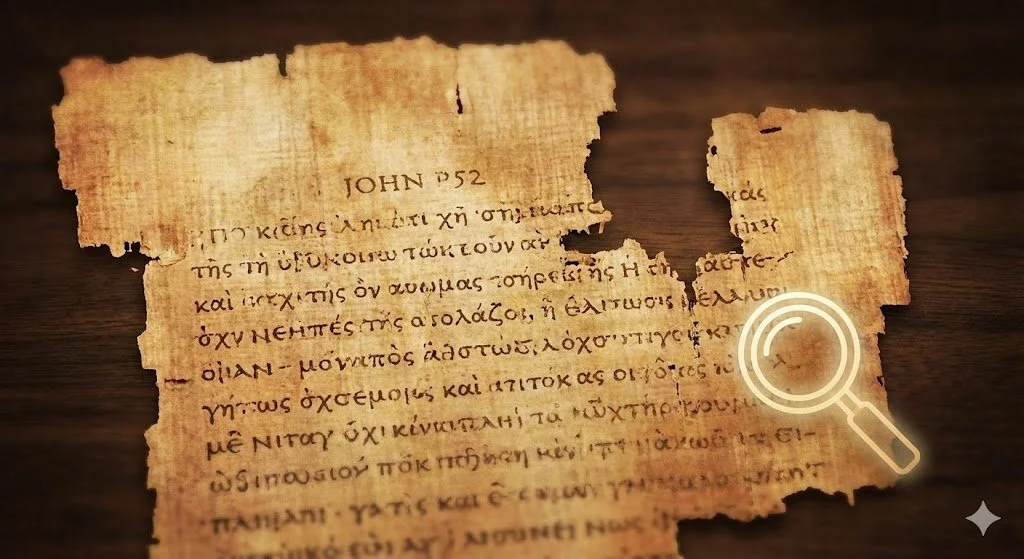
TEXTURAL CRITICISM OF THE BIBLE (PART 1)
How do we know the Bible we read today is what was actually written? Explore the staggering manuscript evidence that makes the Bible the most historically reliable document of the ancient world.
What to Know
This article emphasizes that before exploring the deeper teachings of the Bible and Jesus Christ’s identity, one must first establish the Bible’s historical reliability.
Textual criticism is key: scholars reconstruct original New Testament writings by comparing thousands of existing handwritten copies—far more than what exists for most other ancient works.
The New Testament boasts about 5,800 Greek manuscripts (some within 200 years of the events), which is unparalleled in ancient literature. The Old Testament also has extensive manuscript support, highlighted by the Dead Sea Scrolls, which pushed textual evidence back nearly 2,000 years.
Given the Bible’s vast and early manuscript evidence, questioning its reliability would mean questioning the reliability of all other ancient historical documents as well as historical figures like Alexander the Great.
Before exploring the Bible's true teachings and scriptural truths — often obscured by tradition and diluted interpretations — we must first establish its authenticity, historical accuracy, and the truth of Jesus Christ as the Son of God.
We will begin on this journey by first examining the New Testament, specifically through textual criticism, rather than focusing on the specific writings. The New Testament was originally written in Koine Greek, the common language of the time. Today, we don't have the original manuscripts, known as autographs, of the New Testament books. Instead, we rely on handwritten copies and copies of those copies. Textual criticism is the scholarly practice of reconstructing the original text by comparing these various copies.
It's important to note that textual criticism isn't limited to the New Testament or to only biblical books. It's applied to nearly all classical works because no originals exist for any Greek or Latin classic, including the Bible. This is mainly because ancient people wrote on papyrus, a highly perishable material that can only survive in dry, airy climates. It's actually remarkable we have any surviving papyrus fragments today, considering how easily they degrade.
In 1900, only about nine known papyrus fragments contained parts of the New Testament had been discovered. Today, that number has grown to approximately 115. Among these, 45 papyrus fragments date back to before 300 AD. Collectively, these 45 manuscripts represent about two-thirds of the New Testament, dating to within 200 years of the eyewitness accounts of Jesus. In the context of ancient writings, this is incredibly close to the actual events. In fact, no other ancient document has such early and abundant manuscript evidence.
Beyond these 115 significant and larger manuscripts, there are approximately another 5,800 Greek manuscripts, 10,000 Latin manuscripts, and 9,300 manuscripts in other languages. Some scholars estimate that the number of textual references could exceed one million if we include citations from early church fathers who quoted Scripture in sermons and writings. These numbers are extraordinarily high for ancient texts, underscoring the New Testament's unique position in historical documentation.
The difference is stark when we compare the 5,800 Greek New Testament manuscripts to other classical works. Consider critical editions of works like The Iliad, Caesar's Gallic War, and Beowulf — these are classic texts widely taught in schools, and their authenticity is rarely questioned. However, the number of manuscripts that survive these works is nowhere near the New Testament. The Iliad, for example, has about 650 copies, which is sufficient to produce critical editions but pales in comparison to the New Testament. The earliest complete edition of The Iliad dates from the 10th century A.D., even though the text was written around the 8th century BC. In contrast, we have complete editions of the New Testament from the 4th century A.D., with large fragments dating back to before 300 A.D.—much closer to the events described.
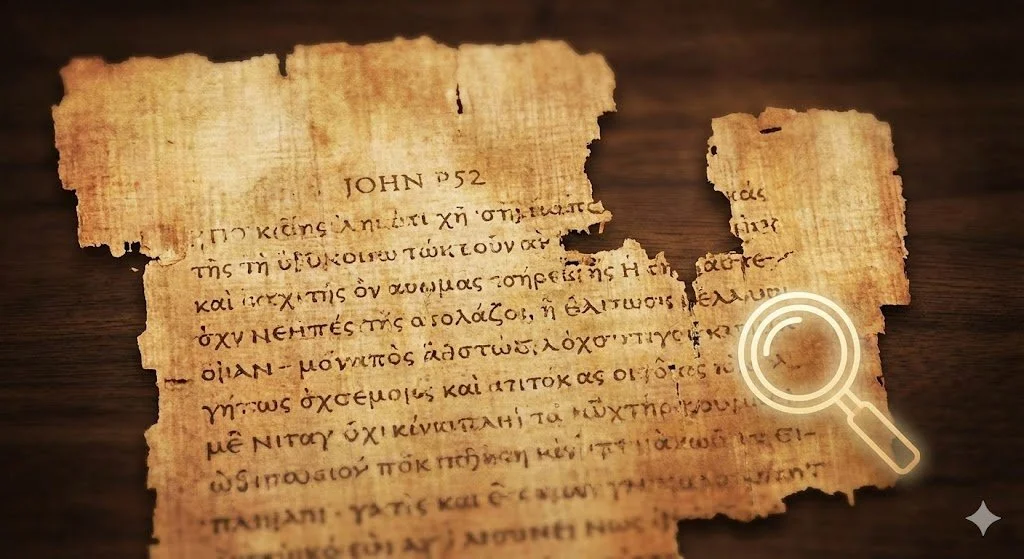
To illustrate this point further, scholars have dated a small fragment containing portions of John, known as fragment P90, to the early 2nd century A.D. Another fragment, known as fragment P104, contains Scripture from Matthew and is dated to the late 1st century A.D. These fragments are incredibly close in time to the events they record, enhancing their reliability.
As briefly explained before with The Iliad, the New Testament's manuscript evidence far surpasses that of any other ancient document. For instance, we have about a dozen copies of Caesar's Gallic War, the earliest dating nearly a thousand years after the events it describes. Tacitus's Histories and Annals are preserved in three manuscripts, and Beowulf survives in only one. The New Testament, by contrast, was widely distributed across the Roman Empire and into North Africa. It was translated into multiple languages, and manuscripts of these translations have been found in numbers that far exceed those of any other ancient document.
While this discussion has focused on the New Testament, similar observations can be made about the Old Testament. Although pinpointing the exact number of Old Testament manuscripts is challenging due to its age, size, and the fact that it was written over a thousand years, estimates suggest there are around 2,000 fragments of Old Testament scripture. Considering the age of these texts, this is truly remarkable.
Some of the oldest complete Old Testament manuscripts include the Aleppo Codex, dating back to 920 A.D., and the Leningrad Codex, dating to 1008 A.D. Both were discovered before the Dead Sea Scrolls, which dates from the 1st to 3rd century B.C. The discovery of the Dead Sea Scrolls pushed back the date of the oldest Old Testament manuscripts by nearly 2,000 years.
When considering both the New and Old Testaments, no other ancient document comes close to this level of manuscript evidence. Despite this, many people still question the accuracy of the Bible and the events it describes. However, if one doubts the reliability of the Bible, they would also have to call in question the reliability of all other ancient historical documents as well.
Table of Contents
Textual Criticism of the Bible (Part 1)
The Evidence of Jesus Christ Outside the Bible (Part 2)
The Evidence of Jesus Christ Through the Darkening of the Sun (Part 3)
When was the First New Testament Book Written and by whom? (Part 4)
The Historical Reliability of the New Testament and Gospels (Part 5)
Proving the Accuracy of the Bible Through Prophecy (Part 6)
Proof of the Bible Through the Crucifixtion and Ressurection (Part 7)
A New Beginning - What does this Mean for Us? (Part 8)
Sources
1. Metzger, Bruce M., and Bart D. Ehrman. The Text of the New Testament: Its Transmission, Corruption, and Restoration. Oxford University Press, 2005.
2. Comfort, Philip Wesley, and David P. Barrett. The Text of the Earliest New Testament Greek Manuscripts. Tyndale House Publishers, 2001.
3. Geisler, Norman L., and William E. Nix. A General Introduction to the Bible. Moody Publishers, 1986.
4. Wallace, Daniel B. "The Reliability of the New Testament Manuscripts." Bible.org, 2012.
5. Kenyon, Frederic G. Our Bible and the Ancient Manuscripts. Eyre & Spottiswoode, 1895.
6. Greenlee, J. Harold. Introduction to New Testament Textual Criticism. Hendrickson Publishers, 1995.
THE BEGINNING: THE ORIGINS OF BAPTISM
Why did the Pharisees recognize baptism before it was ever explained in the New Testament? Discover the "missing" history of this sacred rite and why Jesus Christ’s immersion was a monumental turning point in God’s plan for humanity.
What to Know
What It Is – The Baptism of Jesus Christ is a defining moment recorded in three gospels (Matthew, Mark, Luke) and referenced in John — a rare fourfold witness emphasizing its central role in the New Testament and the plan of God. At Christ’s baptism, the Holy Spirit descended upon Him, confirming Jesus as the Son of God and the One who would baptize with the Holy Spirit (John 1:33–35).
A Pivotal Event in God’s Plan - Scripture shows that Jesus’ baptism was foreordained before the foundation of the world (1 Peter 1:20). God highlights this event multiple times because it marks the beginning of Christ’s public ministry and reveals His divine identity and purpose.
The First Introduction to Baptism in the Bible - When reading the Bible from beginning to end, Jesus’ baptism is the first major appearance of baptism — before its meaning is ever explained. The gospel writers present it as inherently significant, assuming readers recognize its importance, even though its spiritual meaning is clarified later.
Baptism’s Meaning Explained Later in Scripture - The purpose of baptism is first hinted at in John 3, where Jesus describes its connection to being “born again.” The full explanation comes after Christ’s resurrection in Acts 2:38 and Acts 22:16, identifying baptism as the moment of repentance, forgiveness, and the washing away of sins. Paul later summarizes baptism’s meaning: it symbolizes being buried with Christ and rising to walk in newness of life (Romans 6:3–4).
Why the Pharisees Already Understood Baptism - In John 1:25–26, the Pharisees never ask what baptism is. Instead, they ask John why he is baptizing — showing that ritual washing and purification were already well understood in Jewish culture. Only someone with prophetic authority was expected to baptize, which is why John’s actions demanded explanation.
Old Testament Roots and Cultural Background - While the practice of baptism doesn’t formally appear in the Old Testament, its conceptual foundation — cleansing, repentance, purification, and renewal — runs throughout Scripture. The Hebrew language itself reflects a culture centered on God’s law, containing multiple nuanced terms for sin, purification, and love. These linguistic roots help illuminate the deeper meaning of baptism as it unfolds in the New Testament.
In the first book of the New Testament, an important event takes place – Jesus Christ’s baptism. This event is so significant that not only is it recorded in the first book of the New Testament (Matthew), but directly in three of the four gospels (Matthew, Mark, and Luke). Further, reference to Jesus’s baptism is also made in the fourth gospel, John, where he says,
“I did not know Him, but He who sent me to baptize with water said to me, ‘Upon whom you see the Sprit descending, and remaining on Him, this is He, who baptizes with the Holy Spirit.’ And I have seen and testified that this is the Son of God.” (John 1:33-35)
When God states something in the Bible twice, we know it’s important for us to take notice and action, if applicable. When God inspires something to be repeated four times to give abundant witness, we know it is something truly significant, and in this case, a monumental moment in the plan of God. Peter alludes to why this event was so significant in his first epistle,
“He [Jesus Christ] indeed was foreordained before the foundation of the world, but was manifest in these last times for you…”
(1 Peter 1:20)
Part of God’s plan is being shown to us through Jesus Christ’s baptism.
Reading through the various accounts of Jesus Christ’s baptism in the gospels, you may notice something perplexing, but noteworthy which occurs with baptism in general. If you had no prior knowledge of the Bible and read through it for the first time from beginning to end, Jesus’s baptism would be the first time you would be formally introduced to the concept and practice. The definition of baptism, what it means, and its representation within the plan of God isn’t explained beforehand, but only after.
The first such instance in the Bible where the purpose of baptism is alluded to is in John 3. Jesus, while talking to Nicodemus, expounds on baptism’s role as being vital for the new spiritual birth that must take place for believers to enter the Kingdom of God. However, the role of baptism isn’t specifically defined until after Jesus’s crucifixion in Acts where we are told that baptism represents “the remission of sins” (Acts 2:38; 22:16).
These verses illustrating the role of baptism were not inspired and written until some 20-30 years after Jesus’s crucifixion. In spite of this, at the time we read about Jesus Christ’s baptism in the gospels, the authors intend for us to immediately understand its significance, importance, and meaning. This is illustrated to us in John, where it says,
“They [the Pharisees] asked him [John the Baptist], ‘Then why are you baptizing, if you are neither the Christ, nor Elijah, nor the Prophet?’ John answered them, ‘I baptize with water, but among you stands one you do not know, even He who comes after me, the strap of whose sandal I am not worthy to untie.” (John 1:25-26)
The Pharisees don’t ask John what baptizing is or its significance. They grasp the importance since to them only someone of prominence like a prophet or the Messiah has the authority to baptize. They instead ask him why he is baptizing.
This is puzzling because although baptism’s origins can begin to be traced back to the Old Testament, the full concept of burying your old self and becoming a new person through baptism is first recorded by Paul, some 20-30 years after Jesus’ crucifixion. Paul explains baptism’s role to the believers in Rome in his epistle to them,
“Or do you not know that as many of us as were baptized into Christ Jesus were baptized into His death? Therefore, we were buried with Him through baptism into death, that just as Christ was raised from the dead by the glory of the Father, even so we also should walk in newness of life.” (Romans 6:3-4)
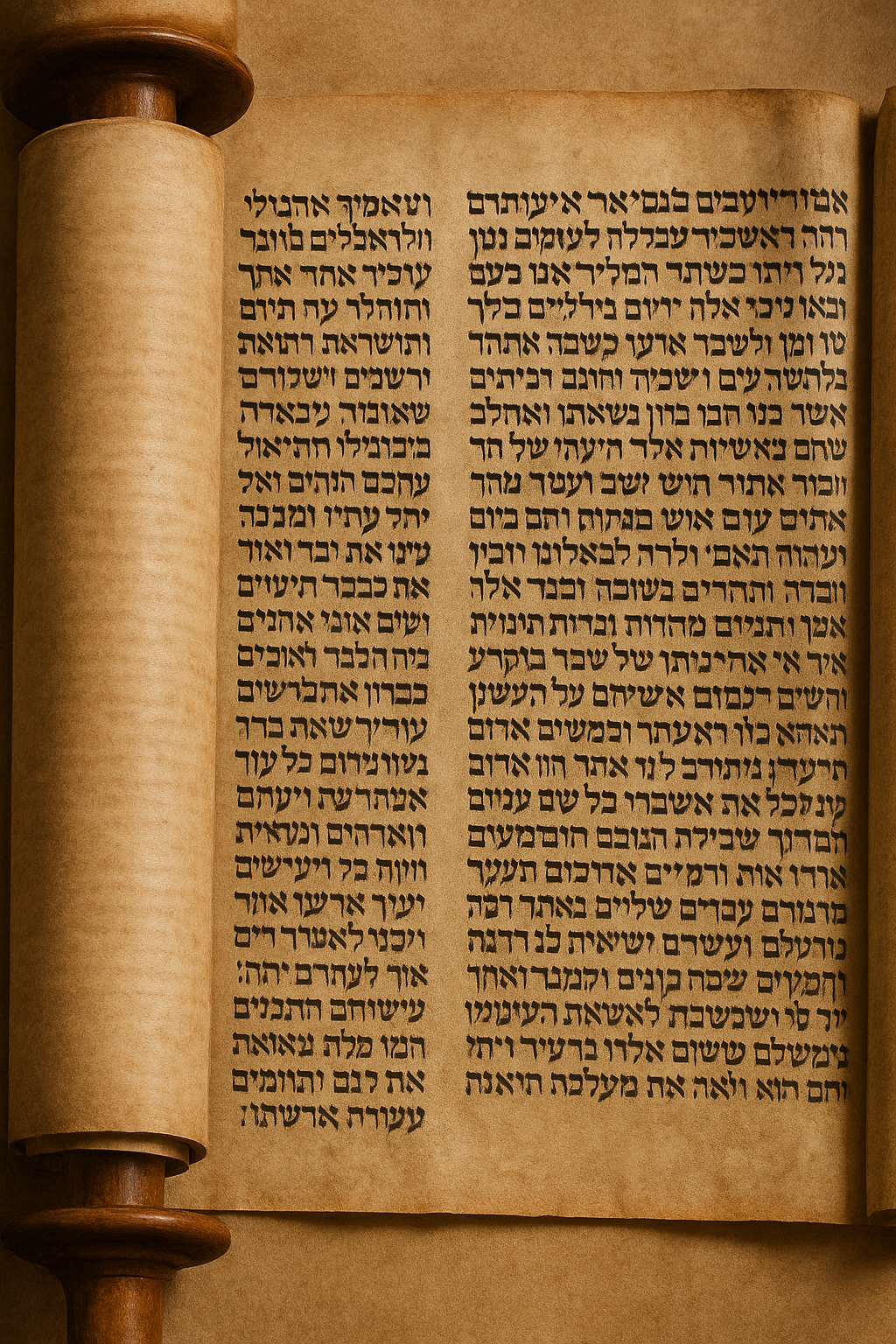
These examples force us to ask ourselves, why did this occur this way in the Biblical narrative? Is it simply because the authors of the New Testament forgot to explain baptism’s importance? Or perhaps it was because the practice was only adopted right before Jesus Christ, so as a result didn’t appear in the Old Testament? Regardless, we will look at these questions and others. While looking, we will discover that there is so much more to baptism, and its true meaning, then what we may have originally thought.
To fully understand the importance of baptism and its origins, we need to go back to the Old Testament. The practice of baptism doesn’t show up in the Old Testament, but the concept and roots go all the way back to Genesis. However, before preceding it’s important to point out something necessary to our understanding of this topic. Through language, we are able to see what topics are important to different cultures. For example, if you look at present-day English you can see topics that we hold important in our society with the recent creation of more words and phrases revolving around technology. The same concept can be applied to any society or language, and this is especially true of ancient Hebrew. The Hebrew language revolves around God and His law. Such things were an important aspect of their life, so their language was developed and evolved to represent that. Similar to our earlier example regarding present-day English, if we do the same with Hebrew, we see there are three different Hebrew words for describing both sin and love. Both of these words are important to construct a proper relationship with God (contrast this to English where there is only one word for “love”, and ancient Greek where there are four different words for “love” - showing us the priority of these cultures). Knowing what beliefs are important to different cultures at different times will be especially important, as we will see with this concept throughout the Old Testament. The meaning of certain words changes, which gives us a clearer understanding to their original intent, and eventually to their complete meaning.
Table of Contents
1. The Beginning: The Origins of Baptism (Part 1)
2. The Washing Away of Sin (Part 2)
3. Mikeveh – A New Meaning (Part 3)
4. The Intertestamental Period: The Silent Years (Part 4)
5. The Hope in Jesus Christ’s Healings (Part 5)
6. Did Jesus Just Turn Water into Wine? (Part 6)
7. The Conclusion: The Hope We Have in What was Promised to Us (Part 7)

THE SABBATH
Why do over 30 languages across the globe still call Saturday "the Sabbath"? Explore the creation-based origins of the seventh-day rest and discover why there is no scriptural mandate for the historical shift to Sunday worship.
What to Know
The Seventh-Day Sabbath is God’s First Appointed Feast: Established at creation (Genesis 2:2–3), the Sabbath predates Israel and the law given at Sinai, making it a universal institution for all humanity.
The Sabbath was Honored Throughout Scripture: Prophets, Jesus, and the apostles all observed the seventh-day Sabbath. Nowhere in the Bible is it changed to Sunday or abolished.
Jesus Affirmed the Sabbath’s Purpose: Jesus called the Sabbath a gift for mankind (Mark 2:27) and made it part of His moral practice (ethos), using it for worship, teaching, and healing.
The Apostles and Early Church Kept the Sabbath: The book of Acts shows Paul and others observing the Sabbath with both Jews and Gentiles. Hebrews 4:9 reaffirms a “Sabbath-rest” still remains for God’s people.
Sunday Observance Came Later: The shift to Sunday worship developed centuries after Christ due to Roman and ecclesiastical influence — not by biblical command.
Historical and Catholic Sources Admit the Change: The Catholic Church openly states it changed the day of worship to Sunday by its own authority, not based on Scripture.
The Sabbath Remains Central to God’s Plan: Prophets like Isaiah and Ezekiel show Sabbath observance continuing in the Millennial Kingdom, underscoring its eternal relevance.
The Sabbath Reflects God’s Covenant and Redemption: It symbolizes rest, peace, and wholeness in Christ and points to the coming Kingdom of God.
Global Language Supports the Sabbath: Over 30 world languages preserve the word “Sabbath” as the name for Saturday, reflecting its longstanding, universal recognition.

The first Feast of the LORD mentioned in Leviticus 23 is the weekly seventh-day Sabbath, a time appointed by God as a day of rest and worship emphasized throughout the Bible. While some argue that the seventh-day Sabbath (along with the rest of the law) was not instituted until the law was given to Moses at Mount Sinai, Scripture reveals otherwise. God established the Sabbath at creation, blessing and sanctifying the seventh day (Genesis 2:2-3). The Sabbath was affirmed throughout the Old Testament, upheld by the prophets (e.g., Isaiah 56:2; Ezekiel 20:12, 20; Ezekiel 44:24), and honored by Jesus and His disciples (e.g., Matthew 12:12; Mark 1:21; Luke 4:16). Even after Jesus’ resurrection, the apostles and the early Christian church observed the seventh-day Sabbath (e.g., Acts 13:14, 42-44; Acts 16:13).
There is no scriptural evidence that the Sabbath was ever changed to Sunday. A thorough examination of both the Old and New Testaments, along with historical and scholarly research, confirms that the seventh day (Saturday) remains the biblically endorsed Sabbath for all who seek to follow God and honor His redemptive plan. The practice of Sunday observance arose centuries after the apostolic era and lacks any clear biblical mandate. Recognizing the Sabbath as Saturday is neither an outdated tradition nor a custom exclusive to Judaism; rather, it is a foundational aspect of God’s design for humanity’s spiritual well-being and ultimate redemption.
From the very beginning, the Sabbath was rooted in the creation narrative itself. Genesis 2:2-3 declares, “And on the seventh day God ended His work which He had made; and He rested on the seventh day from all His work which He had made. And God blessed the seventh day, and sanctified it.” This passage precedes the establishment of the Israelite nation, demonstrating that the Sabbath transcends ethnic and national boundaries. Its significance is not confined to the Mosaic Covenant but is woven into the very fabric of creation, intended as a universal gift for all humanity. Jesus affirmed this when He said, “The Sabbath was made for man, and not man for the Sabbath” (Mark 2:27).
Throughout the Old Testament, God reaffirmed the importance of the seventh-day Sabbath. The Fourth Commandment, recorded in Exodus 20:8-11, explicitly commands believers to “remember the Sabbath day, to keep it holy.” This commandment is placed on equal footing with the other nine moral laws, none of which most Christians believe have been annulled. Ironically, the Sabbath is often the only commandment claimed to have been abolished, despite its extensive endorsement by the major prophets in the Old Testament and its reaffirmation in the New Testament.
The prophet Isaiah emphasized that the Sabbath was not limited to Israel alone but extended to all who would follow God. In Isaiah 56:2-7, he includes foreign converts and eunuchs among those who would be blessed by keeping the Sabbath. Isaiah’s prophetic vision of the future in Isaiah 66:23 describes humanity worshiping God “from one Sabbath to another,” indicating that Sabbath observance will continue into the Millennial Kingdom. Similarly, the prophet Ezekiel describes the Sabbath as fundamental to God’s future Kingdom. In Ezekiel 44-46, Ezekiel records prophetic visions of the future millennial temple, where the Sabbath is observed alongside Feasts, New Moons, and other appointed seasons. For example, Ezekiel 45:17 states, “Then it shall be the prince’s part to give burnt offerings, grain offerings, and drink offerings, at the feasts, the New Moons, the Sabbaths, and at all the appointed seasons…”
Other passages, such as Ezekiel 46:12-14 and Isaiah 66:22-23, reinforce the continued significance of the Sabbath during the Millennial reign of Christ. These prophecies affirm that the Sabbath is not merely a relic of the past but an eternal principle that reflects God’s design for humanity’s worship, rest, and relationship with Him. Its observance is deeply embedded in God’s plan for both the present and the future, making it a timeless practice for those who seek to align with God’s will.
Many argue that Sabbath observance, rooted in the Old Testament, is no longer required under the New Covenant. However, the New Testament provides clear evidence that this argument is incorrect. Throughout His ministry, Jesus consistently upheld the seventh-day Sabbath. Luke 4:16 highlights that Jesus kept the Sabbath regularly, as it was “His custom” to attend synagogue on that day. While the English word “custom” might suggest a voluntary habit or tradition specific to a certain time or place, the original Greek word ethos conveys a much deeper meaning. It refers to “the inherent traits or disposition of an individual, reflecting their moral qualities or character.” For Jesus, the Sabbath was not merely a tradition or routine specific to that time and place — it was an intrinsic part of His moral nature and practice.
Jesus used the Sabbath as an opportunity for worship, teaching, and acts of mercy, demonstrating its true purpose and significance. He never suggested that the Sabbath should be abolished or changed. Instead, He clarified its true meaning, declaring in Mark 2:27, “The Sabbath was made for man, and not man for the Sabbath.” If the Sabbath was so integral to Jesus’ character and moral standard, does it not follow that those who claim to follow Him should view it with the same importance? How can those trying to follow Jesus reflect His nature, while neglecting something He so clearly valued and practiced?
Further, the apostles and early Church also continued to observe and honor the seventh-day Sabbath after Jesus’ crucifixion and resurrection. Acts 13:42-44 describes Paul preaching to both Jews and Gentiles on the Sabbath, while Acts 17:2 notes that it was Paul’s custom (the same Greek word ethos) to reason from the Scriptures on the Sabbath, just as Jesus had done. Even the book of Hebrews reinforces the enduring nature of the Sabbath. Hebrews 4:9 states, ,“There remains, then, a Sabbath-rest (sabbatismos) for the people of God” affirming that the Sabbath commandment remains relevant for believers under the New Covenant. Nowhere in Scripture is there any record of Jesus or the apostles instituting Sunday as a replacement for the Sabbath. Instead, the historical shift toward Sunday observance emerged over centuries, driven by political, social, and religious influences, not by clear biblical instruction.
Historical research strongly supports the evidence that the shift from Sabbath observance on the seventh day (Saturday) to Sunday worship was not biblically mandated, but arose gradually over centuries. Dr. Samuele Bacchiocchi, in his work From Sabbath to Sunday, details how this change was driven by Roman cultural and religious practices, as well as church councils that sought to distance Christianity from its Jewish roots. This transition was later formalized through the influence of the Roman Church and the Roman Empire, not through scriptural instruction.
Additional scholarly resources, such as Sabbath Truth and the United Church of God’s Sunset to Sunset: God’s Sabbath Rest, document how early Christians — both Jewish and Gentile — faithfully observed the seventh-day Sabbath for centuries following Christ’s resurrection. These sources highlight that Sunday observance was later institutionalized through traditions and decrees of the Catholic Church.
Remarkably, the Catholic Church itself openly acknowledges this change. In The Catechism of the Catholic Church and other official publications, it is stated that the Church, by its authority, transferred the day of worship from Saturday to Sunday. The Catholic Encyclopedia, available on their website, emphasizes that this change was not based on biblical instruction but on ecclesiastical authority. For instance, The Convert’s Catechism of Catholic Doctrine states, “The Church substituted Sunday for Saturday by the plenitude of that divine power which Jesus Christ bestowed upon her.”
This raises a critical question for belivers: If the seventh-day Sabbath was sanctified by God at creation and upheld by Jesus and the apostles, does an institution have the authority to alter what God established? By observing Sunday, are people not affirming a change made by human authority rather than God’s command? Some may argue that the specific day of worship is unimportant. But if the Sabbath was set apart by God and reinforced throughout Scripture, would it not be more meaningful to align with what God ordained rather than with a tradition introduced centuries later by an organization?
Could it be that by observing Sunday, one is unintentionally prioritizing human tradition over God’s eternal standard?
The biblical and historical evidence clearly supports the seventh-day Sabbath as a continuing practice for those seeking to honor God’s design for worship, rest, and spiritual renewal.
The Sabbath’s significance extends far beyond mere legalism. It embodies God’s redemptive plan, symbolizing the rest, peace, and wholeness that come from a right relationship with Him. Just as God completed creation and rested on the seventh day, the Sabbath points believers toward the ultimate spiritual rest and restoration promised through Christ’s redemptive work and the future establishment of His Kingdom. By observing the Sabbath, believers affirm their dependence on God rather than on human effort or cultural norms. Far from being abolished, as many Christians claim today, Jesus enlarged its meaning, emphasizing that the Sabbath was made for humanity’s well-being and to honor God’s intentions.
Critically, there is no scriptural basis to suggest the Sabbath was transferred to Sunday. The Resurrection of Christ, often cited as the reason for Sunday observance, is never biblically connected to a change in the Sabbath day. In fact, closer examination shows that the Resurrection has a stronger connection to the Sabbath itself and did not occur on Sunday, as is widely believed. This makes the seventh-day Sabbath not only biblically sound but also deeply symbolic of God’s covenant with humanity.
If you’re interested in researching more about the Sabbath and the change from Saturday to Sunday, we’ve provided additional references here for your review.
The seventh-day Sabbath stands as a timeless sign of God’s covenantal relationship with His creation (Ezekiel 20:12). Interestingly, its significance is echoed across many cultures and languages around the world. For example, in over 30 languages, the word for Saturday is derived from the word “Sabbath.” This linguistic consistency highlights the enduring acknowledgment of the seventh day’s sanctity, even in cultures that may not recognize its biblical origins. In contrast, no such distinction is made for Sunday in these languages, underscoring the Sabbath’s unique and God-ordained role. This global testament to the Sabbath’s significance serves as a powerful reminder of its place in God’s design for humanity.
Semitic Languages
Hebrew: שבת (Shabbat)
Arabic: السبت (As-Sabt)
Amharic: ሰንበት (Sänbet)
Romance Languages
Spanish: Sábado
Portuguese: Sábado
Italian: Sabato
French: Samedi (from Latin Sabbatum, combined with dies)
Catalan: Dissabte
Galician: Sábado
Romanian: Sâmbătă (derives indirectly from Sabbath)
Occitan: Dissabte
Slavic Languages
Russian: Суббота (Subbota)
Ukrainian: Субота (Subota)
Belarusian: Субота (Subota)
Polish: Sobota
Czech: Sobota
Slovak: Sobota
Bulgarian: Събота (Sǎbota)
Macedonian: Сабота (Sabota)
Serbo-Croatian: Субота / Subota
Slovenian: Sobota
Germanic Influence
Yiddish: שבת (Shabbes) (note: borrowed directly from Hebrew).
Hellenic Languages
Greek: Σάββατο (Sabbato)
Baltic Languages
Latvian: Sestdiena (indirect root via Sabbath)
Lithuanian: Šeštadienis (indirect root via Sabbath)
Non-Indo-European Languages
Georgian: შაბათი (Shabati)
Indic Languages (borrowed from Arabic/Hebrew influence)
Hindi: शनिवार (Shanivaar)
Urdu: ہفتہ )Hafta, indirectly related through Persian influence on "week")
Other Languages with Religious or Historical Borrowing
Maltese: Sibt (direct borrowing from Semitic roots)
Ethiopian Semitic (e.g., Tigrinya): ሰንበት (Sänbet)
Ancient Languages
Latin: Sabbatum
Ancient Greek: Σάββατον (Sabbaton)
GOD’S BIBLICAL HOLY DAYS
Are the Biblical Holy Days "abolished" traditions or eternal statutes? Explore the Hebrew meaning of olam and discover why the Holy Days (Feasts) of the LORD remain the master blueprint for God’s plan of salvation in both the Old and New Testaments
(AN INTRODUCTION)
What to Know
God’s Feasts are His appointed Times: From Genesis to Leviticus, God declares the Holy Days as “My Feasts” and “Feasts of the LORD” —not manmade traditions, but divine appointments for worship, reflection, and celebration.
These Holy Days are Still Relevant: Jesus and the early Church observed them (e.g., Passover, Unleavened Bread, Pentecost), showing their continuity beyond the Old Testament. Jesus affirmed God’s law as enduring (Matthew 5:17–19).
The Holy Days reveal God’s Plan of Salvation: Each Feast foreshadows aspects of God’s redemptive plan, fulfilled in Jesus Christ and pointing to future events in God’s Kingdom.
“These Shall be Statutes Forever”: The phrase “statute forever” (the Hebrew word olam) appears throughout Leviticus 23, emphasizing the perpetual nature of these Holy days and how they tie directly to God’s eternal character.
The New Testament Supports Ongoing Observance: The apostles, including Paul, kept and taught these Feasts (Acts 20:6, 1 Corinthians 5:8), and many of Jesus’ key teachings occurred during them (e.g., John 7, during the Feast of Tabernacles).
God’s Calendar Reflects His Dternal Purposes: Observing His Feasts aligns those seeking to Him follow Him (His believers) with His timetable and deepens their understanding of His work in the past, present, and future.
The Feasts are Part of a Living Covenant: Rather than being abolished, these Holy Days reflect God’s unchanging relationship with His people and remain significant for all who seek to worship Him in spirit and truth.

From the very beginning in Genesis, God established specific days as His appointed times, marking them as sacred and set apart. Later, in Leviticus, God reaffirms these appointed times, declaring them as holy convocations for worship, reflection, and celebration. These Holy Days were not merely ceremonial observances for ancient Israel; they were declared as "My Feasts" and "the Feasts of the LORD" (Leviticus 23:2), emphasizing their divine origin and ongoing importance. God’s repeated claim that these are His Feasts underscores that they are not human traditions, but are divinely instituted times of significance for all who seek to worship Him in spirit and truth.
Contrary to the common belief that these Holy Days were part of an old covenant system now abolished, the Bible reveals their enduring relevance. Jesus Himself affirmed the unchanging validity of God’s law in Matthew 5:17-19, stating that He came not to abolish the law but to fulfill it. In the New Testament, the continuity of these holy days is evident. Jesus observed them, as seen in Luke 22:14-15, when He celebrated Passover with His disciples. The early Church continued to recognize and observe these holy days, as demonstrated in Acts 20:6 and 1 Corinthians 5:7-8, where Paul explicitly connects the meaning of Passover and Unleavened Bread to Jesus Christ.
God’s Holy Days remain relevant for those seeking to follow Him today as times to reflect on His plan of salvation, draw closer to Him, and celebrate the fulfillment of them in Jesus Christ while anticipating their ultimate completion in God’s Kingdom. Observing these appointed and holy times allows believers to align themselves with not only God's calendar, but on His ultimate focus for humanity.
In addition to referring to the annual holy days as “My Feasts,” God consistently uses another phrase that underscores their enduring importance: “this shall be a statute forever.” This phrase, often repeated when God establishes His Feasts, highlights their perpetual significance. The Hebrew word translated as “forever” is olam, which conveys the concept of ongoing continuity, perpetual duration, or timelessness.
For example, regarding the Feast of Unleavened Bread, Leviticus 23:14 states: “It shall be a statute forever throughout your generations in all your dwellings.” Similarly, the same wording is used for other Holy Days. Leviticus 23:21 describes the Feast of Weeks (Pentecost): “It shall be a statute forever in all your dwellings throughout your generations.” This phrase also appears in commands for the Day of Atonement (Leviticus 23:31) and the Feast of Tabernacles (Leviticus 23:41), underscoring their ongoing and timeless relevance.
Interestingly, the same Hebrew word, olam, used to describe the eternal nature of God’s Holy Days is also applied to describe God’s own eternal nature. For instance, Psalm 90:2 declares: “From everlasting to everlasting (forever or eternal), You are God.” This connection between the enduring nature of God and the perpetual observance of His Feasts emphasizes their origin from God and timeless significance, making them just as relevant for believers today as when they were first commanded.
The use of olam in conjunction with God’s command to observe His Feast days ties directly to His eternal nature. What does it mean that God describes these days as “My Feasts” (Leviticus 23:2)? Does this not suggest that they belong to Him, rather than being temporary cultural practices for ancient Israel? If God’s very character is eternal, wouldn’t the permanence of these Feasts also reflect His unchanging nature and His covenant with His people in both the Old and New Testaments?
The word “forever” (or as the Hebrew often says, from everlasting to everlasting) transcends human limitations, pointing to the spiritual and prophetic significance of God’s Holy Days. As statutes ordained by God, they are not subject to human alteration or cessation. Instead, their observance serves as a reminder of His sovereignty, His plan for humanity, and the enduring relationship between Him and His people. If these appointed times are part of God’s redemptive plan and reflect His eternal character, why would they be abolished? Should believers not align themselves with God’s purposes by keeping His designated Feast days?
To explore this further, we will examine each of God’s Biblical Feasts and their pivotal role in foreshadowing the plan established by God from the foundation of the earth to reconcile humanity to Him. For those seeking to verify the phrase “My Feasts”, the following verses demonstrate God’s claim of ownership over these annual observances. They are not human traditions or temporary rituals, but integral components of God’s redemptive plan for all people.
Old Testament Contextual Support
Leviticus 23:1-2 (NKJV) - "And the Lord spoke to Moses, saying, 'Speak to the children of Israel, and say to them: "The Feasts of the Lord, which you shall proclaim to be holy convocations, these are My Feasts."'
Leviticus 23:4 (NKJV) - "These are the Feasts of the LORD, holy convocations which you shall proclaim at their appointed times."
Leviticus 23:37-38 (NKJV) - "These are the Feasts of the LORD which you shall proclaim to be holy convocations, to offer an offering made by fire to the LORD: a burnt offering and a grain offering, a sacrifice and drink offerings, everything on its day—besides the Sabbaths of the Lord, besides your gifts, besides all your vows, and besides all your freewill offerings which you give to the LORD."
Leviticus 23:44 (NKJV) - "So Moses declared to the children of Israel the Feasts of the LORD."
Numbers 28:16-17 (NKJV) - "On the fourteenth day of the first month is the Passover of the LORD. And on the fifteenth day of this month is the Feast; unleavened bread shall be eaten for seven days."
Numbers 29:12 (NKJV) - "On the fifteenth day of the seventh month you shall have a holy convocation. You shall do no customary work, and you shall keep a Feast to the LORD seven days."
Exodus 23:14-16 (NKJV) - "Three times you shall keep a feast to Me in the year: You shall keep the Feast of Unleavened Bread... the Feast of Harvest, the first fruits of your labors which you have sown in the field; and the Feast of Ingathering at the end of the year, when you have gathered in the fruit of your labors from the field."
Deuteronomy 16:10 (NKJV) - "Then you shall keep the Feast of Weeks to the LORD your God with the tribute of a freewill offering from your hand, which you shall give as the LORD your God blesses you."
Deuteronomy 16:13-15 (NKJV) - "You shall observe the Feast of Tabernacles seven days, when you have gathered from your threshing floor and from your winepress. And you shall rejoice in your feast, you and your son and your daughter, your male servant and your female servant, and the Levite, the stranger and the fatherless and the widow, who are within your gates. Seven days you shall keep a sacred feast to the LORD your God in the place which the LORD chooses, because the LORD your God will bless you in all your produce and in all the work of your hands, so that you surely rejoice."
New Testament Contextual Support
Passover
Luke 2:41-42 - "His parents went to Jerusalem every year at the Feast of the Passover. And when He was twelve years old, they went up to Jerusalem according to the custom of the feast."
Matthew 26:17-19 - "Now on the first day of the Feast of Unleavened Bread the disciples came to Jesus, saying to Him, 'Where do You want us to prepare for You to eat the Passover?'"
Mark 14:12-16 - "Now on the first day of Unleavened Bread, when they killed the Passover lamb, His disciples said to Him, 'Where do You want us to go and prepare, that You may eat the Passover?'"
Luke 22:7-8 - "Then came the Day of Unleavened Bread, when the Passover must be killed. And He sent Peter and John, saying, 'Go and prepare the Passover for us, that we may eat.'"
John 2:13 - "Now the Passover of the Jews was at hand, and Jesus went up to Jerusalem."
John 13:1 - "Now before the Feast of the Passover, when Jesus knew that His hour had come that He should depart from this world to the Father, having loved His own who were in the world, He loved them to the end."
Feast of Unleavened Bread
Luke 22:1 - "Now the Feast of Unleavened Bread drew near, which is called Passover."
Acts 12:3-4 - "And because he saw that it pleased the Jews, he proceeded further to seize Peter also. Now it was during the Days of Unleavened Bread."
Pentecost (Feast of Weeks)
Acts 2:1-4 - "When the Day of Pentecost had fully come, they were all with one accord in one place. And suddenly there came a sound from heaven, as of a rushing mighty wind, and it filled the whole house where they were sitting."
Acts 20:16 - "For Paul had decided to sail past Ephesus, so that he would not have to spend time in Asia; for he was hurrying to be at Jerusalem, if possible, on the Day of Pentecost."
1 Corinthians 16:8 - "But I will tarry in Ephesus until Pentecost."
Feast of Trumpets
No explicit New Testament reference is made to the Feast of Trumpets being kept. However, its themes of trumpets and future events resonate in:
Matthew 24:31 - "And He will send His angels with a great sound of a trumpet, and they will gather together His elect from the four winds, from one end of heaven to the other."
1 Thessalonians 4:16 - "For the Lord Himself will descend from heaven with a shout, with the voice of an archangel, and with the trumpet of God. And the dead in Christ will rise first."
Day of Atonement - Acts 27:9
"Now when much time had been spent, and sailing was now dangerous because the Fast was already over, Paul advised them..." (‘The Fast’ is widely understood as referring to the Day of Atonement).
Feast of Tabernacles
John 7:2, 10, 14 - "Now the Jews’ Feast of Tabernacles was at hand... But when His brothers had gone up, then He also went up to the feast, not openly, but as it were in secret... Now about the middle of the feast Jesus went up into the temple and taught."
John 8:12 - "Then Jesus spoke to them again, saying, 'I am the light of the world. He who follows Me shall not walk in darkness, but have the light of life.'"
This teaching likely occurred during the Feast of Tabernacles, during the illumination ceremony in the temple.
General Observance of Feasts
Acts 18:21 - "But took leave of them, saying, 'I must by all means keep this coming feast in Jerusalem; but I will return again to you, God willing.' And he sailed from Ephesus."

THE ANISOTROPIC GEMSTONES OF REVELATION 21
Why are diamonds—the world's most famous "precious" stone—missing from the New Jerusalem? Discover the startling optical physics hidden in Revelation 21 and why every single gemstone in the city's foundation shares a rare property that creates a "rainbow" of light.

“The foundation of the wall of the city [New Jerusalem] were adorned with all kinds of precious stones: the first foundation was jasper, the second sapphire, the third chalcedony, the fourth emerald, the fifth sardonyx, the sixth sardius, the seventh chrysolite, the eighth beryl, the ninth topaz, the tenth chrysoprase, the eleventh jacinth, and the twelfth amethyst.” (Revelation 21:19-20)

Pictured above is the Nicol prism, invented by William Nicol in 1828, which consists of two specially cut calcite prisms bonded together with an adhesive. This prism transmits waves vibrating in one direction only and thus produces a plane-polarized beam from ordinary light.
The study of light polarization gained significant momentum in the early 19th century, mainly due to the groundbreaking work of French engineer and physicist Étienne-Louis Malus. In 1808, Malus made the pivotal discovery that light could be polarized through reflection, meaning that it would bounce off when it hit a surface, causing the light waves to align in a specific orientation. Typically, light waves vibrate in multiple directions as they travel. However, when reflected off certain surfaces, the vibrations become restricted to a particular plane, producing polarized light. This insight paved the way for developing instruments to observe polarized light better. Building on this foundation, Scottish physicist William Nicol invented the Nicol prism. This device, composed of two pieces of calcite glued together, allowed only light traveling in a single direction to pass through. By 1828, Nicol had applied this invention to create the polarizing light microscope. This tool became fundamental in the study of gemstones' optical properties.

Sir David Brewster, Scottish physicist, who discovered the concept of double refraction, which paved the way for the discovery of anisotropic stones.
Sir David Brewster, another Scottish physicist, expanded on Nicol's work through a series of experiments from 1815 to 1830, delving deeper into the behavior of light as it passed through various crystals. His investigations explored critical areas of optical science, such as birefringence, chromatic polarization, and the refractive index of polarized light. During this period, Brewster made a crucial discovery: specific stones could split a single light ray into two distinct rays, a phenomenon known as double refraction. This property became the defining feature of what we now call anisotropic stones, including many gemstones used throughout history.
But what does this history of gemstones and polarized light have to do with the Bible and science?
These discoveries laid the groundwork for modern gemology. Today, gemologists use polarized light microscopes to examine the anisotropic properties of stones. This practice continues to benefit from the pioneering work of Brewster and Nicol. Their contributions transformed the understanding of gemstones, revealing optical properties that were previously inaccessible. Remarkably, these characteristics were not known until the 19th century, adding a layer of awe to the detailed description in Revelation 21. In this passage, John lists twelve gemstones as the foundations of New Jerusalem. This vision now resonates with this new and expanded scientific understanding:
“The foundation of the wall of the city [New Jerusalem] were adorned with all kinds of precious stones: the first foundation was jasper, the second sapphire, the third chalcedony, the fourth emerald, the fifth sardonyx, the sixth sardius, the seventh chrysolite, the eighth beryl, the ninth topaz, the tenth chrysoprase, the eleventh jacinth, and the twelfth amethyst.” (Revelation 21:19-20)
All the gemstones listed by John in Revelation are anisotropic! Furthermore, John mentions only 12 gemstones in his account. While hundreds of gemstones have been discovered today, historically (and at the time when John wrote Revelation), there were 28 primary gemstones referred to as "precious" and "semi-precious." This number is often referenced in historical records or for simplified contexts, typically including the most well-known and commonly recognized gemstones since many of the newly discovered gemstones are varieties or subsets of these original 28.
The odds of John randomly selecting 12 gemstones from this group and having all of them be anisotropic would be an astonishing 1 in 16,715! This calculation assumes that all gemstones were equally likely to be included, which wasn't the case since some were considered more valuable than others. Even when narrowing it down through the Bible, you can see that certain gems and stones were esteemed more highly than others. For instance, in the Old Testament God commands the ancient Israelites to make for Aaron a breastplate of precious gemstones as described in Exodus 28:17-20. That chapter tells us specifically what gemstones were to be used in that breastplate:
“The first row shall be a sardius, a topaz, and an emerald; this shall be the first row; the second row shall be a turquoise, a sapphire, and a diamond; the third row, a jacinth, an agate, and an amethyst; and the fourth row, a beryl, an onyx, and a jasper.”
Interestingly, when looking at the breastplate that the ancient Israelites were commanded to make for Aaron and his sons, an exciting distinction emerges: while diamonds are included among the stones listed for Aaron’s breastplate, they are notably absent from the list that John provided in Revelation when describing the New Jerusalem.
Despite their brilliance, diamonds are isotropic, meaning they do not interact with light in the same dynamic way as anisotropic gems. Curiously, John replaces some stones from the Exodus breastplate in Revelation, such as agate with chalcedony (a variety of agate) and onyx with another gem. Only turquoise is anisotropic of the four stones replaced between the two lists. John substitutes it with yet another anisotropic stone. He could have easily chosen other significant biblical gems like garnets or diamonds, or other precious gemstones such as spinel, amber, glass, or opal. Still, he opted for a different set of symbolic stones all of which are anisotropic.
Below are the gemstones which are included in the list of those to be in the New Jerusalem, but do not show up in the account in Exodus of those that were in Aaron’s breastplate. Notice some of the gemstones added to this list, especially chrysoprase, looks to be almost opaque. It would have been very difficult for John to know at the time of writing that this gemstone could not only allow light through, but that the light passing through would result in color.


Below are gemstones mentioned in both accounts of the New Jerusalem and Aaron’s breastplate. Once again, notice how some of the gemstones appear opaque (such as jasper) and others appear transparent (such as topaz and beryl). For some of these gemstones it would be hard to imagine light could pass through. For others, that could easily be seen, but for these gemstones the fact that color results (and not just plain light shining through) would have been much harder for John to know without divine knowledge.


Finally, the gemstones below are the ones that were included on Aaron’s breastplate, but are not in the New Jerusalem. Of the gemstones below, most look to be opaque and were actually anisotropic. The only one that wasn’t is diamond, which is isotropic in nature. These gemstones were replaced with all anisotropic gemstones as listed above.


God selected the stones and gemstones for the new temple's foundation, deliberately avoiding those that would fade in color or lose their brilliance in light. Instead, He chose gemstones that disperse light to create stunning rainbow effects—well before we even understood this unique characteristic of these gems.
“And He who sat there was like a jasper and a sardius stone in appearance; and there was a rainbow around the throne, in appearance like an emerald.” (Revelation 4:3)
Why would He want this?
Although the gemstones listed in Revelations have spiritual significance, Revelation describes New Jerusalem in physical terms. Its application in the universe will most likely be both spiritual and physical. The Bible tells us there will no longer be any light in that city, but the light we know of now will be replaced with a pure and perfect light – from God the Father and Jesus Christ. Imagine the effects and beauty these gemstones will give off when their light source is totally pure.
“And the city had no need of the sun, neither of the moon to shine in it; for the glory of God gave it light, and the Lamb is the light thereof.” (Revelation 21:3)
The gemstones listed in Revelation 21 provide more than just a glimpse of the beauty of God's coming Kingdom and the New Jerusalem; they reveal divine knowledge far beyond what John or anyone in the first century could have understood. The precise mention of these anisotropic gems—nearly 1,800 years before their unique optical properties were discovered—points to the Bible's divine inspiration and prophetic insight. This alignment with modern scientific discoveries further proves that the Bible is not merely a product of its time but a timeless revelation from God. Whether through the precious stones of the New Jerusalem or the symbolic gems of the priesthood, the Bible continues to unveil truths that only an omniscient Creator could have known.
Table of Contents
Science and Scientists
All Things Were Created
Hanging in the Void
The Creator’s Vantage Point
Noah’s Ark: The Engineering Marvel that Survived the Flood
The Fragile Earth: Soil Erosion
The Polar Ice Caps and Frozen Realm
The Heavens Stretched Above the Earth
The Anisotropic Gemstones of Revelation 21
The Solar Eclipse

THE SOLAR ECLIPSE
Is the solar eclipse a "cosmic coincidence" or a divine signal? Explore the "perfect ratio" that makes Earth the only known planet to witness a total eclipse and why ancient civilizations—and the Bible—viewed the darkening sun as a sobering warning.

On April 8, 2024, something occurred that is truly rare and significant within our universe – a solar eclipse.
Depending on where you live you may experienced a total solar eclipse, a partial eclipse, or nothing at all. If you were fortunate to find yourself in the path of totality (where a total solar eclipse can be seen) then you would have witnessed something many people say is an inspiring and life-changing experience. Science says what you saw is totally unique within the known universe. Today, we are able to calculate precisely where a solar eclipse will occur, for how long, and when it will happen far in advance of its occurrence. This allowed an estimated 7 million people to travel to the path of totality to view it, if they chose. Due to the predictability of the Earth, Moon, and Sun’s orbit ancient civilizations such as the Greeks, Aztecs, and Mesopotamians understood this, too. They were able to calculate when a solar eclipse would occur and for how long, but not exactly where it could be seen. Even if they could calculate where a solar eclipse could be seen it’s doubtful that they would travel there.
We may think of solar eclipses as a cool, natural phenomenon to watch, but practically every ancient civilization saw solar eclipses as a negative and ominous sign by their gods. History indicates that the Mayan and Aztec civilizations feared solar eclipses the most. They saw this event as a battle between light and darkness, where demons were attempting to cast out the light and plunge the Earth into darkness. The Greeks viewed solar eclipses as unhappiness by their gods and an impending punishment or doom. Even one of the most ancient civilizations we have record of, the Mesopotamians, viewed solar eclipses as an omen or a sign of negative things to come. For the majority of civilizations throughout human history, solar eclipses carried with them a warning. The solar eclipse that occurred on April 8, 2024 should be viewed no different, especially with the current state of affairs of the world. There is a lot of information available on why the April 8 solar eclipse was unique in this aspect, but that is not the scope of this article.
I would like to look at the solar eclipse from a different perspective – the uniqueness of it to our planet and it as a sign by God to humanity. Solar eclipses are seen on Earth due to the ratio of size and distance between the Earth, Moon, and Sun. The Sun is 400 times larger than the Moon, but the Moon is 400 times closer to the Earth than to the Sun on average. This ratio is referred to as “the perfect ratio” since it allows the Sun and Moon to appear about the same size in the sky.


This “perfect ratio” is what actually allows the Moon to ‘cover’ the Sun, giving us on Earth the opportunity to witness a solar eclipse. In addition to the size and distance ratios, the Earth and Moon orbit the Sun in elliptical paths. This comic dance between the three celestial bodies complicates things further since the irregular paths of all three objects must perfectly align, along with the tilt of the Earth and Moon, to give us a solar eclipse. In a perfect situation where all three bodies had the same perfectly circular path, we would see a solar eclipse each month. However, due to the irregular paths present solar eclipses occur only twice every three years, and any location on Earth’s surface gets darkened by the Moon only once roughly every 400 years. All of these things working together make a solar eclipse a truly rare and unique cosmic event within the universe. That cosmic event of a solar eclipse also happens to occur on the only known planet with intelligent beings.
Ask yourself, what are the chances of that occurring?
Of all of the planets in our solar system, Earth is the only planet that has all of the required conditions. No other planet comes even close. In other solar systems where we see Earth like planets, most of those planets have multiple moons or they are located in a solar system with two or more stars making a solar eclipse impossible. Yet all of the characteristics needed to witness a solar eclipse are present in our solar system and planet. Even the American Astronomical Society acknowledges how bizarre this is and refers to a solar eclipse as the “cosmic coincidence.” They further state on their website, “Given all the variables, it’s almost surprising that we see eclipses at all.”
The chances of any planet experiencing a solar eclipse are exceedingly rare and the probability being incalculable. Include that this event happens on a planet where humanity is present and we are looking at a truly incomprehensible number. Is this truly just a “cosmic coincidence” as the American Astronomical Society says?
Or perhaps there’s something more to the solar eclipse as all ancient civilizations recognized?
The Bible expounds on this and gives us the answer in Genesis,
“And God said, ‘Let there be lights in the expanse of the heavens to separate the day from the night. And let them be for signs and for seasons, and for days and years (Genesis 1:14).”
God tells us in the first book of the Bible that the lights we see in the expanse of the heavens (the Sun and Moon) were not only created for light and to separate the night from the day. They were also created for humanity as signs. In other verses this Hebrew word “oth”, translated as signs, is translated as “token”, “mark”, or even as God’s “miracles” (We should take note of this last translation of “miracle” since that is exactly what an eclipse is). Just like how God created the moon to go through its many phases to mark the seasons for His appointed Feast times, God also created signs in the heaven like the solar eclipse. The Bible doesn’t mention a solar eclipse by name, but does describe certain events with the description “the sun darkening.” There are many references throughout the Bible of the sun darkening, but these are all prophetic warnings of God’s judgement. In the Old Testament, Joel refers to a solar eclipse,
“The sun shall be turned to darkness, and the moon to blood, before the great and awesome day of the LORD comes (Joel 2:31).”
In the New Testament, Jesus Christ Himself refers to this sign as the impending judgement on humanity when He says,
“Immediately after the tribulation of those days the sun will be darkened, and the moon will not give its light, and the stars will fall from heaven, and the powers of the heavens will be shaken (Matthew 24:29).”
This imagery of a solar eclipse or “the sun darkening” preceding God’s judgement on humanity is repeated throughout the Old and New Testament. The events depicted by Jesus Christ and Revelation indicate something beyond a typical solar eclipse. However, it’s not a coincidence that God created the Earth, Sun, and Moon to experience this phenomenon to remind of His eventual judgement on humanity just as He created the rainbow to remind us of the covenant He made with us as stated in Genesis 9:12.
Today, many people view the solar eclipse as a cosmic event. The millions that witnessed the April 8 solar eclipse were mesmerized and fascinated by it, as they should have been. Within the entire universe, this is truly a rare cosmic event that has been given to us by the Creator of the Universe. Hopefully, everyone enjoyed the April 8 solar eclipse and was inspired by this event. However, we should keep in mind what’s been understood throughout human history and what all ancient civilizations recognized. We should enjoy the spectacle of these events as it’s something totally unique and special that God has given to us, but keep in mind the warning God is telling us with the solar eclipse as well.
Table of Contents
Science and Scientists
All Things Were Created
Hanging in the Void
The Creator’s Vantage Point
Noah’s Ark: The Engineering Marvel that Survived the Flood
The Fragile Earth: Soil Erosion
The Polar Ice Caps and Frozen Realm
The Heavens Stretched Above the Earth
The Anisotropic Gemstones of Revelation 21
The Solar Eclipse