


THE MEANING
OF LIFE

THE SABBATH
Why do over 30 languages across the globe still call Saturday "the Sabbath"? Explore the creation-based origins of the seventh-day rest and discover why there is no scriptural mandate for the historical shift to Sunday worship.
What to Know
The Seventh-Day Sabbath is God’s First Appointed Feast: Established at creation (Genesis 2:2–3), the Sabbath predates Israel and the law given at Sinai, making it a universal institution for all humanity.
The Sabbath was Honored Throughout Scripture: Prophets, Jesus, and the apostles all observed the seventh-day Sabbath. Nowhere in the Bible is it changed to Sunday or abolished.
Jesus Affirmed the Sabbath’s Purpose: Jesus called the Sabbath a gift for mankind (Mark 2:27) and made it part of His moral practice (ethos), using it for worship, teaching, and healing.
The Apostles and Early Church Kept the Sabbath: The book of Acts shows Paul and others observing the Sabbath with both Jews and Gentiles. Hebrews 4:9 reaffirms a “Sabbath-rest” still remains for God’s people.
Sunday Observance Came Later: The shift to Sunday worship developed centuries after Christ due to Roman and ecclesiastical influence — not by biblical command.
Historical and Catholic Sources Admit the Change: The Catholic Church openly states it changed the day of worship to Sunday by its own authority, not based on Scripture.
The Sabbath Remains Central to God’s Plan: Prophets like Isaiah and Ezekiel show Sabbath observance continuing in the Millennial Kingdom, underscoring its eternal relevance.
The Sabbath Reflects God’s Covenant and Redemption: It symbolizes rest, peace, and wholeness in Christ and points to the coming Kingdom of God.
Global Language Supports the Sabbath: Over 30 world languages preserve the word “Sabbath” as the name for Saturday, reflecting its longstanding, universal recognition.

The first Feast of the LORD mentioned in Leviticus 23 is the weekly seventh-day Sabbath, a time appointed by God as a day of rest and worship emphasized throughout the Bible. While some argue that the seventh-day Sabbath (along with the rest of the law) was not instituted until the law was given to Moses at Mount Sinai, Scripture reveals otherwise. God established the Sabbath at creation, blessing and sanctifying the seventh day (Genesis 2:2-3). The Sabbath was affirmed throughout the Old Testament, upheld by the prophets (e.g., Isaiah 56:2; Ezekiel 20:12, 20; Ezekiel 44:24), and honored by Jesus and His disciples (e.g., Matthew 12:12; Mark 1:21; Luke 4:16). Even after Jesus’ resurrection, the apostles and the early Christian church observed the seventh-day Sabbath (e.g., Acts 13:14, 42-44; Acts 16:13).
There is no scriptural evidence that the Sabbath was ever changed to Sunday. A thorough examination of both the Old and New Testaments, along with historical and scholarly research, confirms that the seventh day (Saturday) remains the biblically endorsed Sabbath for all who seek to follow God and honor His redemptive plan. The practice of Sunday observance arose centuries after the apostolic era and lacks any clear biblical mandate. Recognizing the Sabbath as Saturday is neither an outdated tradition nor a custom exclusive to Judaism; rather, it is a foundational aspect of God’s design for humanity’s spiritual well-being and ultimate redemption.
From the very beginning, the Sabbath was rooted in the creation narrative itself. Genesis 2:2-3 declares, “And on the seventh day God ended His work which He had made; and He rested on the seventh day from all His work which He had made. And God blessed the seventh day, and sanctified it.” This passage precedes the establishment of the Israelite nation, demonstrating that the Sabbath transcends ethnic and national boundaries. Its significance is not confined to the Mosaic Covenant but is woven into the very fabric of creation, intended as a universal gift for all humanity. Jesus affirmed this when He said, “The Sabbath was made for man, and not man for the Sabbath” (Mark 2:27).
Throughout the Old Testament, God reaffirmed the importance of the seventh-day Sabbath. The Fourth Commandment, recorded in Exodus 20:8-11, explicitly commands believers to “remember the Sabbath day, to keep it holy.” This commandment is placed on equal footing with the other nine moral laws, none of which most Christians believe have been annulled. Ironically, the Sabbath is often the only commandment claimed to have been abolished, despite its extensive endorsement by the major prophets in the Old Testament and its reaffirmation in the New Testament.
The prophet Isaiah emphasized that the Sabbath was not limited to Israel alone but extended to all who would follow God. In Isaiah 56:2-7, he includes foreign converts and eunuchs among those who would be blessed by keeping the Sabbath. Isaiah’s prophetic vision of the future in Isaiah 66:23 describes humanity worshiping God “from one Sabbath to another,” indicating that Sabbath observance will continue into the Millennial Kingdom. Similarly, the prophet Ezekiel describes the Sabbath as fundamental to God’s future Kingdom. In Ezekiel 44-46, Ezekiel records prophetic visions of the future millennial temple, where the Sabbath is observed alongside Feasts, New Moons, and other appointed seasons. For example, Ezekiel 45:17 states, “Then it shall be the prince’s part to give burnt offerings, grain offerings, and drink offerings, at the feasts, the New Moons, the Sabbaths, and at all the appointed seasons…”
Other passages, such as Ezekiel 46:12-14 and Isaiah 66:22-23, reinforce the continued significance of the Sabbath during the Millennial reign of Christ. These prophecies affirm that the Sabbath is not merely a relic of the past but an eternal principle that reflects God’s design for humanity’s worship, rest, and relationship with Him. Its observance is deeply embedded in God’s plan for both the present and the future, making it a timeless practice for those who seek to align with God’s will.
Many argue that Sabbath observance, rooted in the Old Testament, is no longer required under the New Covenant. However, the New Testament provides clear evidence that this argument is incorrect. Throughout His ministry, Jesus consistently upheld the seventh-day Sabbath. Luke 4:16 highlights that Jesus kept the Sabbath regularly, as it was “His custom” to attend synagogue on that day. While the English word “custom” might suggest a voluntary habit or tradition specific to a certain time or place, the original Greek word ethos conveys a much deeper meaning. It refers to “the inherent traits or disposition of an individual, reflecting their moral qualities or character.” For Jesus, the Sabbath was not merely a tradition or routine specific to that time and place — it was an intrinsic part of His moral nature and practice.
Jesus used the Sabbath as an opportunity for worship, teaching, and acts of mercy, demonstrating its true purpose and significance. He never suggested that the Sabbath should be abolished or changed. Instead, He clarified its true meaning, declaring in Mark 2:27, “The Sabbath was made for man, and not man for the Sabbath.” If the Sabbath was so integral to Jesus’ character and moral standard, does it not follow that those who claim to follow Him should view it with the same importance? How can those trying to follow Jesus reflect His nature, while neglecting something He so clearly valued and practiced?
Further, the apostles and early Church also continued to observe and honor the seventh-day Sabbath after Jesus’ crucifixion and resurrection. Acts 13:42-44 describes Paul preaching to both Jews and Gentiles on the Sabbath, while Acts 17:2 notes that it was Paul’s custom (the same Greek word ethos) to reason from the Scriptures on the Sabbath, just as Jesus had done. Even the book of Hebrews reinforces the enduring nature of the Sabbath. Hebrews 4:9 states, ,“There remains, then, a Sabbath-rest (sabbatismos) for the people of God” affirming that the Sabbath commandment remains relevant for believers under the New Covenant. Nowhere in Scripture is there any record of Jesus or the apostles instituting Sunday as a replacement for the Sabbath. Instead, the historical shift toward Sunday observance emerged over centuries, driven by political, social, and religious influences, not by clear biblical instruction.
Historical research strongly supports the evidence that the shift from Sabbath observance on the seventh day (Saturday) to Sunday worship was not biblically mandated, but arose gradually over centuries. Dr. Samuele Bacchiocchi, in his work From Sabbath to Sunday, details how this change was driven by Roman cultural and religious practices, as well as church councils that sought to distance Christianity from its Jewish roots. This transition was later formalized through the influence of the Roman Church and the Roman Empire, not through scriptural instruction.
Additional scholarly resources, such as Sabbath Truth and the United Church of God’s Sunset to Sunset: God’s Sabbath Rest, document how early Christians — both Jewish and Gentile — faithfully observed the seventh-day Sabbath for centuries following Christ’s resurrection. These sources highlight that Sunday observance was later institutionalized through traditions and decrees of the Catholic Church.
Remarkably, the Catholic Church itself openly acknowledges this change. In The Catechism of the Catholic Church and other official publications, it is stated that the Church, by its authority, transferred the day of worship from Saturday to Sunday. The Catholic Encyclopedia, available on their website, emphasizes that this change was not based on biblical instruction but on ecclesiastical authority. For instance, The Convert’s Catechism of Catholic Doctrine states, “The Church substituted Sunday for Saturday by the plenitude of that divine power which Jesus Christ bestowed upon her.”
This raises a critical question for belivers: If the seventh-day Sabbath was sanctified by God at creation and upheld by Jesus and the apostles, does an institution have the authority to alter what God established? By observing Sunday, are people not affirming a change made by human authority rather than God’s command? Some may argue that the specific day of worship is unimportant. But if the Sabbath was set apart by God and reinforced throughout Scripture, would it not be more meaningful to align with what God ordained rather than with a tradition introduced centuries later by an organization?
Could it be that by observing Sunday, one is unintentionally prioritizing human tradition over God’s eternal standard?
The biblical and historical evidence clearly supports the seventh-day Sabbath as a continuing practice for those seeking to honor God’s design for worship, rest, and spiritual renewal.
The Sabbath’s significance extends far beyond mere legalism. It embodies God’s redemptive plan, symbolizing the rest, peace, and wholeness that come from a right relationship with Him. Just as God completed creation and rested on the seventh day, the Sabbath points believers toward the ultimate spiritual rest and restoration promised through Christ’s redemptive work and the future establishment of His Kingdom. By observing the Sabbath, believers affirm their dependence on God rather than on human effort or cultural norms. Far from being abolished, as many Christians claim today, Jesus enlarged its meaning, emphasizing that the Sabbath was made for humanity’s well-being and to honor God’s intentions.
Critically, there is no scriptural basis to suggest the Sabbath was transferred to Sunday. The Resurrection of Christ, often cited as the reason for Sunday observance, is never biblically connected to a change in the Sabbath day. In fact, closer examination shows that the Resurrection has a stronger connection to the Sabbath itself and did not occur on Sunday, as is widely believed. This makes the seventh-day Sabbath not only biblically sound but also deeply symbolic of God’s covenant with humanity.
If you’re interested in researching more about the Sabbath and the change from Saturday to Sunday, we’ve provided additional references here for your review.
The seventh-day Sabbath stands as a timeless sign of God’s covenantal relationship with His creation (Ezekiel 20:12). Interestingly, its significance is echoed across many cultures and languages around the world. For example, in over 30 languages, the word for Saturday is derived from the word “Sabbath.” This linguistic consistency highlights the enduring acknowledgment of the seventh day’s sanctity, even in cultures that may not recognize its biblical origins. In contrast, no such distinction is made for Sunday in these languages, underscoring the Sabbath’s unique and God-ordained role. This global testament to the Sabbath’s significance serves as a powerful reminder of its place in God’s design for humanity.
Semitic Languages
Hebrew: שבת (Shabbat)
Arabic: السبت (As-Sabt)
Amharic: ሰንበት (Sänbet)
Romance Languages
Spanish: Sábado
Portuguese: Sábado
Italian: Sabato
French: Samedi (from Latin Sabbatum, combined with dies)
Catalan: Dissabte
Galician: Sábado
Romanian: Sâmbătă (derives indirectly from Sabbath)
Occitan: Dissabte
Slavic Languages
Russian: Суббота (Subbota)
Ukrainian: Субота (Subota)
Belarusian: Субота (Subota)
Polish: Sobota
Czech: Sobota
Slovak: Sobota
Bulgarian: Събота (Sǎbota)
Macedonian: Сабота (Sabota)
Serbo-Croatian: Субота / Subota
Slovenian: Sobota
Germanic Influence
Yiddish: שבת (Shabbes) (note: borrowed directly from Hebrew).
Hellenic Languages
Greek: Σάββατο (Sabbato)
Baltic Languages
Latvian: Sestdiena (indirect root via Sabbath)
Lithuanian: Šeštadienis (indirect root via Sabbath)
Non-Indo-European Languages
Georgian: შაბათი (Shabati)
Indic Languages (borrowed from Arabic/Hebrew influence)
Hindi: शनिवार (Shanivaar)
Urdu: ہفتہ )Hafta, indirectly related through Persian influence on "week")
Other Languages with Religious or Historical Borrowing
Maltese: Sibt (direct borrowing from Semitic roots)
Ethiopian Semitic (e.g., Tigrinya): ሰንበት (Sänbet)
Ancient Languages
Latin: Sabbatum
Ancient Greek: Σάββατον (Sabbaton)
GOD’S BIBLICAL HOLY DAYS
Are the Biblical Holy Days "abolished" traditions or eternal statutes? Explore the Hebrew meaning of olam and discover why the Holy Days (Feasts) of the LORD remain the master blueprint for God’s plan of salvation in both the Old and New Testaments
(AN INTRODUCTION)
What to Know
God’s Feasts are His appointed Times: From Genesis to Leviticus, God declares the Holy Days as “My Feasts” and “Feasts of the LORD” —not manmade traditions, but divine appointments for worship, reflection, and celebration.
These Holy Days are Still Relevant: Jesus and the early Church observed them (e.g., Passover, Unleavened Bread, Pentecost), showing their continuity beyond the Old Testament. Jesus affirmed God’s law as enduring (Matthew 5:17–19).
The Holy Days reveal God’s Plan of Salvation: Each Feast foreshadows aspects of God’s redemptive plan, fulfilled in Jesus Christ and pointing to future events in God’s Kingdom.
“These Shall be Statutes Forever”: The phrase “statute forever” (the Hebrew word olam) appears throughout Leviticus 23, emphasizing the perpetual nature of these Holy days and how they tie directly to God’s eternal character.
The New Testament Supports Ongoing Observance: The apostles, including Paul, kept and taught these Feasts (Acts 20:6, 1 Corinthians 5:8), and many of Jesus’ key teachings occurred during them (e.g., John 7, during the Feast of Tabernacles).
God’s Calendar Reflects His Dternal Purposes: Observing His Feasts aligns those seeking to Him follow Him (His believers) with His timetable and deepens their understanding of His work in the past, present, and future.
The Feasts are Part of a Living Covenant: Rather than being abolished, these Holy Days reflect God’s unchanging relationship with His people and remain significant for all who seek to worship Him in spirit and truth.

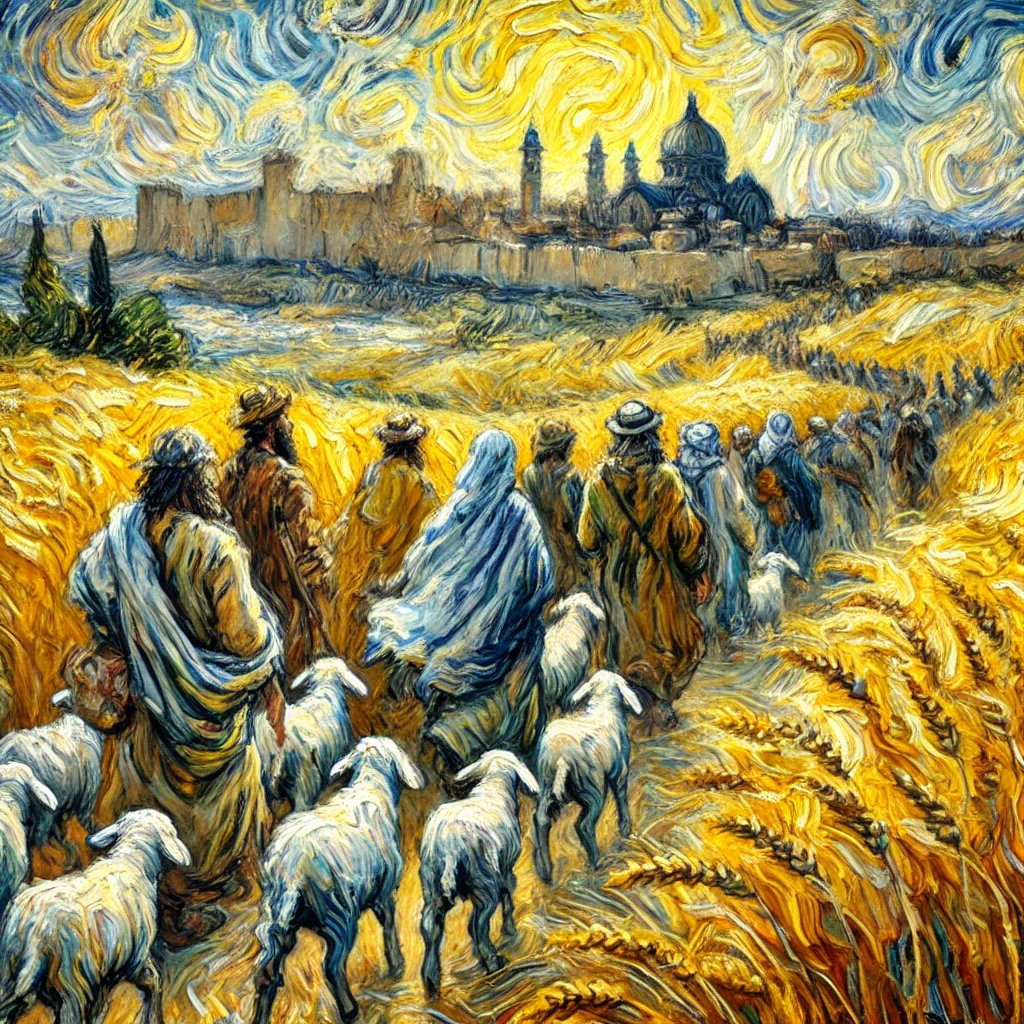
From the very beginning in Genesis, God established specific days as His appointed times, marking them as sacred and set apart. Later, in Leviticus, God reaffirms these appointed times, declaring them as holy convocations for worship, reflection, and celebration. These Holy Days were not merely ceremonial observances for ancient Israel; they were declared as "My Feasts" and "the Feasts of the LORD" (Leviticus 23:2), emphasizing their divine origin and ongoing importance. God’s repeated claim that these are His Feasts underscores that they are not human traditions, but are divinely instituted times of significance for all who seek to worship Him in spirit and truth.
Contrary to the common belief that these Holy Days were part of an old covenant system now abolished, the Bible reveals their enduring relevance. Jesus Himself affirmed the unchanging validity of God’s law in Matthew 5:17-19, stating that He came not to abolish the law but to fulfill it. In the New Testament, the continuity of these holy days is evident. Jesus observed them, as seen in Luke 22:14-15, when He celebrated Passover with His disciples. The early Church continued to recognize and observe these holy days, as demonstrated in Acts 20:6 and 1 Corinthians 5:7-8, where Paul explicitly connects the meaning of Passover and Unleavened Bread to Jesus Christ.
God’s Holy Days remain relevant for those seeking to follow Him today as times to reflect on His plan of salvation, draw closer to Him, and celebrate the fulfillment of them in Jesus Christ while anticipating their ultimate completion in God’s Kingdom. Observing these appointed and holy times allows believers to align themselves with not only God's calendar, but on His ultimate focus for humanity.
In addition to referring to the annual holy days as “My Feasts,” God consistently uses another phrase that underscores their enduring importance: “this shall be a statute forever.” This phrase, often repeated when God establishes His Feasts, highlights their perpetual significance. The Hebrew word translated as “forever” is olam, which conveys the concept of ongoing continuity, perpetual duration, or timelessness.
For example, regarding the Feast of Unleavened Bread, Leviticus 23:14 states: “It shall be a statute forever throughout your generations in all your dwellings.” Similarly, the same wording is used for other Holy Days. Leviticus 23:21 describes the Feast of Weeks (Pentecost): “It shall be a statute forever in all your dwellings throughout your generations.” This phrase also appears in commands for the Day of Atonement (Leviticus 23:31) and the Feast of Tabernacles (Leviticus 23:41), underscoring their ongoing and timeless relevance.
Interestingly, the same Hebrew word, olam, used to describe the eternal nature of God’s Holy Days is also applied to describe God’s own eternal nature. For instance, Psalm 90:2 declares: “From everlasting to everlasting (forever or eternal), You are God.” This connection between the enduring nature of God and the perpetual observance of His Feasts emphasizes their origin from God and timeless significance, making them just as relevant for believers today as when they were first commanded.
The use of olam in conjunction with God’s command to observe His Feast days ties directly to His eternal nature. What does it mean that God describes these days as “My Feasts” (Leviticus 23:2)? Does this not suggest that they belong to Him, rather than being temporary cultural practices for ancient Israel? If God’s very character is eternal, wouldn’t the permanence of these Feasts also reflect His unchanging nature and His covenant with His people in both the Old and New Testaments?
The word “forever” (or as the Hebrew often says, from everlasting to everlasting) transcends human limitations, pointing to the spiritual and prophetic significance of God’s Holy Days. As statutes ordained by God, they are not subject to human alteration or cessation. Instead, their observance serves as a reminder of His sovereignty, His plan for humanity, and the enduring relationship between Him and His people. If these appointed times are part of God’s redemptive plan and reflect His eternal character, why would they be abolished? Should believers not align themselves with God’s purposes by keeping His designated Feast days?
To explore this further, we will examine each of God’s Biblical Feasts and their pivotal role in foreshadowing the plan established by God from the foundation of the earth to reconcile humanity to Him. For those seeking to verify the phrase “My Feasts”, the following verses demonstrate God’s claim of ownership over these annual observances. They are not human traditions or temporary rituals, but integral components of God’s redemptive plan for all people.
Old Testament Contextual Support
Leviticus 23:1-2 (NKJV) - "And the Lord spoke to Moses, saying, 'Speak to the children of Israel, and say to them: "The Feasts of the Lord, which you shall proclaim to be holy convocations, these are My Feasts."'
Leviticus 23:4 (NKJV) - "These are the Feasts of the LORD, holy convocations which you shall proclaim at their appointed times."
Leviticus 23:37-38 (NKJV) - "These are the Feasts of the LORD which you shall proclaim to be holy convocations, to offer an offering made by fire to the LORD: a burnt offering and a grain offering, a sacrifice and drink offerings, everything on its day—besides the Sabbaths of the Lord, besides your gifts, besides all your vows, and besides all your freewill offerings which you give to the LORD."
Leviticus 23:44 (NKJV) - "So Moses declared to the children of Israel the Feasts of the LORD."
Numbers 28:16-17 (NKJV) - "On the fourteenth day of the first month is the Passover of the LORD. And on the fifteenth day of this month is the Feast; unleavened bread shall be eaten for seven days."
Numbers 29:12 (NKJV) - "On the fifteenth day of the seventh month you shall have a holy convocation. You shall do no customary work, and you shall keep a Feast to the LORD seven days."
Exodus 23:14-16 (NKJV) - "Three times you shall keep a feast to Me in the year: You shall keep the Feast of Unleavened Bread... the Feast of Harvest, the first fruits of your labors which you have sown in the field; and the Feast of Ingathering at the end of the year, when you have gathered in the fruit of your labors from the field."
Deuteronomy 16:10 (NKJV) - "Then you shall keep the Feast of Weeks to the LORD your God with the tribute of a freewill offering from your hand, which you shall give as the LORD your God blesses you."
Deuteronomy 16:13-15 (NKJV) - "You shall observe the Feast of Tabernacles seven days, when you have gathered from your threshing floor and from your winepress. And you shall rejoice in your feast, you and your son and your daughter, your male servant and your female servant, and the Levite, the stranger and the fatherless and the widow, who are within your gates. Seven days you shall keep a sacred feast to the LORD your God in the place which the LORD chooses, because the LORD your God will bless you in all your produce and in all the work of your hands, so that you surely rejoice."
New Testament Contextual Support
Passover
Luke 2:41-42 - "His parents went to Jerusalem every year at the Feast of the Passover. And when He was twelve years old, they went up to Jerusalem according to the custom of the feast."
Matthew 26:17-19 - "Now on the first day of the Feast of Unleavened Bread the disciples came to Jesus, saying to Him, 'Where do You want us to prepare for You to eat the Passover?'"
Mark 14:12-16 - "Now on the first day of Unleavened Bread, when they killed the Passover lamb, His disciples said to Him, 'Where do You want us to go and prepare, that You may eat the Passover?'"
Luke 22:7-8 - "Then came the Day of Unleavened Bread, when the Passover must be killed. And He sent Peter and John, saying, 'Go and prepare the Passover for us, that we may eat.'"
John 2:13 - "Now the Passover of the Jews was at hand, and Jesus went up to Jerusalem."
John 13:1 - "Now before the Feast of the Passover, when Jesus knew that His hour had come that He should depart from this world to the Father, having loved His own who were in the world, He loved them to the end."
Feast of Unleavened Bread
Luke 22:1 - "Now the Feast of Unleavened Bread drew near, which is called Passover."
Acts 12:3-4 - "And because he saw that it pleased the Jews, he proceeded further to seize Peter also. Now it was during the Days of Unleavened Bread."
Pentecost (Feast of Weeks)
Acts 2:1-4 - "When the Day of Pentecost had fully come, they were all with one accord in one place. And suddenly there came a sound from heaven, as of a rushing mighty wind, and it filled the whole house where they were sitting."
Acts 20:16 - "For Paul had decided to sail past Ephesus, so that he would not have to spend time in Asia; for he was hurrying to be at Jerusalem, if possible, on the Day of Pentecost."
1 Corinthians 16:8 - "But I will tarry in Ephesus until Pentecost."
Feast of Trumpets
No explicit New Testament reference is made to the Feast of Trumpets being kept. However, its themes of trumpets and future events resonate in:
Matthew 24:31 - "And He will send His angels with a great sound of a trumpet, and they will gather together His elect from the four winds, from one end of heaven to the other."
1 Thessalonians 4:16 - "For the Lord Himself will descend from heaven with a shout, with the voice of an archangel, and with the trumpet of God. And the dead in Christ will rise first."
Day of Atonement - Acts 27:9
"Now when much time had been spent, and sailing was now dangerous because the Fast was already over, Paul advised them..." (‘The Fast’ is widely understood as referring to the Day of Atonement).
Feast of Tabernacles
John 7:2, 10, 14 - "Now the Jews’ Feast of Tabernacles was at hand... But when His brothers had gone up, then He also went up to the feast, not openly, but as it were in secret... Now about the middle of the feast Jesus went up into the temple and taught."
John 8:12 - "Then Jesus spoke to them again, saying, 'I am the light of the world. He who follows Me shall not walk in darkness, but have the light of life.'"
This teaching likely occurred during the Feast of Tabernacles, during the illumination ceremony in the temple.
General Observance of Feasts
Acts 18:21 - "But took leave of them, saying, 'I must by all means keep this coming feast in Jerusalem; but I will return again to you, God willing.' And he sailed from Ephesus."

SCIENCE AND SCIENTISTS
Does the Bible contradict science, or does it actually provide the foundation for it? Explore the history of scientific thought—from Aristotle to Einstein—and discover why the consistent laws of physics point toward a Creator who established them "by Him and for Him."

“For by Him were all things created, that are in heaven, and that are in Earth, visible and invisible, whether by thrones, or dominions, or principalities, or powers: all things were created by Him and for Him.” (Colossians 1:16)
Before diving into specific scientific proofs in the Bible, it’s important to first look at “science” and what it means. This is especially important since we’re living in a time when many people believe the Bible and science contradict one another, which I hope these articles and other material on this website will show is actually the opposite of the truth. The Bible and science both complement one another, as we’ll see, and this should be expected since God, the Creator of all things, also created science.
Let’s first briefly look at the term “scientist.” The term actually only dates back to 1833 and was coined by British polymath William Whewell. Whewell was just the first person to coin the term, but history shows scientists have been with us for far longer. Modern scholars consider the well-known ancient Greek Aristotle to be the first recorded “scientist” in history, largely due to his extensive knowledge of natural phenomenon, and his curiosity in trying to understand why things happen as they do. Others may argue the astronomer Galileo Galilei is the first true “scientist” due to his use of experimentation, observation, and math to understand nature (instead of common sense and logical deductions used by Aristotle). Regardless of who the first scientist was, we can see that science dates back thousands of years, and even before these men, perhaps to the beginning of humanity.
These scientists made science what it is today, that is observing and then using those observations to establish rules and laws to explain how the world operates. In the realm of physics, this process is done largely through mathematical equations. Understanding this brings us to an important question to consider:
If these great scientists from the past only discovered these laws, then where did they come from?
For science to exist and to be trusted, the observations seen must be consistent and repeatable. For the observations we see to be consistent and repeatable, there must be specific laws that are being followed, otherwise everything would be in constant change and science would be impossible. This is an important point to consider since life itself and our interactions with the world would be impossible unless we had established, predictable, and constant laws. At some point, these laws of the universe had to be established. Not surprisingly, this observation was made in the beginning of science by the ancient Greeks and they debated this topic extensively. In school we learned about famous Greek scientists such as Socrates, Plato, and the previously mentioned Aristotle. These men were not only considered great scientists of their age, but also great philosophers. The Greeks realized that oftentimes science and philosophy needed to be included together to form a wholistic and complete picture of the reasoning and laws which govern the universe. This correlation between philosophy and science exists even today. Some of the great scientists of the 20th century, such as Albert Einstein and Nikola Tesla, considered themselves to be “philosophical scientists.”


Both ancient Greeks and modern scientists understand that science and philosophy are needed together to begin to understand and answer some of these big questions, but the question still remains. Where did the laws come from that allow science to exist?
The Natural Laws argument comes from the philosophical field and dates back to Aristotle. According to the Massachusetts Institute of Technology (MIT), the argument states, “the observation of governing laws and existing order in the universe indicates the existence of a superior being who enacted these laws.” Due to the age of this argument, there is obviously much debate, specifically on what should be considered a natural law versus a man-made law or observance.
Regardless, through basic observation and common sense we can see there are obviously core laws built into the universe which humanity can merely just discover such as mathematics, engineering, and physics. Without these laws present and consistent, our interaction with the universe would be impossible. Considering this, ask yourself:
If these laws are present, orderly, and consistent then what would that imply?
The Bible tells us plainly what this implies and precisely where these laws came from.
“For the LORD is our Judge, the LORD is our Lawgiver, the LORD is our King, He will save us.” (Isaiah 33:22)
In the New Testament of the Bible, we see the apostle James state something similar:
“There is only one Lawgiver and Judge, the One who is able to save and destroy…” (James 4:12)
You might think these verses refer to the LORD as the giver of the law, particularly in the Old Testament, and that’s partially correct. However, consider the Hebrew word translated as “Lawgiver” here: ḥāqaq. This word is also used in Proverbs, but not in reference to God’s law. Instead it is used to describe the creation of the Earth and the establishment of the laws of the universe.
“When He gave the sea its boundary so the waters would not overstep His commands, and when He appointed [ḥāqaq] the foundations of the earth…” (Proverbs 8:29)
Whether it was Aristotle or Galileo, whoever was the first person to observe or discover these natural laws did only that - discover. As the Bible states and we are able to see all around us, it was God Who created not only the universe, but also the laws that govern it and provide stability. When we ask where did the natural laws come from, we should consider Paul’s word in Colossians who succinctly summarizes this point,
“He is before all things, and in Him all things hold together.” (Colossians 1:17)
Paul, and other Biblical authors before him, are given no consideration by scholars as being great scientists or philosophers from their times. However, we see the Biblical authors, who were inspired to write these words by God, come to the same conclusion regarding natural laws and a Lawgiver well before the great minds of the ancient Greeks, like Aristotle, began to grasp with these questions. The intricate relationship between science and the Bible is not one of opposition but of complementarity. As we’ve explored, the Bible anticipated many of the questions that would later be formalized by great minds like Aristotle, Socrates, and Plato. The natural laws they discussed and we’ve “discovered” are not inventions of humanity, but rather, reflections of the divine order established by God from the very beginning. These laws provide the consistent, predictable foundation upon which science stands, and their existence points to the necessity of a Lawgiver. As we look at the universe and the governing principles within it, it becomes clear that science, rather than contradicting the Bible, affirms the existence of a Creator. The Bible not only explains where these laws originated, but offers a broader understanding of their purpose, as seen in scriptures in both the Old and New Testaments. Just as science relies on consistent laws, our lives depend on a God who created them and continues to hold sustains and all holds all these things together. Through this, we see that both the Bible and science ultimately lead us back to the same truth: that God is the author of all creation, including the laws that govern it.
Table of Contents
Science and Scientists
All Things Were Created
Hanging in the Void
The Creator’s Vantage Point
Noah’s Ark: The Engineering Marvel that Survived the Flood
The Fragile Earth: Soil Erosion
The Polar Ice Caps and Frozen Realm
The Heavens Stretched Above the Earth
The Anisotropic Gemstones of Revelation 21
The Solar Eclipse
THE EVIDENCE OF JESUS OUTSIDE THE BIBLE (PART 2)
What did the enemies of the early Church say about Jesus? Explore the "hostile witnesses" of history—from Roman governors to Greek satirists—who confirmed the life, crucifixion, and worship of Jesus Christ long before the New Testament was finalized.
What to Know
Several early non-Christian writers—Josephus, Tacitus, Mara bar Serapion, Pliny the Younger, Lucian—reference Jesus, despite generally hostile views of Christianity, lending credibility to the Gospel accounts.
These sources support three main points: Jesus lived when the Gospels say He did, was executed by crucifixion under Pontius Pilate, and was worshipped as divine by His followers.
Josephus, a Jewish historian, mentioned Jesus within 60 years of His death; Tacitus, a Roman historian, describes His execution during the reign of Emperor Tiberius.
Pliny the Younger details early Christians’ worship practices, explicitly noting they sang hymns to Christ “as to a god,” reinforcing the idea that Jesus was viewed as divine soon after His crucifixion.
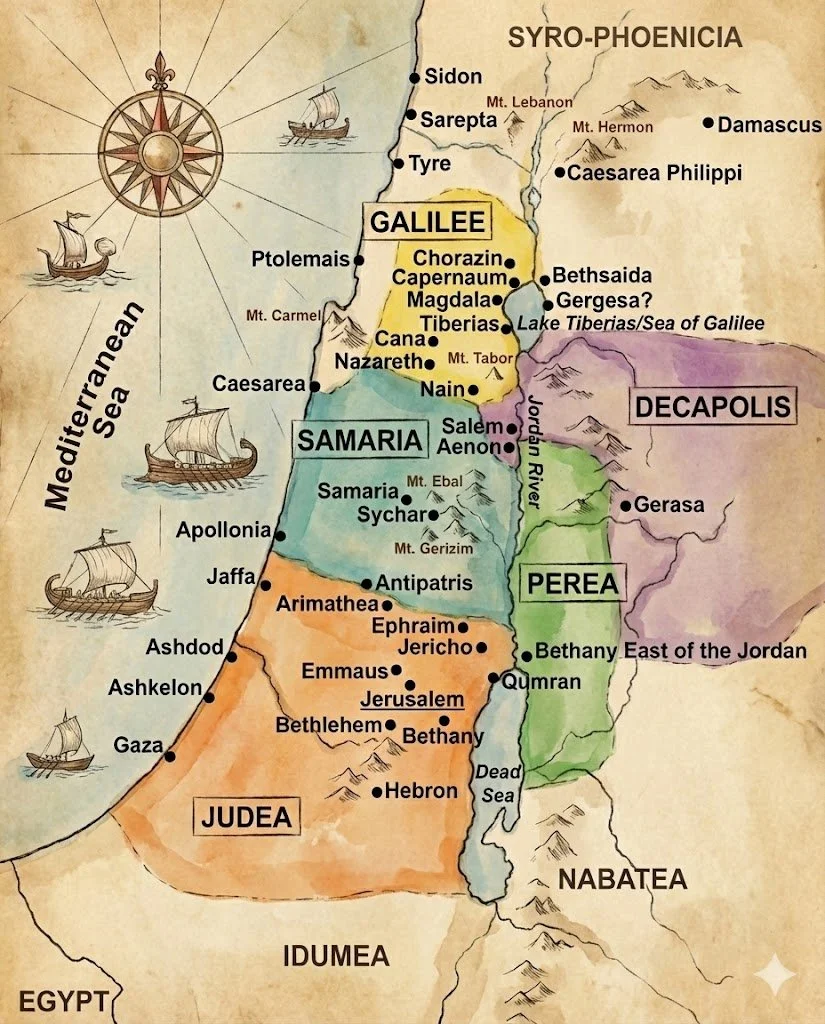
Now, let's explore another way to demonstrate the historical reliability of the Bible by examining references to Jesus Christ in early non-Christian sources. These references are particularly significant because they come from writers who were generally hostile to Christianity, making their accounts all the more noteworthy. We'll focus on establishing three main points through these sources:
1) Jesus Christ was a real person who lived during the time described in the Gospels and had a public ministry.
2) He was condemned to death by crucifixion under the authority of Pontius Pilate.
3) Jesus was worshipped as a God by His followers after His crucifixion.
We'll review references to Jesus from various sources such as Josephus, Thallus, Suetonius, Tacitus, Pliny the Younger, Mara bar Serapion, Lucian, and certain Talmudic texts (in this post and future posts on the topic). These accounts will confirm to you key elements of the synoptic Gospels, including Jesus' birth out of wedlock through the power of God’s Holy Spirit, His connection with John the Baptist, the existence of His brother James, His gathering of disciples, His disagreements with Jewish leaders over the interpretation of the law, His performance of miraculous feats, His crucifixion by Pilate, and the belief among His followers that He was the Messiah who was resurrected after death.
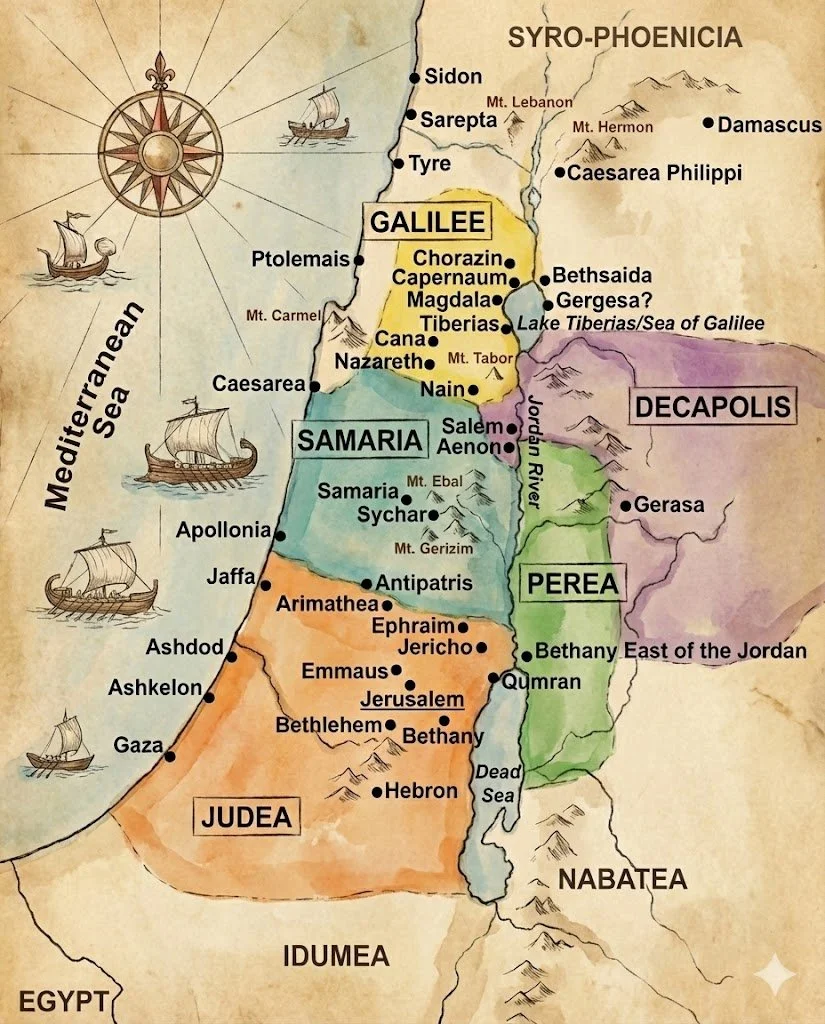
First, in this post, we will use non-Christian sources, to establish that Jesus Christ lived during the time the Bible claims. The first mention of Jesus comes from the Jewish historian Flavius Josephus, who lived from around 37 to 100 A.D. In his work Jewish Antiquities, written in 93 A.D., Josephus refers to Jesus within 60 years of his death.
The Roman historian Tacitus, who lived from 56 to 120 A.D., also mentioned Jesus in his book Annals. He wrote,
"The Christians, you know, worship a man to this day – the distinguished personage who introduced their novel rites and was crucified on that account."
He later adds, "Nero fastened the guilt and inflicted the most exquisite tortures on a class hated for their abominations, called 'Christians' by the populace. Christus [Christ], from whom the name originated, suffered the extreme penalty during the reign of Tiberius at the hands of one of our procurators, Pontius Pilate."
Although Tacitus was not sympathetic to Christians, he provided clear evidence of their existence and worship of Christ, including his crucifixion under Tiberius at the hands of Pontius Pilate, exactly as the Bible portrays.
Mara bar Serapion, a Stoic philosopher writing around 73 A.D., referred to Jesus in a letter to his son, saying,
"On the eve of the Passover, Yeshua was hanged," using a synonym for crucifixion.
Pliny the Younger, a governor in Asia Minor, wrote to Emperor Trajan around 112 A.D., describing how Christians worshipped Jesus as a God:
"They [Christians] were in the habit of meeting on a certain fixed day before it was light, when they sang in alternate verses a hymn to Christ, as to a god, and bound themselves by a solemn oath, not to any wicked deeds, but never to commit any fraud, theft or adultery, never to falsify their word, nor deny a trust when they should be called upon to deliver it up."
Lucian of Samosata, a Greek satirist who lived from 120 to 195 A.D., mentioned Jesus in his work Death of Peregrine, stating,
"Or what advantage came to the Jews by the murder of their Wise King, seeing that from that very time their kingdom was driven away from them?"
These non-Biblical references, along with others, align closely with what we know about Jesus from the New Testament, providing strong evidence that Jesus was a real historical figure. The fact that so many different sources mention Him is remarkable, especially given the relative scarcity of such records from that time, and these sources’ general hostility toward Christianity.
Table of Contents
Textual Criticism of the Bible (Part 1)
The Evidence of Jesus Christ Outside the Bible (Part 2)
The Evidence of Jesus Christ Through the Darkening of the Sun (Part 3)
When was the First New Testament Book Written and by whom? (Part 4)
The Historical Reliability of the New Testament and Gospels (Part 5)
Proving the Accuracy of the Bible Through Prophecy (Part 6)
Proof of the Bible Through the Crucifixtion and Ressurection (Part 7)
A New Beginning - What does this Mean for Us? (Part 8)
Sources
Flavius Josephus: "Jewish Antiquities," Book 18, Chapter 3, Section 3.
Tacitus: "Annals," Book 15, Chapter 44.Mara bar Serapion: Letter to his son, dated around 73 AD.
Pliny the Younger: "Letters," Book 10, Letter 96.
Lucian of Samosata: "Death of Peregrine," Chapter 11.

THE HISTORICAL RELIABILITY OF THE NEW TESTAMENT AND GOSPELS (PART 5)
Why would a people waiting for a conquering King invent a story about a crucified criminal? Discover why the "improbability" of a dying Messiah is one of the strongest proofs that the New Testament accounts are true. It’s a message that defied every Jewish expectation of the time.
What to Know
Jewish Expectations of the Messiah: The Jewish people anticipated a triumphant, eternal ruler as their Messiah. Scriptures such as 2 Samuel 7:12-13 and Daniel 7:14 describe a reigning, everlasting king, making the idea of a suffering, dying Messiah unthinkable at that time. Even the disciples initially struggled to reconcile this concept, as seen in Peter’s reaction in Matthew 16:22 and the crowd’s confusion in John 12:33-34.
The Paradox of the Crucifixion: Crucifixion was a symbol of being cursed by God, according to Deuteronomy 21:23, and was reserved for criminals. Despite this, Jesus’s death on the cross became the centerpiece of the gospel message, as Paul explains in Galatians 3:13-14. The unlikely nature of this event underlines the sincerity of the disciples’ proclamation—they believed it truly happened.
Abandonment and Unlikely Burial: All of Jesus’s disciples fled during His arrest and crucifixion (Matthew 26:35; Mark 14:50). His body was buried not by His followers, but by Joseph of Arimathea and Nicodemus — members of the Sanhedrin, the council that condemned Him. This unexpected detail strengthens the credibility of the accounts, as these prominent figures would have publicly refuted a fabricated story.

In this post, we will reference Biblical passages to highlight why it is remarkable that the disciples and other Jews of Jesus's time responded as they did. These individuals were deeply familiar with the Scriptures and well-versed in its teachings. Therefore, understanding what the Bible says on this matter is essential, as it underscores how improbable it would have been for someone of Jewish heritage to fabricate these events, given their significant implications.
A Suffering and Dying Deliverer: The idea of a suffering and dying Messiah, especially one mocked by the religious leaders of the time, would have been unthinkable to Jews of that era. The Jewish people anticipated a Messiah who would reign eternally, as seen in passages like 2 Samuel 7:12-13: "I will establish the throne of His kingdom forever." Likewise, in Daniel 7:14, the "Son of Man" — a title Jesus frequently used for Himself — is described as being given "dominion and glory and a kingdom, that all peoples, nations, and languages should serve Him. His dominion is an everlasting dominion, which shall not pass away, and His kingdom shall not be destroyed." The Jewish people, including Jesus's followers, expected a triumphant Messiah, not one who would die, particularly in a public and humiliating manner. This is evident in Peter's reaction before Jesus's crucifixion: "Peter took Him aside and began to rebuke Him, saying, 'God forbid it, Lord! This shall never happen to you! (Matthew 16:22)'" Similarly, the crowd's confusion is recorded in John 12:33-34: "We have heard from the Law that the Christ is to remain forever; and how is it that You say, 'The Son of Man must be lifted up'?"
While the Old Testament, notably in Isaiah 53, did foretell the Messiah's death, it is clear from these passages that the Jews of Jesus's time struggled to reconcile these prophecies with their expectations. They did not grasp that these promises would be fulfilled in stages. Given this context, why would Jesus predict His own humiliating death at the hands of Jewish leaders? Why would His disciples continue to proclaim this message after His death, even to the point of enduring their own excruciating deaths? The most plausible answer is that they believed it to be true.
2. The Nature of Jesus's Death: The crucifixion of Jesus Christ adds another layer of improbability to the idea that this story was fabricated. Dying on a cross was a symbol of being cursed by God and was reserved by the Romans for criminals. Deuteronomy 21:23 states, "...for he who is hanged is accursed of God." Paul echoes this in Galatians 3:13, acknowledging how contradictory it might seem for the Messiah, who claimed to be sent by God, to die such a death. This paradox likely contributed to Paul's initial persecution of the church, yet it later became central to his message. Paul explains its significance: "Christ has redeemed us from the curse of the law, having become a curse for us (for it is written, 'Cursed is everyone who hangs on a tree'), that the blessing of Abraham might come upon the Gentiles in Christ Jesus, that we might receive the promise of the Spirit through faith" (Galatians 3:13-14).
Table of Contents
Textual Criticism of the Bible (Part 1)
The Evidence of Jesus Christ Outside the Bible (Part 2)
The Evidence of Jesus Christ Through the Darkening of the Sun (Part 3)
When was the First New Testament Book Written and by whom? (Part 4)
The Historical Reliability of the New Testament and Gospels (Part 5)
Proving the Accuracy of the Bible Through Prophecy (Part 6)
Proof of the Bible Through the Crucifixtion and Ressurection (Part 7)
A New Beginning - What does this Mean for Us? (Part 8)
Sources
2 Samuel 7:12-13 - Bible passage referring to the Messiah's eternal reign.
Daniel 7:14 - Describes the everlasting dominion of the "Son of Man."
Matthew 16:22 - Peter's reaction to Jesus predicting His death.
John 12:33-34 - The crowd's confusion over the Messiah's predicted death.
Isaiah 53 - Prophecy of the suffering servant.
Deuteronomy 21:23 - The curse associated with hanging on a tree.
Galatians 3:13-14 - Paul’s explanation of the significance of Christ’s crucifixion.
Matthew 26:35; Mark 14:50 - The disciples abandoning Jesus.
John 19:38-42; Mark 15:43; John 3:1 - The burial of Jesus by Joseph of Arimathea and Nicodemus.